Start With the Floor, Not the Crane
Before a workshop lift is ordered, the site must be checked properly. A lift that is perfect on paper can become a problem if the slab is not level, the concrete is too thin, or the bay is too tight for vehicle movement. In Durban, many workshop yards have older floors with patch repairs, so it pays to measure the full bay and not only the lift footprint.
Allow space for the columns, the power unit, and a safe working zone around the machine. If delivery is going into a property in Umbilo, Springfield Park, or City Deep, check whether there is enough turning room for a flatbed or side-loader. A lift that weighs several tonnes also needs a clear route from gate to final position, with no low pipes, weak paving, or tight overhead beams.
- Measure the bay length, width, and ceiling height.
- Check floor thickness and concrete condition before shipping.
- Confirm vehicle access, gate width, and turning space.
- Plan where the power supply and control unit will sit.
Know the Anchor Requirements Early
Anchoring is one of the main points that gets missed when import planning starts too late. Most workshop lifts need fixed anchor points, and the installer will want the slab type, bolt size, and spacing confirmed before the equipment lands. If the floor is cracked or has been resurfaced, that can affect the final fixing method. In some cases, core drilling or chemical anchors may be needed, but that must be checked against the slab design and the supplier's installation guide.
In coastal areas like Durban and Paarden Eiland, humidity and salt air can also affect the long-term condition of fasteners and hydraulic parts. It is worth asking for coated fixings and keeping spare service parts in dry storage. A neat installation saves time later, and it reduces downtime when load-shedding or workshop pressure hits.
- Confirm anchor spacing before cargo is cleared.
- Check whether the slab is new, old, or resurfaced.
- Ask for the installation drawing well before delivery.
- Keep fixings and fittings packed separately to avoid loss.
Plan the Import Around the Port and the Route
Workshop lifts usually arrive in crates, loose components, or bundled steel sections. The way they are packed affects the shipping plan, port handling, and inland transport. Machines Africa Hub arranges import planning, shipping coordination, and customs clearing so the cargo moves through the Durban harbour corridor with fewer delays. For clients in Johannesburg, the route through City Deep or Jet Park needs to be booked with enough time for offloading and reloading.
Tariff classification must be done correctly, because a wrong code can trigger queries at the port and hold up release. Document management matters as well, especially where invoices, packing lists, and permits need to match exactly. If the lift is going into a bonded store first, the papers must be in order before the truck leaves the terminal. A small mistake in the paperwork can cost days, not just hours.
- Match invoice values to the actual packing list.
- Confirm the tariff code before shipment leaves origin.
- Book clearance time for Durban, Johannesburg, or Cape Town.
- Use cargo insurance for every leg of the move.
Offloading Must Match the Installation Sequence
Ordering the unloading properly is just as important as the import itself. A workshop lift should not arrive in a yard with no forklift, no crane plan, and no place to lay out parts. The delivery team needs to know which pieces come off first, where they will be placed, and whether the site can accept a full truck or only a partial load. In busy areas such as Springfield Park or Paarden Eiland, access times can be tight, so the slot has to be booked with care.
For large lifts, site offloading may need to happen before business hours, especially where there is limited parking or municipal traffic control. If the cargo is delayed at the port, the installation crew may already be booked. That is why the offload plan should be linked to the clearing release, inland transport, and the installer’s calendar from the start. No one wants heavy steel waiting in a driveway because the sequence was not thought through.
- Confirm the offloading equipment before the truck departs.
- Mark the parts so assembly starts smoothly.
- Keep the bay clear for the install crew.
- Allow for after-hours delivery where access is limited.
Storage, Insurance, and Moisture Control Matter
Not every lift goes straight from port to workshop. Some cargo must sit in bonded storage while clearing is completed, or wait for the site to be ready. In Durban’s humid conditions, that storage period should be managed carefully. Steel parts, hydraulic fittings, and electrical components need dry cover and safe handling. If the crate sits too long on a damp floor, corrosion can start before the lift is even assembled.
Cargo insurance is not optional when goods are moving through ports, depots, and inland routes. The risk is not only theft, but also forklift damage, wet weather, and rough handling during re-stacking. Machines Africa Hub can arrange bonded storage, cargo insurance, and document management together, which helps keep the process orderly while the client finalises the site. It also gives the workshop time to prepare the floor and anchor positions properly.
- Use dry storage for electrical and hydraulic parts.
- Keep components off the ground and wrapped where needed.
- Check insurance cover from origin to final delivery.
- Do not store crates next to open wash bays or leaking roofs.
A Durban Example: From Harbour to Workshop Bay
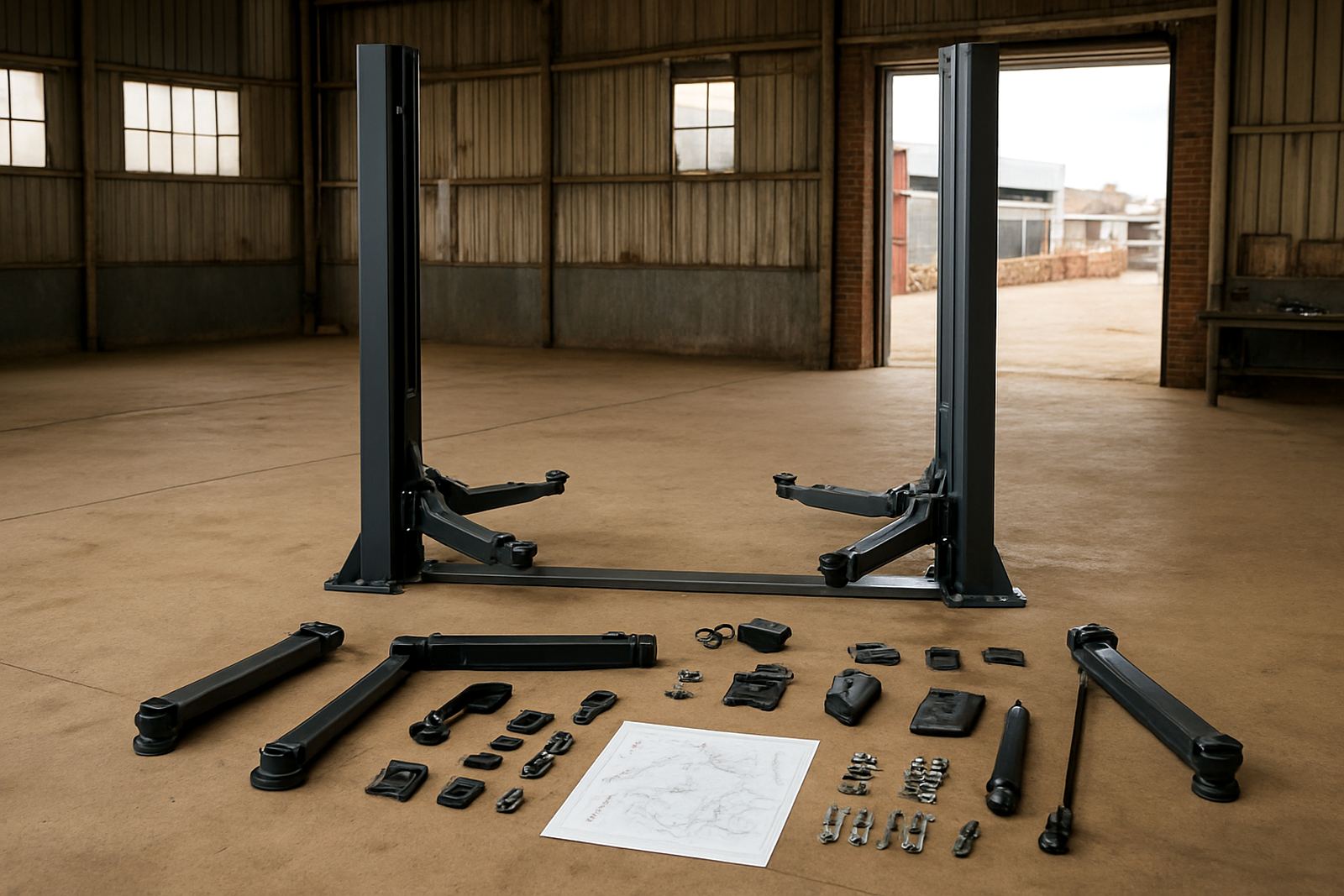
A typical job might start with a workshop in Umbilo ordering a two-post lift for vehicle servicing. The cargo lands at Durban harbour, clears with the right tariff classification, then moves by inland truck to a site near Springfield Park. Before release, the team confirms the slab thickness, anchor layout, and access gate width. The lift is then offloaded in sequence, with the columns separated from the hydraulic unit and control parts.
By the time the installer arrives, the floor is ready, the parts are sorted, and the truck has already left the yard. That is what proper planning does. It avoids double handling, reduces storage time, and keeps the workshop on schedule. For a business that relies on vehicle lifts every day, a few extra checks before shipping can save a lot of trouble later.
Why Clear Coordination Saves Time and Money
Workshop lifts are heavy, sensitive and time-critical. They need the same attention as any other capital item moving into a working site. When import planning, customs clearing, inland transport, and offloading are handled in one chain, there are fewer gaps for delays to creep in. That is especially important for fleet workshops, panel shops, and automotive clients that cannot afford idle bays.
Machines Africa Hub works with clients across Durban, Johannesburg, and Cape Town, including Umbilo, Jet Park, City Deep, and Paarden Eiland. The focus is simple: get the lift through the port, onto the truck, and into the workshop with the least disruption. If the paperwork is tidy, the route is booked, and the site is ready, the whole job runs better. That is what makes the difference between a clean delivery and a costly backtrack.