Project brief from a busy Alrode workshop
The client was an engineering and repair workshop in Alrode that needed two core machine tools brought in, cleared and delivered for installation. The site was working against production targets, so the brief was simple in theory but tight in practice: move the cargo from port to inland store, clear it correctly, then get it to site in one piece and on the agreed week.
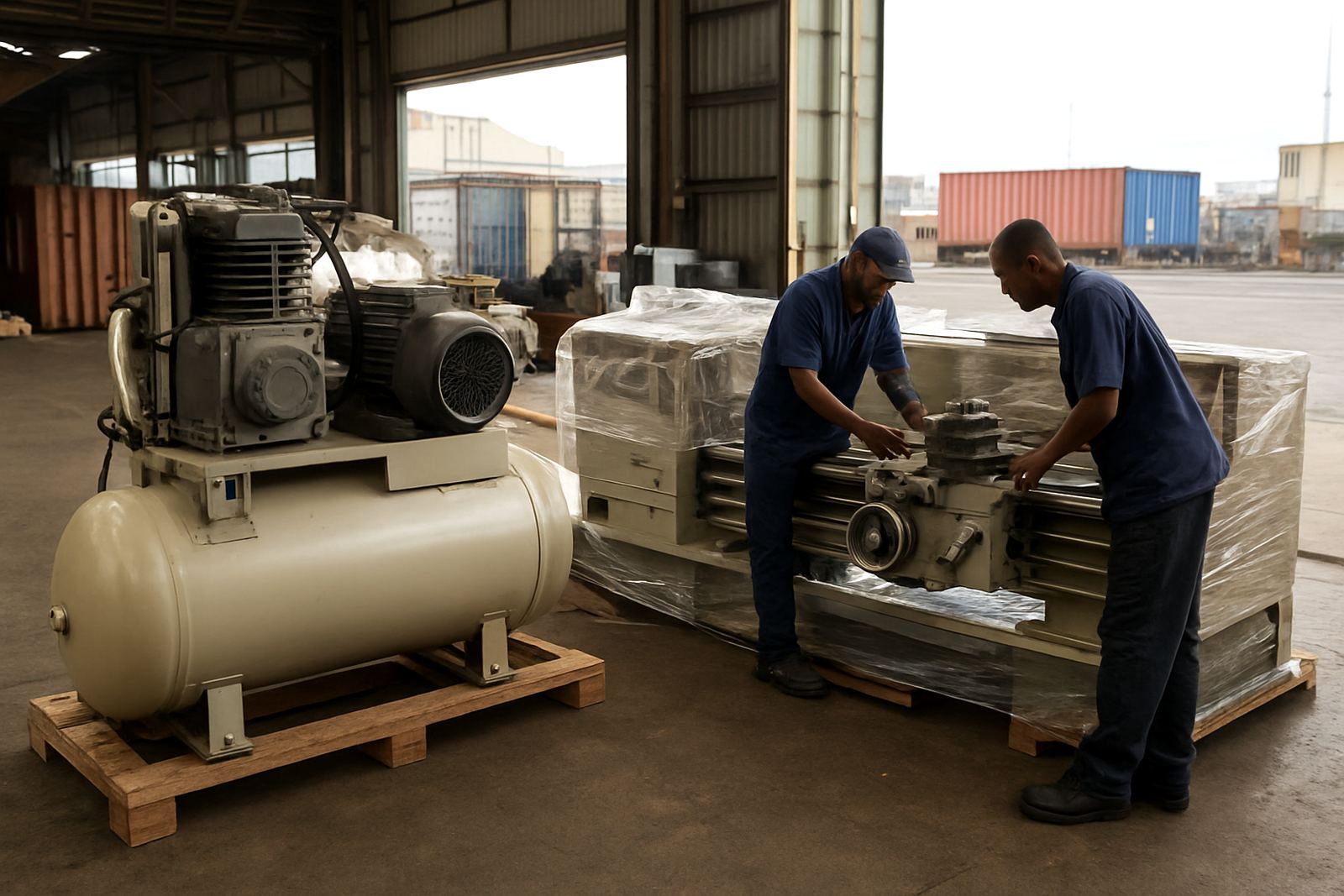
The shipment included a CNC lathe and a vertical milling machine, both packed for sea freight on steel base frames with timber protection and moisture wrap. The lathe package measured about 3.2 metres by 2.1 metres by 2.4 metres high, while the milling package came in at around 2.7 metres by 2.0 metres by 2.3 metres high. Combined gross weight was just under 11 tonnes, which meant we had to plan the transport, lifting points and offloading sequence properly from the start.
The client also needed documents kept in order for insurance, customs and site access. In the South of Johannesburg, a missed gate booking or a late truck can waste a whole day, so we built the plan around the road conditions, receiving hours and the workshop's own crane availability.
What had to be managed before the trucks moved
There were three main constraints. First was timing at the port and depot side, because machinery cargo can rack up storage and demurrage charges quickly if release papers are not ready. Second was classification, since machine tools need the correct tariff treatment and supporting invoice detail. Third was road and site access, because the delivery point in Alrode had limited room for turning and no tolerance for unnecessary delays.
Durban humidity was also part of the picture. The machines had crossed by sea and were arriving into a coastal storage environment, so we checked that the packaging remained dry, the anti-rust protection was intact, and the crates were not damaged by condensation. One loose wrap or split timber panel can create a problem later, especially when a machine is going straight into a workshop and not a warehouse.
- Verified commercial invoice, packing list and transport release instructions
- Confirmed machine serial numbers and packing dimensions against shipping papers
- Prepared customs entries and tariff notes for the clearing file
- Arranged loading gear for the different weight points on each machine
- Booked inland transport to suit workshop receiving times in Alrode
Clearing work through Durban and Johannesburg
We handled the import planning from the Durban harbour corridor and then moved the file through clearing with the inland handover in mind. For machinery, the paperwork has to match the cargo exactly: item description, model detail, country of origin, invoice value and container or breakbulk references. That matters when cargo is going from a port area to a site that cannot absorb a second trip.
Retief Labuschagne led the clearing side and Fatima Cassim handled trade compliance checks. They worked through the documents, checked the classification, and kept the client informed on what was needed at each point. In a job like this, a small mismatch on weights or description can slow the release, so we kept the file tight and asked for one round of clarification only.
We also managed cargo insurance cover for transit to Johannesburg. That gave the client protection from the port stage right through to delivery at the workshop. Once release was confirmed, the cargo moved under control instead of sitting and waiting for someone to chase another document.
Transport, offloading and site handover in Alrode
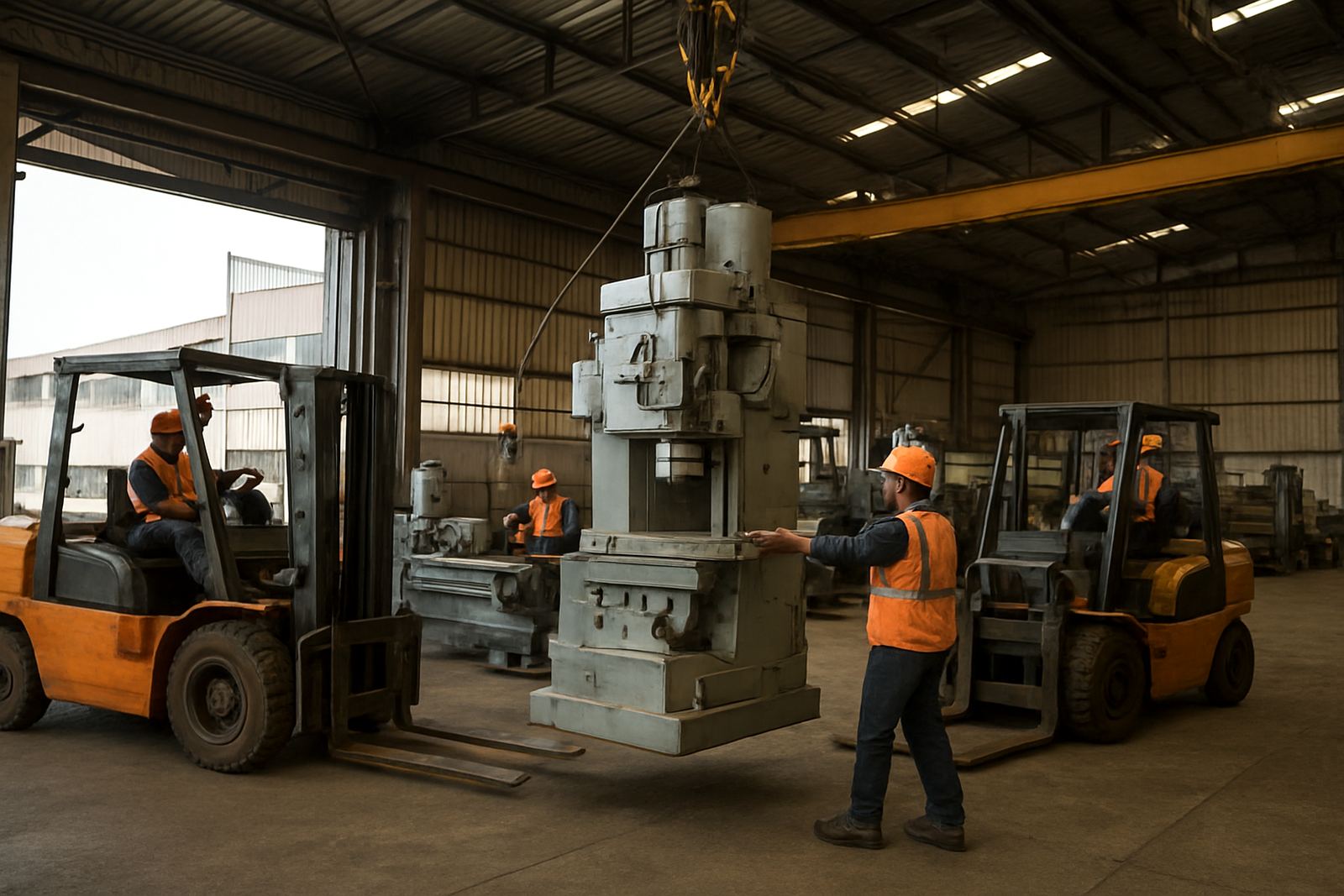
The inland leg was arranged for direct delivery to the south of Johannesburg, with route planning around heavy traffic and municipal road limits for the route into Alrode. The load needed a flatbed arrangement with suitable restraint points, and we used lifting support for site offloading because the client needed the machines positioned close to the installation bay.
Luthando Mchunu coordinated the fleet side and tracked the handover window with the receiving team. On site, the machines were offloaded in sequence so the heavier lathe was placed first, followed by the milling machine. That made the receiving easier and reduced unnecessary repositioning. The result was a cleaner handover, fewer people standing around and no last-minute scramble for extra equipment.
- Machine 1: CNC lathe, approx. 3.2 m x 2.1 m x 2.4 m, just over 6 tonnes
- Machine 2: vertical milling machine, approx. 2.7 m x 2.0 m x 2.3 m, just under 5 tonnes
- Delivery route: Durban to Johannesburg with final leg into Alrode industrial area
- Offloading method: controlled lift and position placement at the receiving bay
Timeline and communication over three weeks
The job ran over three weeks from initial document check to final site delivery. Week one was for verification, shipment detail review and planning. Week two covered clearing, release and transport booking. Week three was the inland move, site offload and handover confirmation. It sounds straightforward on paper, but that structure is what stops a machinery move from drifting into extra days and extra costs.
Nomsa Dlamini kept the client updated with the status at each step, including release progress, vehicle timing and any point where the workshop needed to prep the bay. The client had enough notice to organise staff, floor space and an electrician for the next phase. That saved time once the truck arrived, because the machines could be received and staged without confusion.
For us, the important part was not just getting the cargo there. It was getting it there when the receiving team could actually use it. That is often the difference between a machine arriving and a machine being installed on schedule.
What the client gained from the install
The workshop received both machines without damage, without customs delay and without a second handling point. The cargo arrived clean, complete and ready for the next stage of installation. That meant the client could move from receiving to commissioning work far quicker than if the shipment had been left to sit between port and site.
The practical gains were easy to measure:
- No storage overrun at the port
- No rework on documents before release
- No damage claims or moisture issues on arrival
- Direct inland delivery to the Alrode site
- Clear receiving window for the client team
For an engineering business, that kind of control matters. A lathe or milling machine is only useful when it is on the floor, levelled and ready. Delays cost more than freight, they knock into job planning and customer commitments too.
On a similar move, we would still inspect cargo details early, confirm dimensions against the road plan, book lifting support in advance and keep the client informed in plain language.: inspect the cargo details early, confirm dimensions against the road plan, book lifting support in advance and keep the client updated in plain language. That process works well for machinery moving from Durban into Gauteng, especially where access is tight and time on site is limited.
Key facts
| Project | Alrode Machining Install |
|---|---|
| Client type | Engineering workshop in Alrode, south of Johannesburg |
| Cargo | CNC lathe and vertical milling machine |
| Route | Durban harbour corridor to Alrode |
| Timeline | 3 weeks from check to handover |
| Services used | Import Planning, Customs Clearing, Port Collection, Inland Transport, Cargo Insurance, Site Offloading |