
Warehouse rollout in Pinetown with split delivery dates
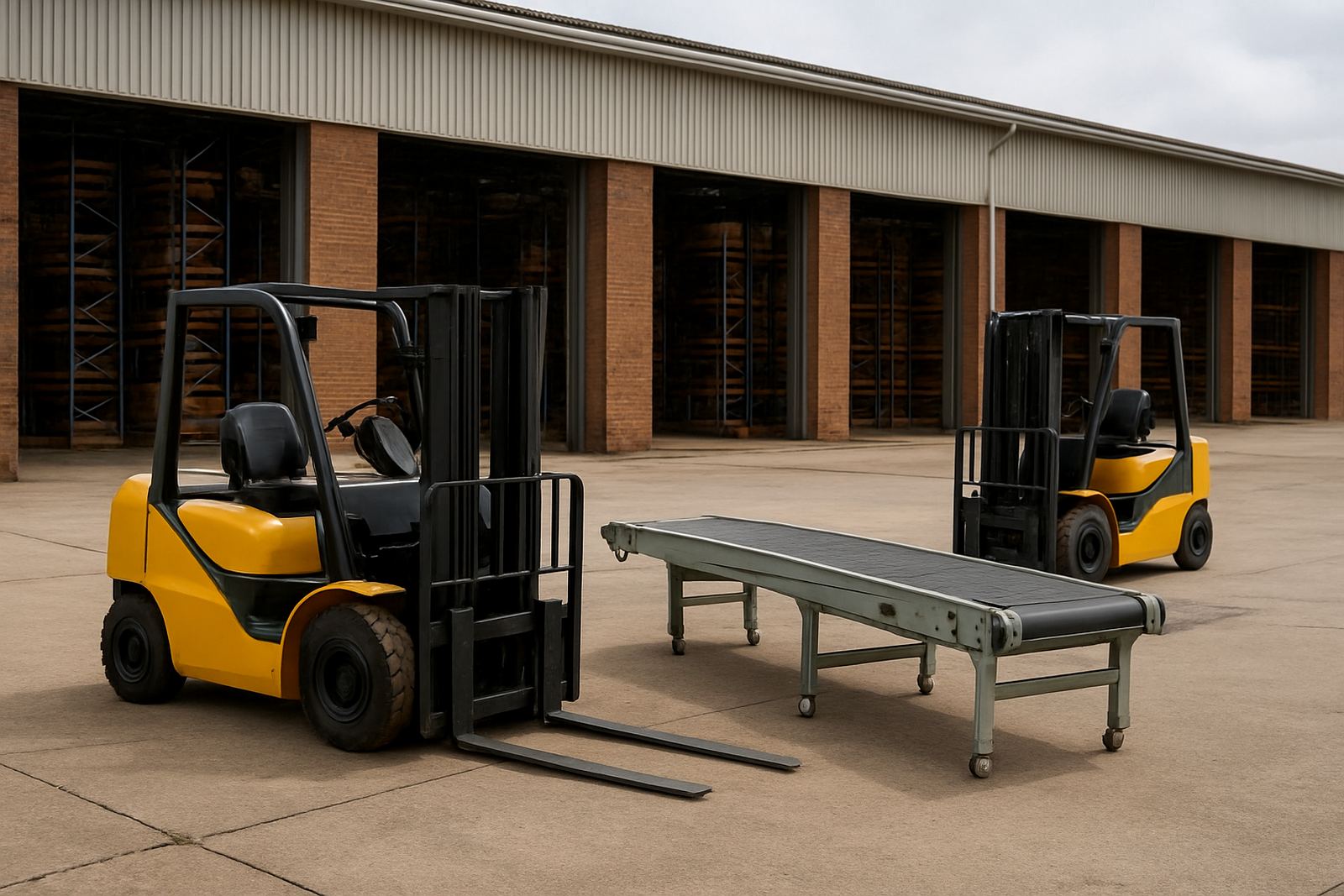
The client was a distribution operation in Pinetown that needed new material handling equipment brought in for a warehouse upgrade. The brief was straightforward on paper: land forklifts and conveyor sections through Durban, clear them quickly, then release the units in batches so the warehouse team could install and commission them in phases.
The equipment was for a busy site with limited floor space, tight receiving hours and no room for a single large drop. We planned for staggered deliveries over 3 weeks, which let the client keep part of the warehouse active while the upgrade moved ahead. That mattered because the site could not afford a full shutdown, and the receiving team was working around normal dispatch cycles.
What made the job practical rather than simple was the mix of cargo. The forklifts needed careful handling because of their weight and centre of gravity, while the conveyor units arrived as longer packed sections that had to be checked for transit damage and kept in sequence for installation. It was the kind of project where a missing pallet or mixed-up packing list can slow everything down.
Import planning, customs clearing and port release
We started with import planning before the cargo even reached Durban. That meant checking the equipment descriptions, confirming tariff classification, and preparing the paperwork needed for clearing. For machinery imports, the details matter: serial numbers, packing lists, invoice values, and the correct item descriptions all need to line up or the file gets held up at the port.
Our clearing team managed the entry process through Durban, then coordinated release once the documents were in order. We also kept the client updated on likely charges and timing, which helped them line up labour and internal storage space. For this project, the main challenge was keeping the cargo moving without rushing the wrong load out first. In freight, that is where small mistakes become expensive.
- Customs entries prepared for machinery and conveyor components
- Tariff review and document matching before vessel arrival
- Release planning to suit staggered warehouse receiving windows
- Port coordination to reduce storage and demurrage exposure
Cargo specs and handling controls we worked to
The shipment included 3 counterbalance forklifts and conveyor sections packed in multiple crates and steel-reinforced bundles. The forklifts ranged from 2.5 to 3.0 tonnes operating capacity, with the heaviest single units just under 4 tonnes packed for transport. Conveyor sections were shipped in lengths from 2.4 metres to 6 metres, which meant we had to plan the truck loading order carefully so the correct pieces came off first at each stop.
Because Durban humidity can be rough on exposed metal, we used wrapped protection and kept the cargo in bonded storage only as long as needed before inland movement. We also checked that lifting points were accessible for site offloading. One crate arrived with light external scuffing, nothing serious, but it reminded everyone why proper load restraint and handling notes matter. The receiving team was informed in advance so there were no surprises on the ground.
- Forklifts: 3 units, 2.5 to 3.0 tonne class
- Conveyor equipment: modular sections from 2.4 m to 6 m
- Handling plan: crane-free where possible, forklift offload at site
- Storage: short-term bonded holding before release to Pinetown
Durban port timing and inland transport to Pinetown
Once cleared, the cargo moved from the Durban harbour corridor into inland transport. Pinetown is close enough to Durban for a quick turn, but traffic, loading bay access and delivery time slots still need proper planning. We scheduled the first release to avoid peak congestion and then sent the remaining loads according to the client’s installation sequence.
The route planning also had to account for the type of vehicle used. The longer conveyor bundles needed flatdeck capacity and secure strapping, while the forklifts travelled on low-bed units with clearance checks before loading. Nothing was left to guesswork, because a late vehicle or a bad load plan can knock a whole day off a warehouse programme. With load-shedding still affecting some receiving yards and scanner systems, we kept paper copies of the key documents on hand as back-up.
Each delivery was signed off against the packing list before handover. That sounds basic, but it saved time at the receiving end and made it easier for the client’s installation crew to sort the equipment by zone. A tidy process helps when the warehouse team is trying to get racks, conveyors and vehicle lanes ready at the same time.
Staggered deliveries that kept the site working
The main result was simple: the warehouse stayed operational while the equipment rollout happened in stages. The client could receive, store and install in planned blocks rather than trying to deal with everything at once. That reduced congestion in the yard and cut the risk of damage during internal movement. It also meant the operations team did not have to hold overtime labour for a single giant receiving day.
Over the 3 week programme, we released the cargo in the order the site required, starting with the first forklift units and the conveyor sections needed for the initial installation bay. Later deliveries followed once the receiving area was clear. This is where good communication matters, because the team in Pinetown needed to know what was coming, when it would arrive and what still remained in storage.
- Lower pressure on the warehouse receiving bay
- Clear handover between transport, offload and installation teams
- Reduced risk of mixed parts or delayed assembly
- Better control of labour and site access times
What we would repeat on the next handling job
For another warehouse delivery like this, we would again plan the import early, separate the release schedule by delivery zone, and confirm offloading equipment before the first truck moves.: plan the import early, separate the release schedule by delivery zone, and confirm offloading equipment before the first truck moves. For machinery going into a working warehouse, that is the safest way to keep the client’s day-to-day operations moving.
We would also keep a close eye on document completeness from the start, especially with multi-part machinery shipments where one missing line can slow the clearance. A second check on packing sequence before loading is worth it too. In projects like this, a few extra minutes at the start can save hours later, and that matters when the site is waiting on equipment to get the job done.
For clients in Pinetown, Durban, Springfield Park and the wider KZN logistics corridor, this kind of handling is about timing, control and clean handover. That is what keeps a warehouse rollout on track, without forcing the client to stop trading while new equipment comes in.
Key facts
| Client type | Distribution and warehousing operation |
|---|---|
| Location | Pinetown, KwaZulu-Natal |
| Timeline | 3 weeks from clearance planning to staged release |
| Cargo | 3 forklifts plus modular conveyor sections |
| Transport mode | Durban port release with inland flatdeck and low-bed moves |
| Services used | Import planning, customs clearing, bonded storage, port collection, inland transport, site offloading |