What the Prospecton load required
The client was a transport operator based in Prospecton, Durban, moving into container road operations and needed a batch of skeletal trailers cleared without holding up yard plans. The shipment sat in the Durban harbour corridor, so the brief was practical: get the trailers through customs, arrange collection, and move them to site with no avoidable delays.
The batch formed part of a fleet build-up for linehaul work and depot support. Each unit had to be released on the right documents, with duties and customs charges aligned before dispatch. Because the trailers were for active use, the client needed the handover done in order, not in stages that would leave part of the batch stranded at port.
- Project type: customs clearing and dispatch for skeletal trailers
- Client base: transport operator in Prospecton, Durban
- Use case: container road operations and fleet expansion
- Movement route: Durban harbour to inland yard
The brief and the pressure points
The core job was to clear the trailer batch properly and release it as one coordinated movement. We had to manage import planning, tariff classification and customs clearing, then line up port collection and transport so the trailers could leave as one planned movement. The client needed certainty on landed cost before release, and they wanted the paperwork handled in a way that would stand up to port checks and inland compliance reviews.
There were a few pressure points. Durban port congestion can shift collection windows quickly, and heavy equipment needs the right lowbed or suitable link arrangement depending on trailer condition and release timing. We also had to account for load-shedding at the yard and office side, because missed communication windows can cost a whole day when a release slips past the gate cut-off.
- Clear customs release before vehicle call-up
- Confirm documentation with the forwarding file and invoices
- Keep the client updated on port status and transport timing
- Reduce storage charges by planning collection tightly
How we managed clearing and dispatch
We assigned the file to our customs and operations team and worked the job in a controlled sequence. Fatima Cassim handled trade compliance checks, Retief Labuschagne led the clearing side, and Luthando Mchunu coordinated fleet movement and release timing. That meant the file was checked for tariff classification, supporting documents and any hold risk before the trailers were sent for collection.
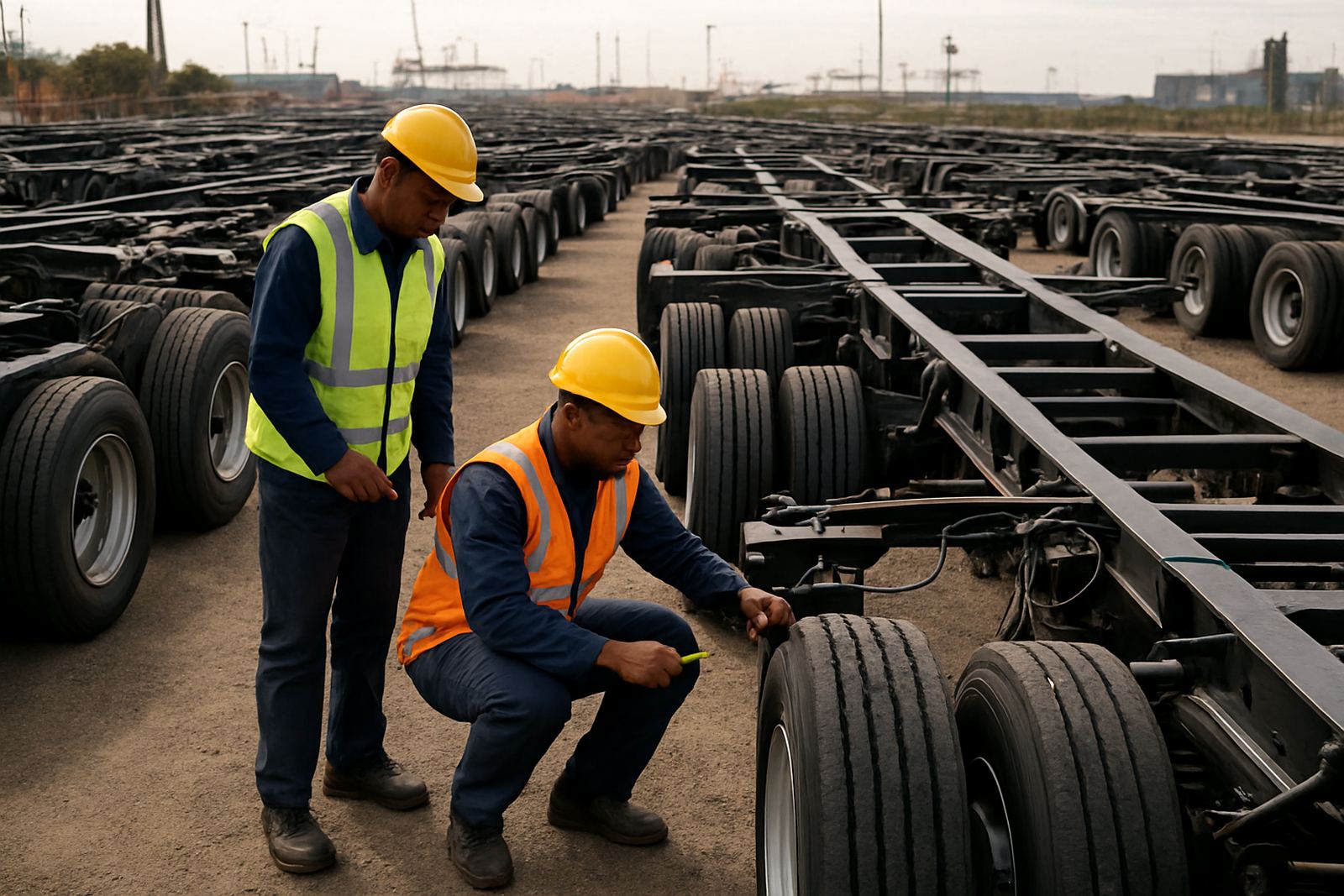
Once the release was in place, we arranged port collection and inland transport from Durban. The batch moved from the harbour side with the correct dispatch sequence, and the handover to the receiving yard was managed with proof of delivery and release notes. Because the equipment was destined for container work, we paid close attention to the condition on collection and the fit for road movement, especially around securing points and axle spacing.
- Import planning and document review
- Tariff classification and customs clearing
- Port collection and dispatch scheduling
- Inland transport to the Prospecton area
- Document management for release and delivery records
Specs that mattered on this batch
Trailer batches are judged on numbers, not noise. For this project the key facts were the quantity of skeletal trailers, the road movement profile, and the fact that the units were headed into container logistics where uptime matters. We treated the batch as a working fleet asset rather than a one-off import and that shaped how we handled the paperwork and collection timing.
The load called for practical checks on dimensions, axle arrangement and the way the trailers would be received into service. Durban’s humid coastal conditions also meant the handover had to move quickly enough to limit unnecessary time standing in the open. Rust risk is a real factor on metal equipment near the coast, so short dwell times matter.
- Equipment type: skeletal trailers
- Quantity: batch movement for fleet deployment
- Destination use: container road operations
- Port area: Durban harbour corridor
- Storage control: bonded and release-driven handling where needed
- Delivery outcome: direct dispatch to the operating yard
Timeline from file opening to yard delivery
The project ran over three weeks from initial instruction to final delivery confirmation. Week one covered file opening, document review and import planning. Week two was used for customs submission, tariff checks and release follow-up. Week three covered port collection, inland transport and handover at the receiving site.
That pace worked because the file stayed active every day. We kept contact with the client’s operations team, checked release status against collection windows, and prepared transport once the release notice was ready. No part of the movement was left to chance, which is important when a fleet operator is trying to get equipment into service before month end.
- Week 1: instruction, planning and document check
- Week 2: customs submission and release control
- Week 3: port pick-up, transport and delivery
Result for the client and what we would repeat
The batch cleared and moved as planned, with the trailers delivered into the Prospecton operation ready for container work. The client avoided unnecessary storage exposure and had one point of contact through the process, which made it easier to plan driver training, yard allocation and next-step fleet use. That kind of certainty matters when a transport business is balancing workshop time, depot space and contract start dates.
If we were to do the same job again, we would keep the same approach: early document review, strict release tracking, and transport booked only once the port file is clean. For trailer imports in Durban, especially where the client is scaling a fleet, this is the best way to keep costs under control and avoid a scramble at the gate. It is steady work, but it has to be exact.
- One file owner from start to finish
- Transport booked against actual release, not estimates
- Regular client updates on storage and dispatch timing
- Proof of delivery retained with customs documents
Key facts
| Project | Prospecton Trailer Batch |
|---|---|
| Client type | Transport operator in Prospecton, Durban |
| Cargo | Batch of skeletal trailers |
| Services used | Import Planning, Customs Clearing, Port Collection, Inland Transport, Document Management |
| Timeline | 3 weeks |
| Operating region | Durban harbour corridor with clearing counters in Johannesburg and Cape Town |