What a reach stacker does in container yards
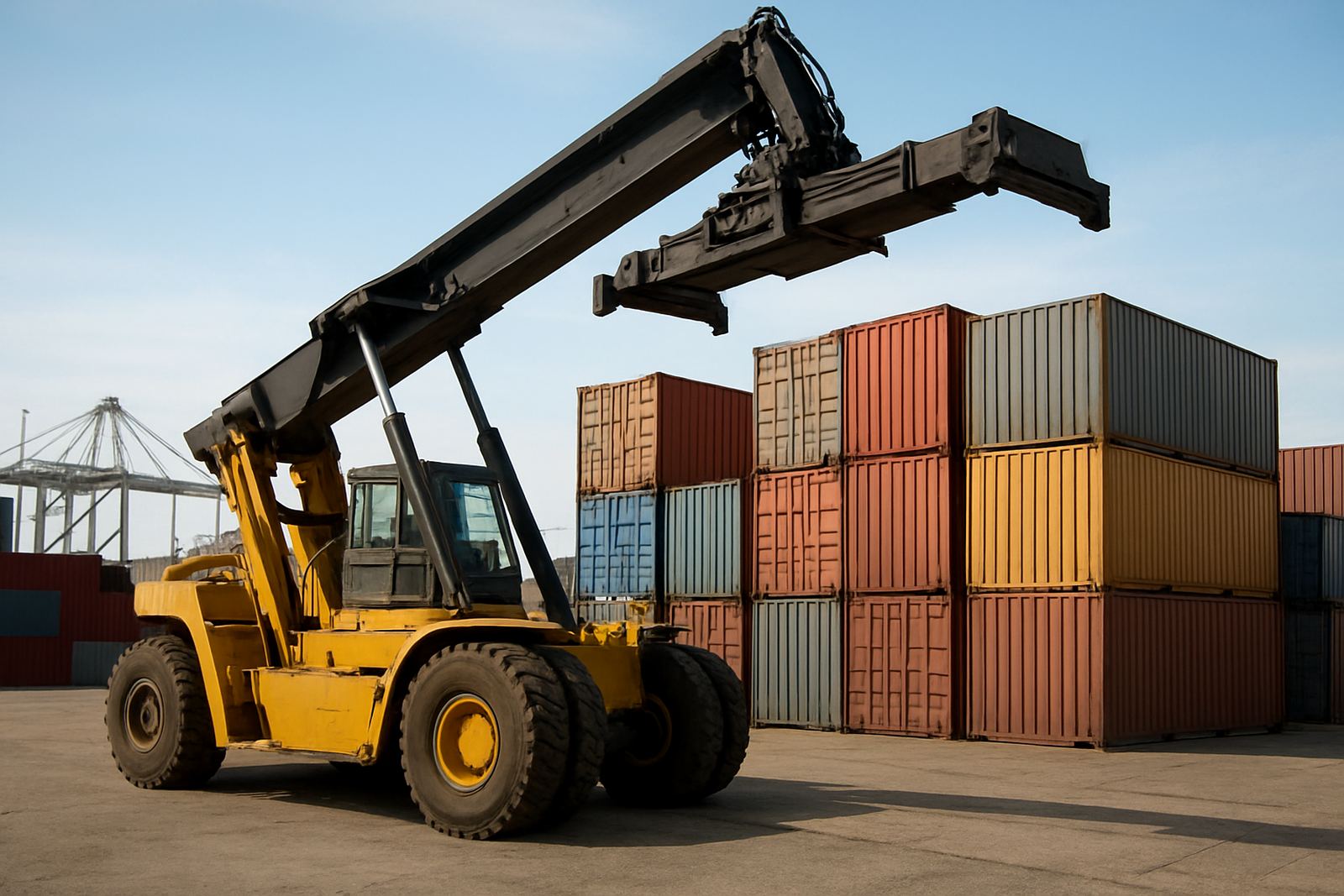
A reach stacker is a heavy container-handling machine fitted with a boom and spreader attachment for lifting ISO containers from a truck, rail siding or stack and placing them onto another position. It is used in places where a forklift is not large enough and a mobile crane is not practical for everyday yard work. In Durban, City Deep, Jet Park and Paarden Eiland, reach stackers are common where containers must be shifted in tight spaces and the work has to keep moving despite load-shedding or port congestion.
For inland depots and logistics yards, the machine is usually chosen for its speed, reach and ability to work in rows of containers. A good unit can handle heavy duty cycles through the day, but it still needs proper planning for access, turning space and ground conditions. Soil that looks firm can still sink under axle loads after rain, especially on sites near the coast or on uncompacted yard surfaces.
Typical sizes, lifting capacity and layout options
Reach stackers come in different lifting classes and boom configurations to suit yard size and container weight. Common working capacities include 36 tonnes, 45 tonnes and 50 tonnes, with rated first-row and second-row lifting figures depending on the boom design and counterweight. Most operations in South Africa use machines set up for 20-foot and 40-foot containers, while some yards also need attachments for empty container handling.
- Rated capacity: 36 t to 50 t depending on model and reach
- Container handling: 20 ft and 40 ft standard ISO containers
- Stack height: usually up to 5 high in practical yard conditions
- Drive: diesel powered, with some yard-specific hybrid or electric options on request
- Cabin: air-conditioned operator cab, rear and side visibility, load indicators
Choice depends on how many moves per shift are expected, the stack height needed and whether the unit must operate on paved apron, compacted gravel or concrete hardstand. If you are handling empty containers only, a lighter specification may be enough, but mixed cargo depots normally need a higher capacity machine with stronger tyres and more ground clearance, otherwise the wear gets expensive very fast.
Where reach stackers suit best
These machines suit inland terminals, freight yards, shipping depots, rail-connected storage sites, automotive logistics yards and bonded facilities. They are also used where containers must be moved between truck and stack without waiting for a crane slot. At a Durban harbour corridor site, a reach stacker can cut down handling delays when vessels discharge in waves and road transport must keep coming through Umbilo, Springfield Park or the port side industrial area.
They are less suitable for very narrow sites with poor turning circles or weak paving. A reach stacker needs a clear operating lane, stable stacking area and safe pedestrian separation. If your site has municipal stormwater channels, overhead cables or low gate clearance, those details must be checked before the machine is ordered because fixing them afterwards costs time and money.
- Best for: container yards, depots, bonded storage and automotive freight
- Needs: level hardstanding, defined traffic flow and marked exclusion zones
- Works well in: high-turnover yards with varied container movements
Import planning, shipping and clearing for South African delivery
Machines Africa Hub handles reach stacker movements from the first booking through to release at port and final inland delivery. That includes import planning, shipping coordination, tariff classification, customs clearing, port collection and inland transport. Where a unit arrives through Durban, the paperwork must match the machine specification exactly so the release does not stall at the terminal.
For imported equipment, the right document pack normally includes the bill of lading, commercial invoice, packing list, serial numbers, product description and country of origin details. If the machine is moving under bond, or into storage before site delivery, the route and storage terms must be planned in advance. Our team in Durban, Johannesburg and Cape Town works on those steps daily, so the sequence is managed properly and the load does not sit longer than needed.
Installation, access and power considerations
A reach stacker is not installed like fixed plant, but the site still needs preparation before the machine starts work. The delivery route must suit low-bed transport, overhead restrictions and turning radius at the gate. If a depot is in Umbilo or Springfield Park, access roads and yard entry points should be measured before arrival. For inland sites in Gauteng, check bridge height and truck access through City Deep or Jet Park routes, because one missed measurement can hold the whole move up.
Most reach stackers are diesel powered and do not need mains electricity for operation, which is useful where load-shedding affects other equipment on site. The machine does need clean fuel, regular battery checks for control systems, and safe refuelling procedures. Some operators also ask for tyre pressure monitoring, extra lighting for early starts, and dust control in dry yards. On coastal sites, corrosion protection matters too, because salt air works into pins, hydraulic joints and electrical connectors sooner than many people expect.
Upkeep, servicing and key checks before buying
Reach stackers work hard, so maintenance must be disciplined. Daily checks should cover tyres, lift chains, mast and boom pins, hydraulic leaks, lights, alarms and the spreader lock system. Weekly and monthly servicing should include grease points, filters, fluid levels, wheel nuts and brake condition. If the machine is used on uneven surfaces or loaded to capacity all day, service intervals should be shortened, not stretched.
- Check service records and hours run
- Confirm tyre condition and spare parts availability
- Match capacity to the heaviest container you handle
- Measure yard surface and stacking height
- Confirm operator training requirements and safety signage
- Check if fuel storage and bunding meet site rules
Before ordering, confirm whether you need a standard reach stacker, an empty container handler or a unit with extra reach for deeper stacks. Also check the container mix, because a machine that is fine for regular 20-foot moves may not suit heavier 40-foot loads at full height. A proper site survey saves a lot of back-and-forth and avoids a machine that is technically correct but awkward in practice.
Ordering support from Durban to Johannesburg and Cape Town
Machines Africa Hub supports businesses of all sizes, from a single depot in KwaZulu-Natal to multi-site fleets moving through Gauteng and the Western Cape. Our base in Umbilo keeps us close to the Durban harbour corridor, while our clearing counters in Johannesburg and Cape Town help with inland releases and follow-up movement. That matters when timing is tight and a container machine has to land, clear and move without sitting around.
If you need import planning, port collection, bonded storage or site offloading around Durban, Paarden Eiland, City Deep or Jet Park, we can line up the paperwork and transport sequence to suit the job. The aim is simple: the machine arrives as specified, clears cleanly and gets to site ready for work, not waiting for missing documents or a truck that was booked too late.
Key facts
| Product type | Reach stacker for container handling and inland depot use |
|---|---|
| Lifting capacity | 36 t, 45 t or 50 t depending on model and configuration |
| Container size compatibility | 20 ft and 40 ft ISO containers, with empty container options |
| Power source | Diesel powered standard, site-specific alternatives on request |
| Typical working height | Up to 5 high stacking in suitable yard conditions |
| Service use | Port yards, bonded storage, rail depots, automotive and logistics sites |