Tyre changer basics for busy workshops
A tyre changer is a workshop machine used to remove and fit tyres on rims without damaging the wheel, bead or sidewall. In fleet yards, fitment bays and automotive service centres it saves time on buses, bakkies, trucks and light commercial vehicles, especially where there is regular turnover and pressure to keep vehicles moving.
Most units are built around a clamping table, bead breaker, mounting arm and foot pedals for controlled operation. Some models are made for passenger vehicle wheels only, while others suit larger commercial rims and tougher tyres used in logistics and municipal fleets. If your team works in Durban, Jet Park, City Deep or Paarden Eiland, the right model depends on wheel size, daily volume and the amount of floor space available.
For South African conditions, the machine also needs to cope with dust, coastal humidity and long operating hours. Workshops close to the harbour corridor in Umbilo, Springfield Park and the Cape Town port area often need equipment that is easy to clean, has solid corrosion protection and can keep working through load-shedding when paired with the right supply arrangement.
Sizes, capacity and model options
Tyre changer units come in a few practical formats. The compact floor-standing type suits smaller tyre fitment shops, while larger swing-arm or tilt-back models are common in fleet depots and high-volume workshops. Heavy-duty versions are selected for larger rims and stiffer sidewalls found on commercial vehicles and some off-road applications.
- Clamping range: commonly from 10 inch to 24 inch for standard units, with larger options available for commercial work.
- Wheel diameter capacity: usually suitable for passenger and light commercial wheels, with specific models for larger assemblies.
- Bead breaker force: sized for the tyre construction you handle daily, from standard road tyres to tougher fleet tyres.
- Table speed: available in single-speed or two-speed drive setups for better control on harder tyres.
Some units include a helper arm for low-profile tyres, run-flat types, or stiff sidewalls that need extra support during fitting. Others are kept simple for general workshop use where the focus is on reliability and lower maintenance. The right choice depends on whether you handle mainly cars, LDVs, minibuses or mixed fleet work.
Where the machine fits best
A tyre changer works well in tyre fitment centres, fleet maintenance depots, bus and truck workshops, agricultural support yards and municipal repair facilities. It is also useful for automotive workshops that want to keep wheel jobs in-house rather than sending them out. If your operation handles contract vehicles, courier fleets or service vans, the machine helps reduce turnaround time and labour strain.
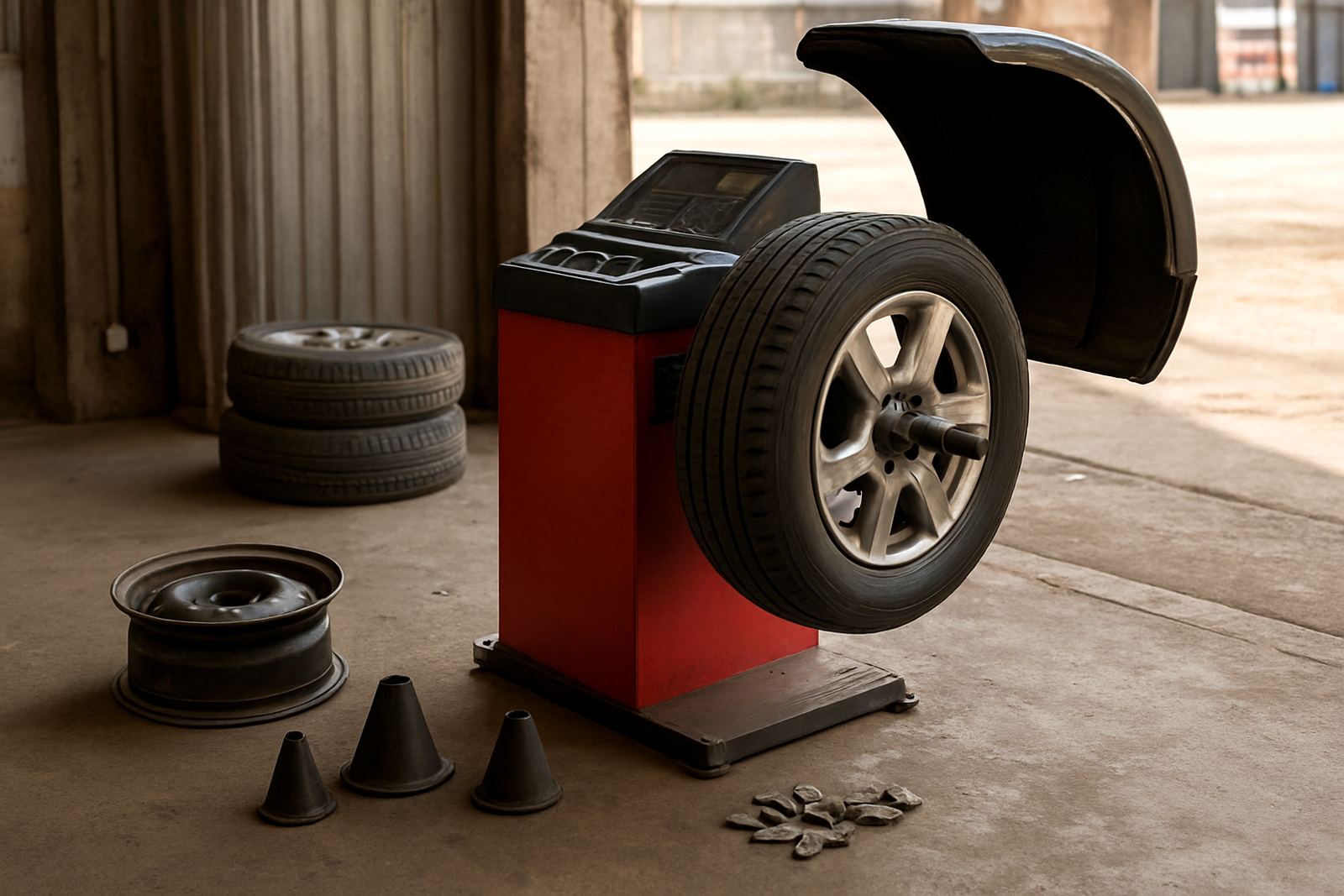
In busy centres such as Durban, Johannesburg and Cape Town, the machine is usually installed close to balancing equipment, an air compressor and a clean tyre storage area. That layout keeps the workflow straight and cuts walking time between wheel removal, tyre fitting and refitting. A level concrete floor and enough space for doors to open fully are important, particularly where larger rims and wide tyres are handled.
- Fleet workshops needing faster turnaround on routine tyre replacements.
- Fitment shops wanting cleaner bead handling and less rim damage.
- Municipal and contract depots working with mixed vehicle sizes.
- Service centres that need better control over labour and tyre stock.
Installation, power and air requirements
Most tyre changers need a stable single-phase or three-phase electrical supply, depending on the model, plus a strong compressed air line for the bead breaker and control functions. Before installation, check the rated voltage, plug type and air pressure range so the machine can be connected without extra delays. In areas where load-shedding is common, many workshops tie the unit into generator or inverter-backed supply planning so the bay does not sit idle.
Air quality matters too. Moisture in the line can shorten seal life and affect performance, especially in coastal towns where humidity is high. A proper filter regulator and water trap are worth fitting. The machine should also be bolted or placed on a firm, level base so the table stays stable while the operator works. For sites in Umbilo, Springfield Park or Paarden Eiland, we usually advise checking access doors, offloading points and fork access before delivery so the unit reaches the bay safely.
If the machine is going into a bonded store, workshop annex or site with restricted access, planning the offload is just as important as the spec. Machines Africa Hub can coordinate delivery through Durban harbour, with inland movement to Johannesburg or Cape Town as required, and the paperwork handled through clearing counters in both centres.
Care, servicing and workshop discipline
A tyre changer does not need complicated maintenance, but it does need regular attention. Clean the clamping jaws, turntable and bead breaker area after use so grit and rubber build-up do not affect grip. Moving parts should be lubricated on schedule, and air lines checked for leaks because small pressure losses can slow the machine down over a full day.
Operators should avoid forcing oversized wheels or damaged rims onto a unit that was never intended for them. That is where bent clamps, damaged seals and poor bead seating start. If your workshop handles mixed fleets, it helps to keep a clear size chart near the machine so staff know what is within limits and what should be referred to a heavier unit.
- Check clamps, pedals and seals weekly for wear.
- Drain moisture from the air system regularly.
- Keep the turntable clean and free of stones, wire and sealant residue.
- Service the machine before peak season, not after it has already slowed down.
What to confirm before you order
Before placing an order, confirm the wheel sizes you handle, the type of tyres fitted most often, and whether the machine must manage low-profile or commercial tyres. Also check your available power supply, compressor output and floor space. A model that looks suitable on paper can still be the wrong choice if the bay is too tight or the air supply is weak.
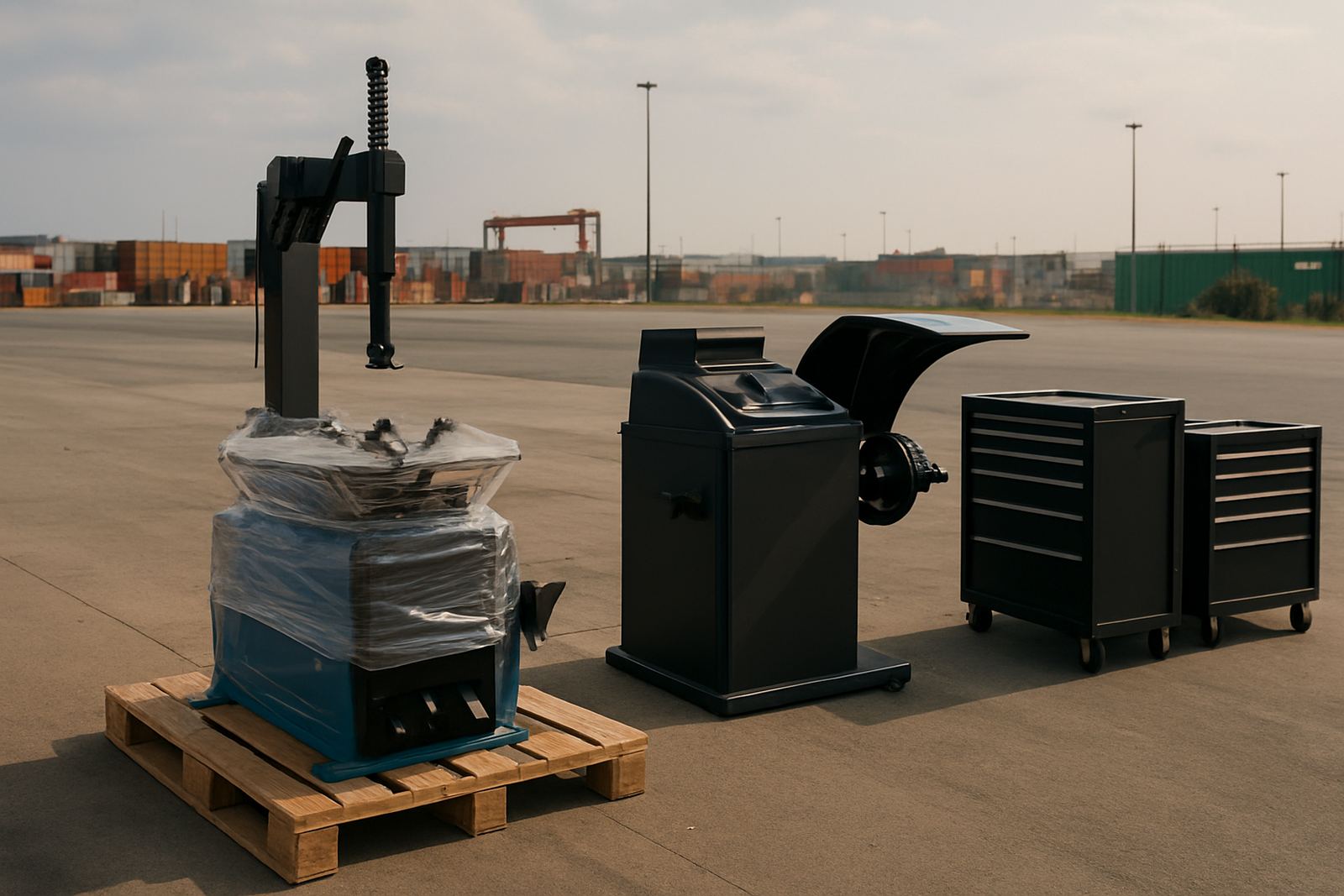
It is also worth confirming whether you need extras such as plastic rim protectors, helper arms, a bead blast system or special clamping jaws. If the unit is being imported, ask for the packing size, gross weight and lifting points so the cargo can be offloaded correctly at the port or on site. For businesses in Durban, Johannesburg and Cape Town, that detail makes a real difference to delivery timing and handling costs.
Machines Africa Hub supports import planning, shipping coordination, customs clearing, tariff classification, port collection, inland transport, cargo insurance, bonded storage, site offloading and document management. That means the machine moves through the process with less back and forth, and your team can get on with fitment work, fleet maintenance and normal workshop output.
Key facts
| Machine type | Tyre changer for workshop and fleet use |
|---|---|
| Typical clamping range | 10 inch to 24 inch standard, larger options on request |
| Power supply | Single-phase or three-phase, model dependent |
| Air requirement | Compressed air supply needed for bead breaker and controls |
| Best suited to | Fitment centres, fleet workshops, municipal depots, automotive service bays |
| Key options | Helper arm, rim protectors, bead assist, commercial wheel capacity |