
What a wheel balancer does in a busy workshop
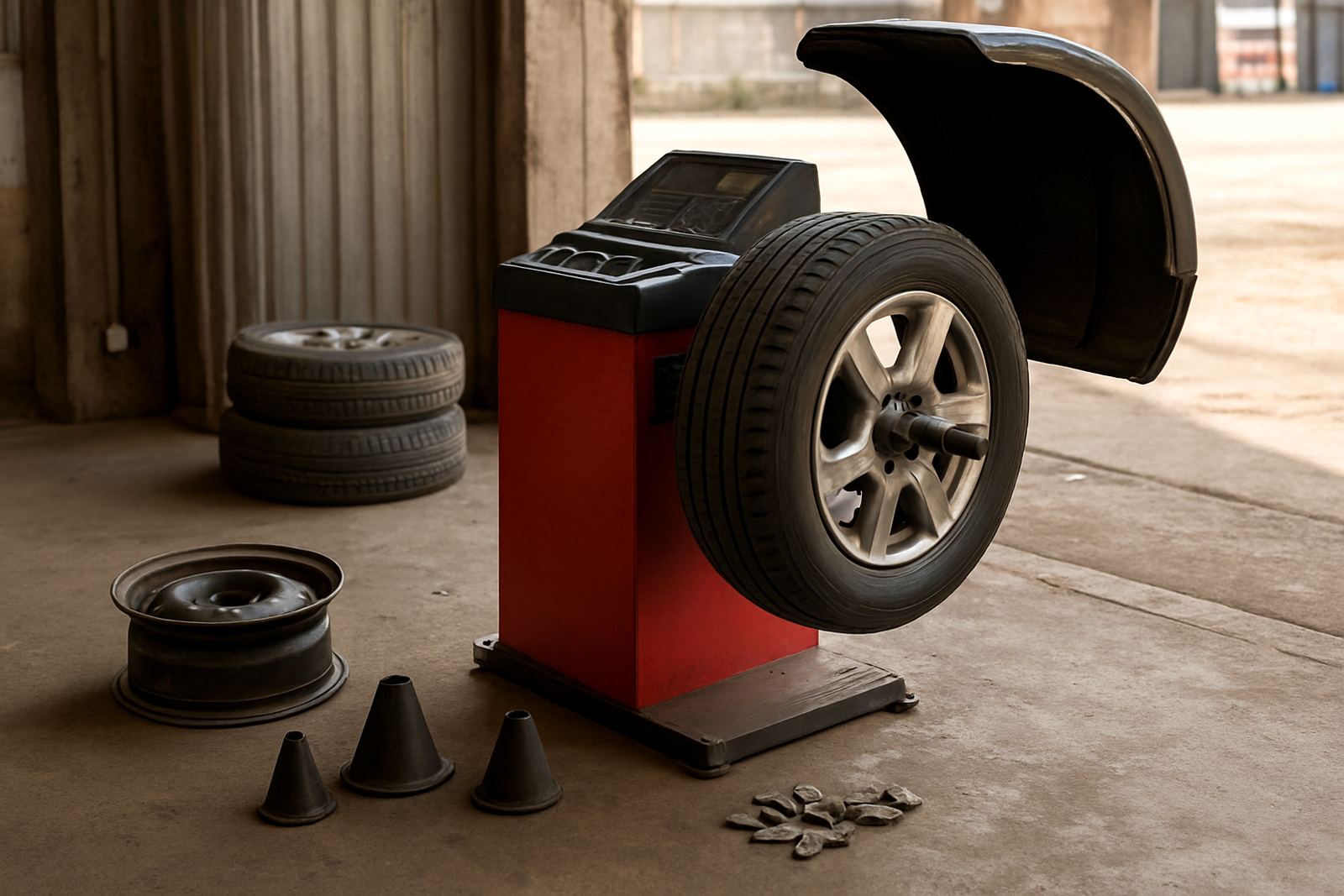
A wheel balancer checks where a wheel is heavier on one side and shows the operator where to place weights to correct it. On passenger cars, bakkies and vans, this matters after tyre fitting, puncture repairs, rim repairs or suspension work. For commercial tyre facilities, it is also a practical way to keep repeat jobs down and make handovers cleaner.
In South Africa, many workshops run balancing alongside tyre fitting, wheel alignment and suspension checks. That means the machine must handle regular use, dusty conditions and occasional power interruptions. If your site is in Durban, Jet Park, City Deep or Cape Town, you also need to consider humidity, floor space and how the unit will be moved during fit-out or later upgrades.
Wheel balancers are generally supplied as digital electronic units with a protective hood, measurement arm and different balancing programmes. Some are aimed at passenger vehicles only while others cope with light truck wheels and wider rims. The right choice depends on your daily vehicle mix and the size of the wheels you handle.
Sizes and configuration options to match your bay
Balancers come in bench-top and floor-standing formats. Most workshop units are floor-standing because they are easier to place beside a tyre changer and can take heavier use. Compact models suit smaller fitment centres while larger commercial units work better in fleet depots and high-volume tyre shops.
- Wheel diameter capacity: typically 10 to 30 inches for passenger and light commercial work
- Wheel width capacity: often 1.5 to 20 inches depending on the model
- Shaft diameter: common sizes include 40 mm and 36 mm adapters
- Max wheel weight: often 65 kg to 120 kg for general workshop use
- Balancing modes: static, dynamic and alloy-specific programmes
- Display type: LED or LCD readout with automatic data capture on some units
Some machines include automatic distance and diameter input, which saves time when your team is working through a queue of vehicles. Others are manual and suit operators who prefer simple controls and fewer electronics. If your workshop does fleet work or mixed vehicle types, it is worth checking whether the unit supports motorbike wheels, commercial van wheels or clip-on and stick-on weight options.
Where this equipment suits best in South Africa
Wheel balancers are a good fit for tyre outlets, fitment centres, fleet maintenance depots, municipal garages and motor service workshops. They also make sense for businesses handling rental fleets, delivery vehicles and company cars that need consistent road feel and low comeback rates. In busy nodes like Umbilo, Springfield Park and Paarden Eiland, a reliable balancer helps keep turn-around times under control.
For sites near the coast, corrosion resistance matters. Salt air can affect exposed fasteners, shafts and covers if the machine is not cleaned properly. In inland areas like City Deep and Jet Park, dust and workshop grit can build up around sensors and moving parts. Either way, the machine should be installed where staff can keep it dry, level and clear of traffic.
If you handle customer fleets, balancing is also useful for reducing tyre wear on vehicles that do long highway kilometres. That includes delivery bakkies, panel vans and service vehicles that travel between branches or client sites. The machine does not need a large footprint, but it should be placed where the operator can load wheels safely without carrying them too far.
Installation, power and workshop setup
Most wheel balancers run on standard 220 V single-phase power, which suits common South African workshop supplies. Some larger units may need a dedicated circuit. Before installation, check your socket position, floor level and whether the site has stable power during load-shedding. A small UPS or backup system can help protect electronics, but it should be matched to the machine draw.
- Allow a level concrete floor with enough space for wheel loading and weight placement
- Keep the unit close to your tyre changer to reduce handling time
- Use a clean dry area away from wash bays and compressed air moisture
- Check if the machine needs a compressed air line for certain clamps or accessories
- Confirm whether the model is suitable for 1-phase or 3-phase supply before ordering
Good setup saves time every day. If the balancer sits on uneven paving or next to vibration-heavy equipment, readings can be affected. A proper site check before import and delivery avoids delays and extra installation costs.
Care, servicing and keeping readings accurate
A wheel balancer gives the best results when the operator keeps the shaft clean, the cones in good order and the display free from dust. The clamps and adapters should be inspected for wear because even small damage can cause poor centring. On a busy site, it is wise to set a weekly cleaning routine and a monthly inspection for calibration checks.
Electronic balancers may need periodic recalibration, especially after transport or power interruptions. If the machine is used with dirty wheels or damaged rims, false readings can creep in and lead to customer comebacks. Train staff to remove old adhesive weight residue, centre the wheel properly and choose the correct mode for steel or alloy rims. A little care now avoids a lot of rework later.
For coastal workshops, a light anti-corrosion wipe on exposed metal parts helps during humid months. For inland workshops, keeping the area clear of brake dust and grinding residue is just as important. Service records should note calibration dates, parts replaced and any error codes so that faults can be traced quickly.
What to check before you order a wheel balancer
Before placing an order, look at the mix of wheels you will handle, the available floor space and the skill level of your team. The cheapest model is not always the best if you handle larger SUVs, fleet vans or alloy wheels every day. It is better to match the machine to the work than to force the work around the machine.
- Wheel size range and whether it covers your common tyre sizes
- Maximum wheel weight and rim width for commercial or fleet work
- Power supply at the site and any backup power arrangement
- Need for automatic input, digital display or basic manual controls
- Availability of cones, clamps, calibration weights and spare parts
- Import documents, delivery point and whether you need inland transport or site offloading
When shipping into South Africa, the paperwork should be ready before the machine lands. Correct tariff classification, commercial invoice details and packing lists help avoid delay at the port. If the machine is going to Durban, Johannesburg or Cape Town, plan for bonded storage or inland delivery as needed so the equipment arrives where it is needed, not stuck in the wrong terminal.
Key facts
| Machine type | Electronic wheel balancer for automotive workshop use |
|---|---|
| Power supply | 220 V single-phase, some models available in 3-phase |
| Wheel diameter range | Typically 10 to 30 inches |
| Wheel width range | Typically 1.5 to 20 inches |
| Max wheel weight | Commonly 65 kg to 120 kg |
| Typical use | Passenger vehicles, bakkies, vans and light commercial fleets |