What an industrial chiller does on site
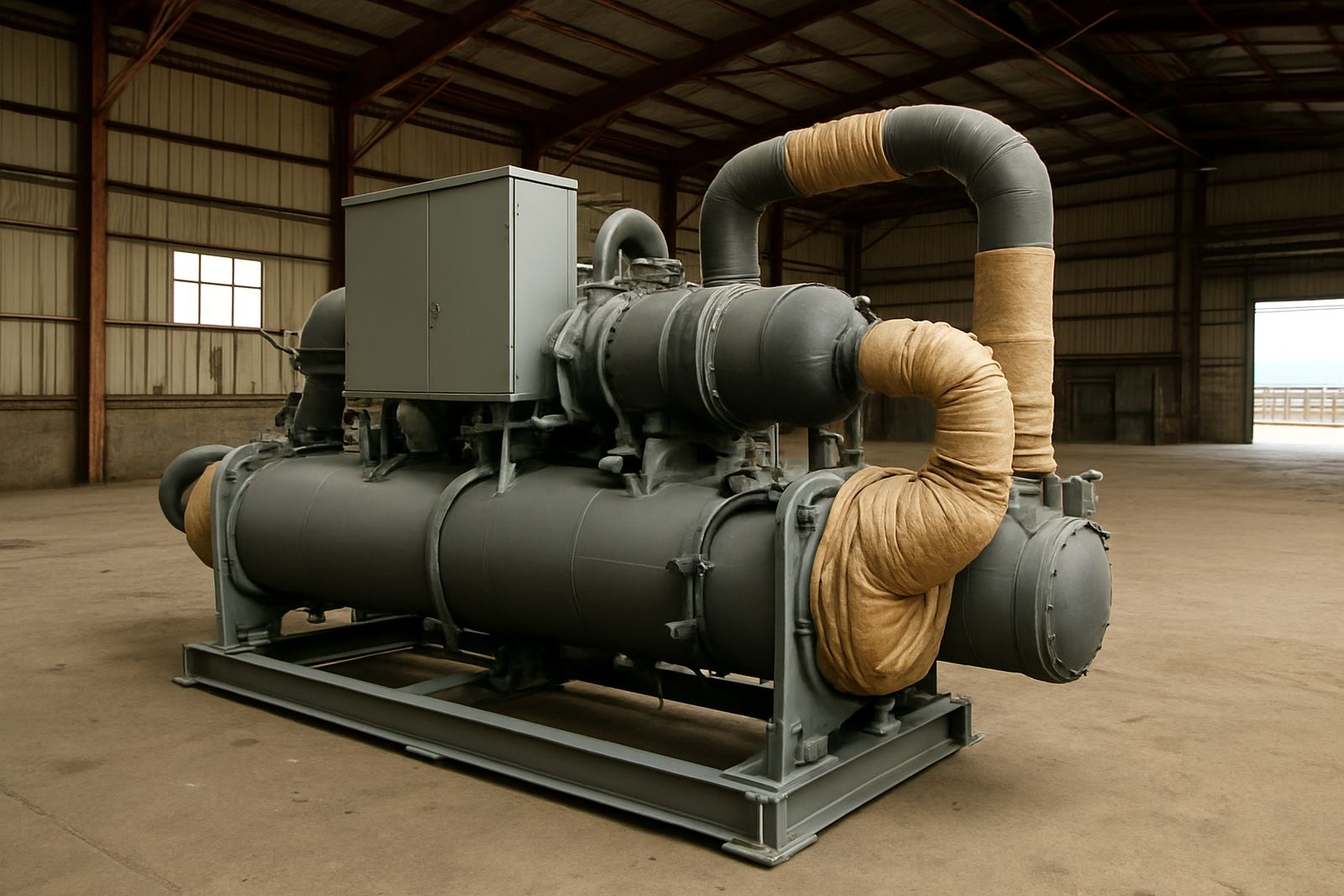
An industrial chiller removes heat from water or process fluid and sends it back to equipment at a controlled temperature. In food processing, plastics, packaging, dairy, chemicals and metal finishing, that steady temperature helps keep output consistent and reduces waste. Chillers are used where air cooling is not enough and where summer heat, coastal humidity or long production runs push equipment harder.
Most units use a closed water circuit with a compressor, evaporator, condenser and pumps. The chilled water then feeds moulds, jackets, heat exchangers or machine plates. On larger lines, a chiller may be linked to buffer tanks, variable flow pumps and temperature controls at each machine. If the unit is sized properly, operators get fewer stoppages and less product variation, which matters when orders are tight and load shedding is already testing the plant.
Common sizes, formats and options
Industrial chillers are supplied in a wide range of capacities. Small units may start around 5 kW to 20 kW for a single machine or test line, while medium systems often run from 30 kW to 150 kW. Large plants may need 200 kW, 500 kW or more, especially where several lines share one cooling package. The right choice depends on heat load, ambient temperature, water quality and whether the unit must run all day or only on demand.
- Air cooled chillers for sites with limited water supply or where tower maintenance is difficult
- Water cooled chillers for higher efficiency where cooling water and a condenser loop are available
- Packaged units for quick installation and smaller footprints
- Modular systems for staged growth and future line expansion
- Low temperature models for process cooling below standard chilled water ranges
- Variable speed options for plants with changing load through the shift
We also consider 50 Hz power, starter type, control panel layout and the need for spare fan motors, pumps or filters. In Durban and the coastal belt, corrosion protection and enclosed electrical cabinets are worth checking early.
Where an industrial chiller works best
These units suit factories and facilities that need reliable process cooling, not just comfort cooling. Typical users include injection moulding plants, bottling lines, cold process mixers, laser systems, bakery lines, breweries, pharmaceutical filling, hydraulic oil cooling and laboratories. In Gauteng, many buyers want units that can cope with dry heat, dust and long operating hours. In Durban and the port corridor, the challenge is often salt air, moisture and limited laydown space during offloading.
For sites in Umbilo, Springfield Park, City Deep or Paarden Eiland, access planning matters. We check gate height, pallet or skid dimensions, offloading gear and whether the unit must move into a plant through a narrow doorway or on a mezzanine. If the chiller will sit outdoors, the installation point needs drainage, clear airflow and protection from spray, sun and vandalism.
Installation needs, power supply and pipework
Before ordering, the buyer should confirm the electrical supply, water connections and space around the unit. Many chillers require three phase power at 380V to 400V, though smaller units can differ. Current draw, starting load and cable sizing must be matched to the panel and site supply. If the building is already under pressure from compressors or overhead cranes, a proper load check saves trouble later.
Pipework should be sized to suit the flow rate and total run length. Poor pipe sizing can cause pressure drop, low flow alarms and uneven cooling at the machine. On water cooled systems, the condenser water loop or cooling tower connection also needs to be planned. Where water quality is poor, filtration and treatment must be included. A chiller that is installed on a weak slab or in a hot enclosed room will struggle, so ventilation and service access must be allowed for from the start.
- Confirm electrical supply and breaker capacity
- Check water inlet, return and drain points
- Allow clear space for airflow and maintenance
- Match pipe sizes to design flow rates
- Plan for lifting, skidding or forklift access
Importing through Durban harbour and inland clearing
We handle chiller imports through Durban harbour and move the paperwork through clearing counters in Johannesburg and Cape Town where needed. That includes import planning, shipping coordination, customs clearing, tariff classification, port collection and inland transport. For heavier units, bonded storage or site offloading can be arranged if the plant is not ready on delivery day.
Industrial chillers often arrive with separate compressors, control panels, pumps or loose accessories. If the packing list is incomplete, customs delays are common, so document management must be tight. Our team checks invoices, serial numbers, weights and dimensions before the cargo lands. For cross-border projects into neighbouring countries, we also plan the route, the transit paperwork and any export documents required at the point of exit. That avoids last minute hold ups at the port or inland depot.
Servicing, upkeep and what to confirm before ordering
Most chiller trouble starts with neglected filters, dirty condenser coils, low water quality or a poor installation. Routine care should include cleaning strainers, checking refrigerant pressures, inspecting belts and fan motors, testing alarms and confirming that the water circuit is free of scale and sludge. In humid coastal areas, corrosion checks should be done more often, especially on fasteners, electrical terminals and exposed pipework.
Before you place an order, ask these practical questions:
- What cooling load in kW or tons is required at peak production?
- What leaving and return water temperature is needed?
- Will the unit run in Durban heat, Johannesburg altitude or both?
- Is the site air cooled, water cooled or tower ready?
- What are the footprint, lifting points and service clearances?
- Are spare parts and service access available locally?
If the chiller supports a critical line, it may be worth adding a standby pump, dual circuits or remote alarms. That gives the maintenance team time to react before product is lost and a shift is missed.
Key facts
| Product | Industrial chiller |
|---|---|
| Typical capacity range | 5 kW to 500 kW+ |
| Cooling type | Air cooled or water cooled |
| Power supply | Usually 380V to 400V, 3 phase, 50 Hz |
| Common applications | Process cooling, temperature control, hydraulic oil cooling, moulding, filling and packaging |
| Import support | Shipping coordination, customs clearing, port collection, inland transport and site offloading |