
What a tow tractor does on site
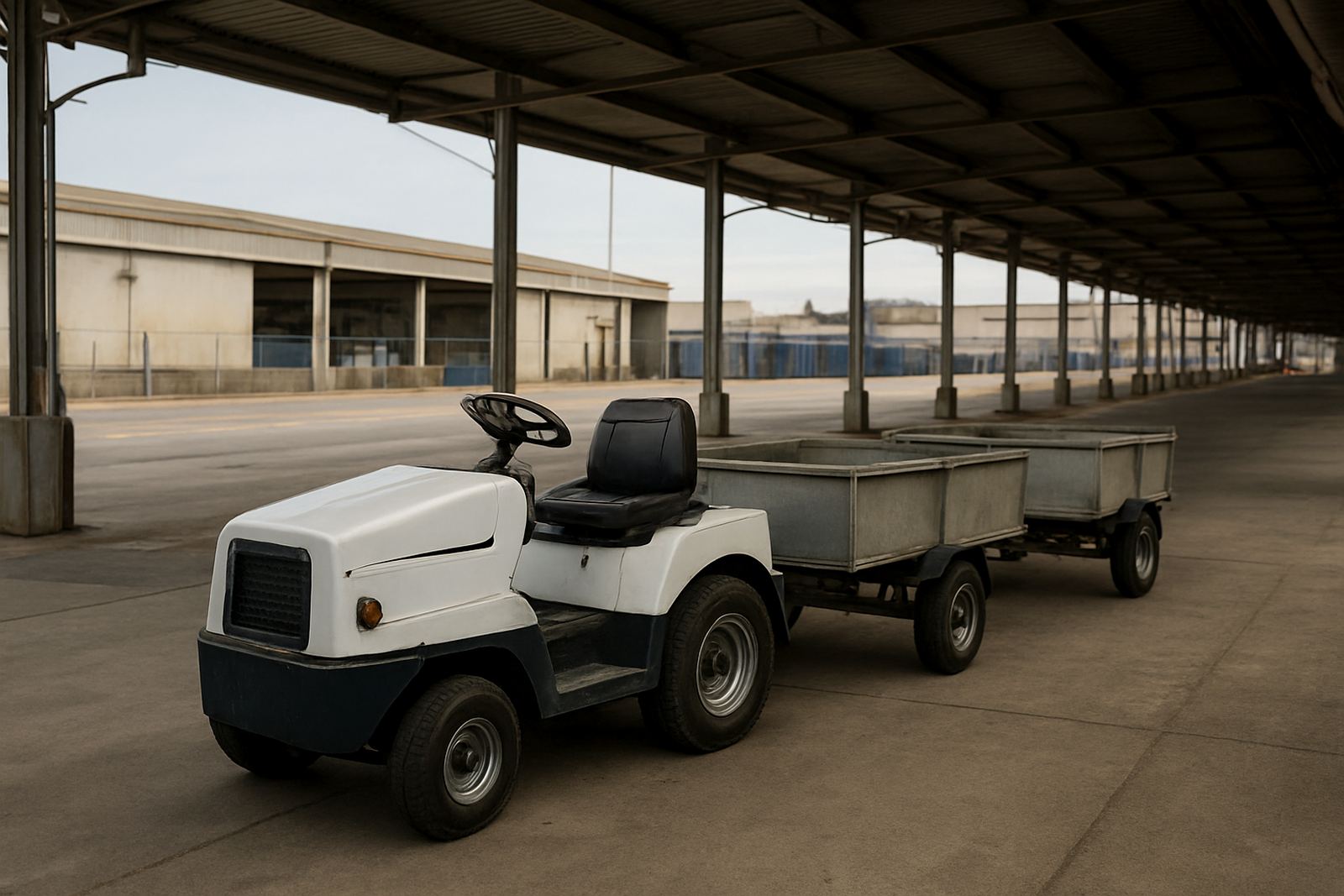
A tow tractor is a low speed industrial vehicle made to pull wheeled loads rather than carry them. In practice that means trailers in a factory yard, baggage trains at an airport, carts in a distribution centre, or service trolleys in a large logistics yard. The unit is built for controlled towing, short turning circles and regular stop start work, with the driver seated or standing depending on the model.
These units are selected when an ordinary pickup is not suited to the job, or when a site needs better control for repeated towing movements. They are common in warehouses, automotive plants, port support areas and airport style operations where the ground is level, the route is defined, and the duty cycle is known. For outdoor use in Durban or Richards Bay, corrosion resistance matters because coastal humidity and salt in the air can shorten service life if the wrong finish is chosen.
- Typical use: trailer movement, cart towing, baggage and freight handling
- Best for: flat hard standing, marked routes and regular shuttle work
- Not ideal for: rough terrain, steep gradients or loose gravel
Size and drive options for different towing duties
Tow tractor units are usually chosen by tow capacity, turning space and operating environment. Smaller electric units suit indoor yards and light freight handling, while heavier diesel or LPG powered units are used where longer shifts and outdoor work are expected. If the site has tight access at City Deep, Jet Park or Springfield Park, wheelbase and overall width become just as important as tow rating.
Common options range from compact units for 1 to 3 tonnes of tow load through to heavy duty yard tractors that can move far more when fitted with the correct hitch and braking arrangement. Some models are designed for seated operation, others for stand on or walk behind control. Cab protection, beacon lights, mirrors and reversing alarms can be added for busy sites with forklift traffic and pedestrians.
- Electric units: low noise, lower local emissions, suited to indoor or mixed use
- Diesel units: strong for outdoor duty and long shifts with less charging downtime
- LPG units: useful where quick refuelling is needed and ventilation is controlled
- Cabin choices: open, canopy, partial enclosure or full weather protection
Where tow tractors suit in South Africa
These machines suit operations where products, containers or service equipment are moved often but not over long road distances. In Durban harbour corridor operations, tow tractors are often used for internal movements, port support work and depot shuttling. In Johannesburg they suit freight hubs, vehicle yards and manufacturing plants. In Cape Town and Paarden Eiland, corrosion control and compact turning space often guide the order.
They are also useful in automotive assembly, fleet depots, airport support areas and large municipal or industrial yards. For businesses dealing with load-shedding, an electric unit may still be the right choice if charging is scheduled properly and the battery bank is sized to match the shift pattern. If operations run on weekends or after hours, it helps to check whether the machine must work in wet conditions, on slopes, or near loading docks with uneven surfaces.
- Yards and depots with repeated trailer movement
- Factories with carts, trolleys or component transfer points
- Airport style towing and ground support movement
- Fleet and automotive sites where movement is frequent and controlled
Power, charging and refuelling needs
Installation is straightforward compared with larger plant, but the power or fuel supply still needs proper planning. Electric tow tractors require a charging point, safe cable routing and enough downtime for the battery to recover between shifts. If the site uses single phase or three phase supply, the charger must match the available power and the charging area should be dry, ventilated and protected from dust.
For battery units, check the battery size, charger type and whether opportunity charging is practical during tea breaks or change of shift. Fuel powered units need a refuelling point, safe storage and site procedures that comply with local fire rules. If the tractor works near the coast, regular wash down and terminal checks are important to limit salt build up. Simple daily care usually prevents most nuisance failures.
- Confirm power supply before ordering an electric unit
- Allow space for charging or refuelling and safe vehicle access
- Check ground finish, kerbs, gradients and dock edges
- Plan for loading during outages if the site relies on generators
Care and servicing that keep it earning
A tow tractor is only useful when it is available, so service intervals should be set from the start. Daily checks should cover tyres, hitch wear, brakes, lights, warning alarms and battery condition or fuel leaks. Weekly checks can include steering play, wheel nuts, fluid levels and the condition of the tow coupling. On coastal sites, a quick rinse and dry down after use helps protect terminals, connectors and exposed metal parts.
Scheduled servicing should follow the operating hours, not just the calendar. A unit in a busy Durban yard will need attention sooner than one used a few times a week in a light duty store. Tyres should be matched to the floor finish, because a hard compound may last longer but can chatter on polished concrete. Keep a record of service dates, parts replaced and any tow incidents so the machine stays within safe working limits.
- Daily: visual inspection, tyre pressure, hitch and brake check
- Weekly: battery or fuel system check, lights and alarms test
- Planned servicing: oils, filters, brake wear and steering components
What to confirm before placing an order
Ordering the right tow tractor starts with the actual load, the route and the duty cycle. It is worth noting the maximum tow weight, average tow weight, gradient, turning width and floor condition before selecting a unit. If the machine will move airport style baggage trains, make sure the hitch height and coupling type match the trailer set. If the tractor must be imported into South Africa, paperwork, tariff classification, shipping and customs clearing should be lined up early to avoid port delays.
Machines Africa Hub supports import planning, shipping coordination, customs clearing, tariff classification, port collection, bonded storage, inland transport and document management. That helps when the unit is arriving through Durban and then moving inland to Johannesburg, or coming through Cape Town for delivery into the Western Cape. Give the team the make-up of the load, intended site, power source and any access restrictions so the machine can be matched properly and cleared without wasted time.
- Working load and tow capacity required
- Indoor or outdoor use, plus floor type and gradient
- Power source, charging time or fuel preference
- Coupling type, hitch height and trailer compatibility
- Delivery point, offloading method and site access notes
Supply and delivery through Durban, Johannesburg and Cape Town
Machines Africa Hub works from Umbilo in Durban with clearing counters in Johannesburg and Cape Town, which helps when tow tractors need to move through the harbour corridor and then on to inland sites. The team handles shipping, customs clearing, cargo insurance and inland transport for machinery moving into logistics yards, factories and fleet operations across South Africa. For time-sensitive projects, the branch and corridor structure makes it easier to keep track of documents, port timing and collection windows.
Whether the unit is going to a depot in Jet Park, a manufacturing site in Springfield Park, or a Cape Town operation in Paarden Eiland, the order should be checked against the site conditions before shipment leaves. That avoids the common problem of ordering a tractor with the wrong drawbar setup, wrong battery arrangement or too little clearance for the loading bay. Freight queries can be sent through our contact form.
- Durban, Umbilo and harbour corridor support
- Johannesburg clearing and inland movement coordination
- Cape Town and Paarden Eiland delivery support
Key facts
| Tow capacity | 1 to 30 tonnes depending on model and hitch setup |
|---|---|
| Power options | Electric, diesel or LPG |
| Operating speed | Low speed towing, usually site controlled |
| Turning type | Tight radius steering for yard and depot use |
| Tyre options | Solid, pneumatic or non-marking depending on floor surface |
| Typical applications | Trailers, carts, baggage trains, freight dollies and yard towing |