What a telehandler does on site
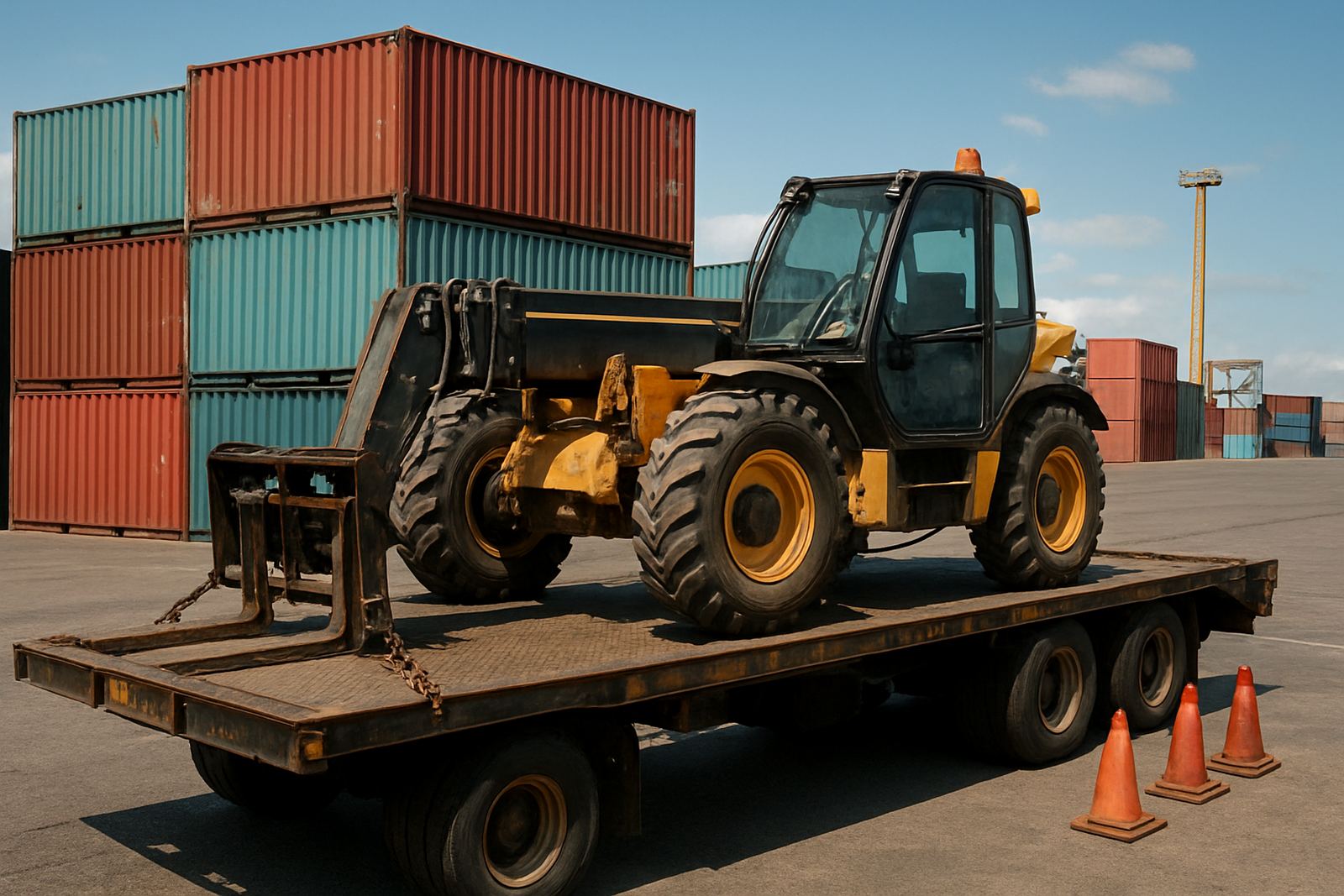
A telehandler, sometimes called a telescopic handler, is a diesel-powered lifting machine with a boom that extends forward and upward. It is used to pick, move and place palletised goods, bags, pipes, steel, timber and site materials where a forklift would fall short. The telescopic boom gives reach over obstacles and the larger tyres and chassis help on gravel, mud and uneven yard surfaces.
In practical terms, this machine suits projects where materials need to be moved into position without bringing in a crane for every lift. It is common on construction sites, farms, warehouses, bulk yards and portside operations. For Durban humidity and coastal conditions, buyers often look at sealed electrics, corrosion protection and proper washdown routines after work near salt air.
- Typical lift height: 6 m to 18 m
- Common lift capacity: 2 500 kg to 5 000 kg
- Typical travel speed: 20 km/h to 40 km/h
- Drive: 4x4 on most rough terrain models
Sizes, lift charts and attachment options
Telehandlers are chosen by reach first, then capacity. A 2.5 tonne unit may lift that load close in, but capacity drops as the boom extends. That is why the load chart matters more than the headline number. For example, a machine rated at 3 500 kg may only handle a fraction of that at full reach, so the actual job profile needs to be matched to the chart, not guess work.
Options include fixed boom or rotating turret units, different tyre patterns, and attachments such as pallet forks, buckets, lifting jibs, sweeper buckets and work platforms. If you are loading on a narrow site in Springfield Park or stacking in a warehouse yard at City Deep, the turning circle and overall width can matter just as much as lift height.
- Wheelbase and overall width for access gates and container offloading
- Cab height for low sheds and loading bays
- Fork carriage type and quick-attach setup
- Tyres suited to hard yard, turf or soft ground
Where telehandlers are a good fit
Telehandlers suit sites where the ground is not perfect and the work changes from day to day. They are used in logistics depots, freight yards, agricultural stores, building sites, municipal projects and maintenance teams that need one machine to do several jobs. In the Durban harbour corridor they are often deployed for bag handling, ship-related cargo work and moving materials between storage points.
For fleet managers, the appeal is that one machine can replace separate lifting tools for many tasks. It can reduce manual handling, cut turnaround times and help keep materials off the ground in wet weather. If the job is in Paarden Eiland or Jet Park, access rules, delivery hours and loading bay height should be checked before shipment.
- Construction and civil works
- Warehousing and bulk storage
- Agri handling and feed yards
- Fleet depots and service yards
- Port support and cargo staging
Power, fuel and site setup requirements
Most telehandlers used in South Africa run on diesel and do not need a fixed electrical installation. What they do need is a safe fuelling point, enough yard space for manoeuvring, and a surface that can carry the machine weight. On soft ground, mud or fresh fill, axle loading and tyre sink must be checked. If the site is near the coast, regular cleaning is important because salt and moisture will attack hoses, pins and electrical connectors quicker than inland sites.
Before delivery, the receiving site should confirm access width, overhead clearance, turning radius and ground bearing capacity. If the machine will be used in a shed or under shade netting, check the height of the boom when folded and the exhaust position. Some sites also need a fire plan and a designated refuelling area with spill control.
- Diesel fuel supply and safe storage point
- Level loading and unloading area
- Operator training and lift plan for each task
- Space for maintenance, greasing and tyre checks
Importing, clearing and inland delivery
We handle telehandler imports through Durban and move them inland to Johannesburg, Cape Town and other South African destinations. That includes import planning, shipping coordination, customs clearing, tariff classification, port collection, bonded storage where needed, inland transport and document management. For urgent fleet replacements, we also assist with site offloading so the machine arrives ready for handover.
Trade paperwork needs to be right first time. Serial numbers, year of manufacture, model identification, invoice values and shipping marks all need to line up, or the shipment can be delayed at port. Our clearing team in Durban, Johannesburg and Cape Town manages the process across the harbour corridor and the inland corridors that feed City Deep and the western Cape distribution zones.
- Pre-shipment document check
- Customs tariff classification
- Port collection and cargo insurance
- Inland transport with route planning
Care, servicing and ordering checklist
A telehandler gives good service when the boom, hydraulics, tyres and pins are checked on schedule. Grease points should not be skipped, and boom wear pads need inspection because slack in the telescoping section quickly becomes a safety issue. Hydraulic hoses should be kept clean, and machines working in sandy or coastal conditions may need more frequent filter changes and corrosion checks. Load-shedding does not affect the machine itself, but it can affect fuel pumps, workshops and storage lighting, so backup planning helps.
When ordering, buyers should decide on the heaviest load, the highest lift point, the working surface and the attachments needed on day one. It is also worth checking service access, local spare parts support and operator skill levels. A machine sized for one job but under-specced for another can cost more in delays than in purchase price.
- Maximum lift height and reach needed
- Load at full extension, not only close-in capacity
- Jobsite ground conditions and access gates
- Attachment list and spare tyre or service kit needs
Key facts
| Product type | Telehandler / telescopic handler |
|---|---|
| Common lift capacity | 2 500 kg to 5 000 kg |
| Typical lift height | 6 m to 18 m |
| Drive | 4x4 rough terrain, diesel |
| Typical use | Material handling, stacking, loading and site placement |
| Import support | Shipping, clearing, port collection and inland delivery |