
What a diesel compressor does on site
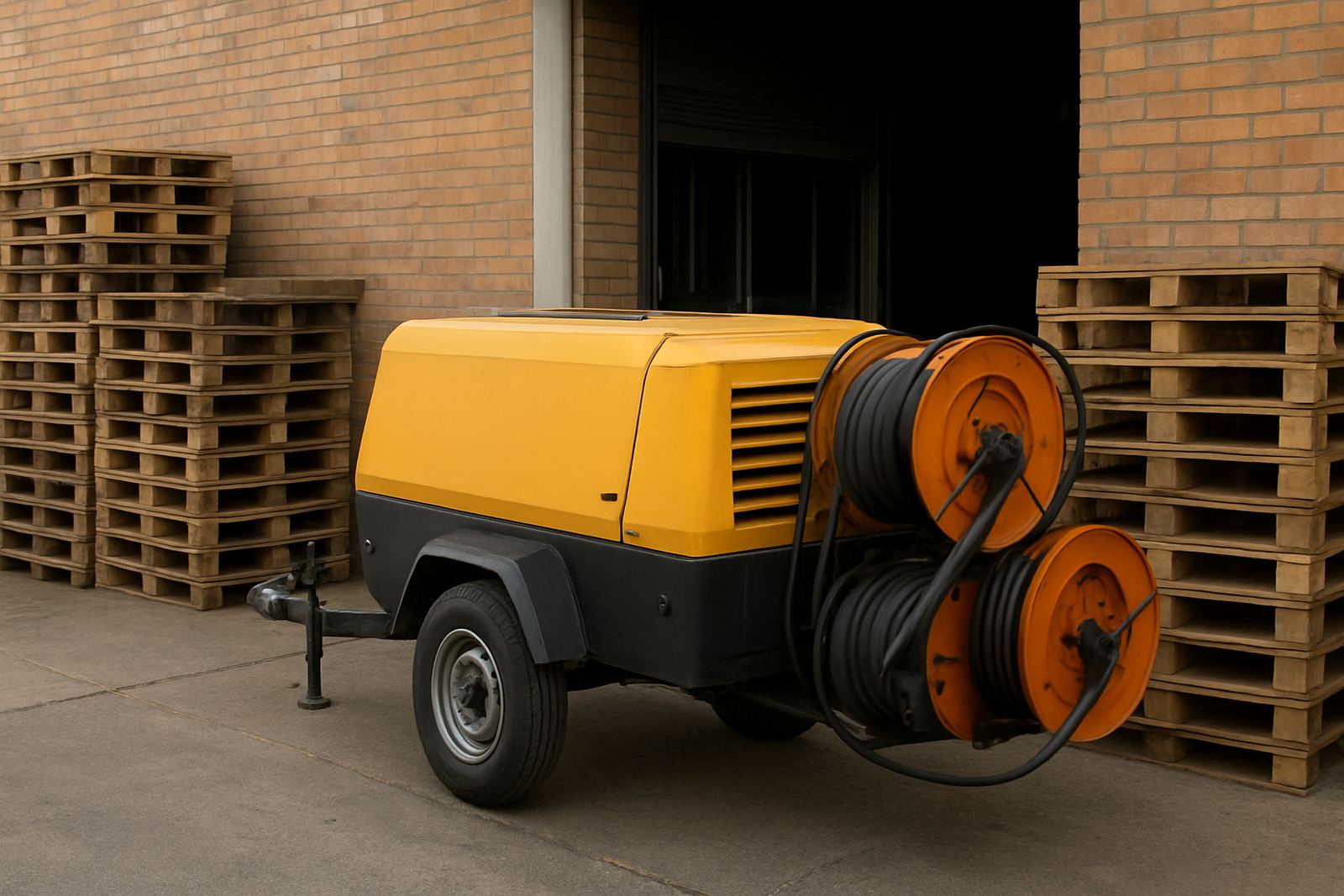
A diesel compressor is a self-powered air unit that creates compressed air for tools, blasting pots, drill rigs and general site use. Unlike electric units, it does not depend on a stable mains supply, which makes it practical for remote work, load-shedding periods and temporary sites where power is not yet installed.
In South Africa these units are often used on construction sites, mines, workshops, quarry operations and road maintenance projects. They also suit municipal crews and contractors working along the Durban harbour corridor, inland industrial nodes, or out on farms where a generator would be another point of failure. For many buyers the real value is mobility and uptime, not just pressure output.
We handle diesel compressor imports for new equipment and replacement units. That includes shipping advice, tariff classification, customs clearing, port collection and inland transport to your site or depot.
Common sizes and build options
Diesel compressor units are usually selected by free air delivery, pressure rating and whether the machine is towable or skid mounted. Small portable units may suit light drilling or tyre work, while larger road tow models are used for blasting, sand cleaning and heavier industrial tasks. A buyer should match the machine to the actual tool demand, not only the cheapest listing.
Typical options include single axle tow units, skid units for fixed mounting, canopy enclosed machines for outdoor use and heavy duty units built for harsher dust and vibration. In coastal areas such as Durban, Paarden Eiland and other salty environments, a coated frame and protected electrics help reduce early wear. For inland fleet yards and workshops, access for fuelling and servicing is often the deciding factor.
- Portable units: about 100 to 250 cfm for light to medium air tasks
- Mid range units: about 250 to 500 cfm for drilling, blasting support and multiple tools
- Large site units: 500 cfm and above for heavy duty continuous use
- Pressure ranges: commonly 7, 10, 12 or 14 bar depending on application
Where diesel compressors suit best
These machines suit sites where compressed air is needed away from permanent infrastructure. That includes civil works in Durban, warehouse fit outs in Springfield Park, vehicle depots in Jet Park, and cargo handling areas around City Deep and the harbour. They are also common on mining support sites and drilling contractors moving between jobs.
For blasting work, the compressor must deliver stable air over the full shift without dropping off as the tank cycles. For drilling, the operator needs enough pressure and flow to keep the tool performing properly. For general site air, units are often used for cleaning, maintenance, tyre inflation and equipment testing.
- Construction and roadworks
- Mining support and exploration drilling
- Fleet yards and maintenance depots
- Warehouses, workshops and plant shutdowns
Installation, fuel and site readiness
Most diesel compressors are delivered ready to place and operate, but the site still needs basic preparation. You will need level ground, safe access for the truck or trailer, a clear fuelling point and enough space for ventilation and servicing. If the unit will run near other equipment, plan for hose routes, noise control and safe separation from pedestrian movement.
These machines do not need gas connection, but they do need clean diesel, routine checks and correct start-up procedures. If the unit is towable, check the brake setup, hitch type and lighting requirements before dispatch. For projects near ports or busy municipal areas, site offloading should be timed with the delivery permit and local access rules. It helps to have a person on site who can receive the load, because delays at the gate can become expensive very quickly.
We can arrange inland transport from Durban to Johannesburg, Cape Town or other centres, and we can support bonded storage where a client is waiting on a permit or project release.
Care, servicing and working life
A diesel compressor will last longer if it is serviced on time and kept clean. The main items are engine oil, air filters, fuel filters, oil separators and cooling systems. Dust, vibration and coastal humidity all shorten service life if the machine is left out in the open. In Durban especially, units should be parked under cover when not in use and checked for corrosion around fasteners and panels.
Operators should watch for pressure loss, excess smoke, overheating, water in the fuel and unusual vibration. Hoses and couplings also need inspection because air leaks waste fuel and put extra strain on the machine. If the compressor is used daily, a proper logbook helps track hours, services and any fault that needs follow up. A small problem caught early is much cheaper than a full shutdown.
- Change filters at the recommended hours
- Drain condensate where applicable
- Keep the cooling area clear of dust and rags
- Check tyres, brakes and lights on towable units
What to confirm before you order
Before ordering, confirm the air demand in cfm or l/s, the pressure required, the number of tools running at the same time and whether the unit will be used all day or only in short bursts. Also confirm if you need a towable machine, a skid unit or a fixed frame. These choices affect shipping dimensions, offloading and customs treatment.
We also ask clients to confirm the fuel type, engine power, operating weight, noise limits, and whether any accessories must travel with the machine. If the compressor is going into a mine, harbour zone or controlled worksite, the paperwork may need extra detail. Tariff classification must match the machine correctly, otherwise clearance can stall at the port or at the inland clearing counter.
Our team at Machines Africa Hub handles the practical side from Umbilo, Durban, with clearing support in Johannesburg and Cape Town. Sibusiso Ntuli heads the operation, with support from Tumisang Mahlaba, Retief Labuschagne, Nomsa Dlamini, Luthando Mchunu and Fatima Cassim. We keep the paperwork tight so the unit arrives ready for the job, not sitting in storage waiting for a missing document.
Key facts
| Air delivery | 100 to 1 000+ cfm depending on model |
|---|---|
| Working pressure | 7 to 14 bar common, higher on selected units |
| Power source | Diesel engine, no mains power required |
| Configuration | Portable towable, skid mounted or enclosed canopy |
| Typical use | Blasting, drilling, cleaning and site air supply |
| Import handling | Shipping coordination, customs clearing, port collection and inland transport |