
What a fuel tanker is and how it is used
A fuel tanker is a road or site service unit used to transport liquid fuels such as diesel, petrol, paraffin or aviation-related products where permitted by law. These units are built with compartmented tanks, baffled interiors and pumping gear so product can be moved safely, measured accurately and discharged at a depot, mine site, workshop or fleet yard.
In South Africa, the truck and tank combination is usually selected around the product being carried, the volume required and the route. For coastal moves into Durban, Richards Bay or Cape Town, corrosion protection matters because humidity and salt air can shorten the life of fittings, valves and brackets if they are left untreated.
Sizes, builds and tanker options we handle
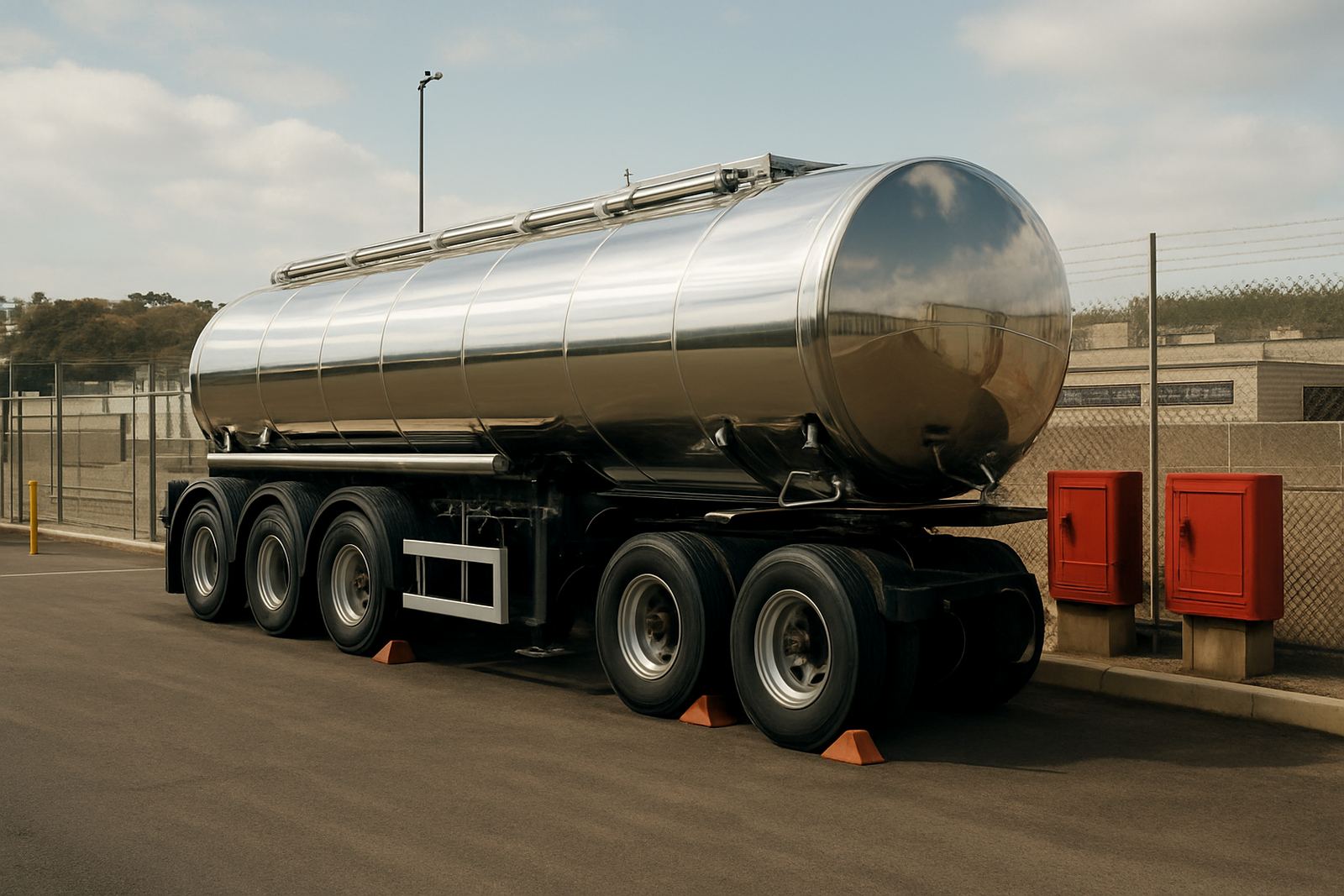
Fuel tanker units vary from compact rigid trucks for local deliveries to larger articulated combinations for higher-volume distribution. The tank body may be round or oval, single-compartment or multi-compartment, and fitted with pumps, hose reels, flow metres and metered discharge points. Some units are fitted for gravity discharge, while others use powered transfer pumps for faster offloading at fuel depots and fleet yards.
- Typical capacities: 5 000 litres, 10 000 litres, 18 000 litres, 26 000 litres and larger custom builds
- Common materials: mild steel, aluminium or coated steel for specific product and route needs
- Options: fixed pump set, hose cabinet, metre system, vapour recovery fittings, manholes, fire extinguisher mounts and wheel chocks
- Axle and chassis setup: rigid, interlinked trailer or semi-trailer depending on road limits and site access
When clients order a tanker for cross-border or inland use, we look at tare weight, gross vehicle mass, axle loading and the intended road network. That helps avoid trouble at weighbridges and keeps the unit suitable for the route, not just the loading bay.
Where a fuel tanker suits best
Fuel tankers are used by logistics operators, fleet managers, agricultural suppliers, construction teams, mines and automotive businesses that run bulk fuel on site. They are also suited to depots supplying generators during load-shedding, especially where businesses need reliable diesel movement to keep plant and backup power running.
For Durban harbour corridor imports, a tanker often needs to move from port to a depot in Umbilo, Springfield Park or inland to Jet Park and City Deep. In Cape Town, a discharge or storage point in Paarden Eiland must often be checked for access, turning space and municipal or fire requirements before delivery is booked.
- Fleet refuelling yards and transport depots
- Mining sites and remote service points
- Construction projects with generator fuel demand
- Automotive service operations with bulk diesel storage
- Cross-border fuel logistics where permits and route checks apply
Power, fittings and site requirements
Fuel tanker units do not need fixed site power to move product, but the operating setup may need battery supply, a driven pump, or a PTO-linked pumping system depending on the build. If the tanker is meant to offload into a fixed tank, the receiving site should have the correct hose connection, earth bonding, and clear access for the truck to stand level. Uneven ground can cause problems with discharge rates and reading accuracy.
Sites that handle flammable liquids should have basic safety controls in place, including signage, fire equipment and spill control materials. For urban deliveries, local access rules matter too. Low bridges, narrow streets, steep driveways and road closures can all affect whether a unit can get in and out without delay.
- Check pump type and flow rate before ordering
- Confirm hose length, reel position and coupling size
- Allow space for turning, offloading and emergency access
- Make sure the receiving tank is compatible with the product and fittings
Import clearing, shipping and inland movement
Machines Africa Hub coordinates fuel tanker shipments from export collection through to clearing and inland delivery. That includes shipping coordination, customs clearing, tariff classification, port collection and document handling. For tanker units arriving through Durban, we can arrange movement into Johannesburg or Cape Town through the appropriate inland channels, with route planning that takes axle limits and road conditions into account.
Because fuel tankers are sensitive cargo assets, paperwork must be correct before release. Import values, descriptions, serial numbers, dimensions and any hazardous-related details need to match the documents. Our team in Durban, Johannesburg and Cape Town works on the import side as well as the inland side, so clients are not left chasing separate people for port release and road delivery.
We also assist with cargo insurance and bonded storage where timing or inspection is needed. If a site cannot receive immediately, that gives the client some breathing room without rushing a delivery into the wrong yard.
Care, servicing and what to inspect before ordering
A fuel tanker should be checked often, especially if it works near the coast or on long-distance routes. Salt air, vibration and product residue can wear hoses, seals, valves and couplings over time. Regular wash-downs, leak checks and inspections keep the unit compliant and reduce stoppages during deliveries. If the tanker is used for diesel in humid conditions, condensation inside the tank must also be watched because water contamination can spoil product quality.
Before you place an order, confirm the actual use of the tanker and where it will operate. A unit that suits city delivery work may not be suitable for rough site access or cross-border roads. If the road network includes areas with tight municipal rules or limited after-hours access, the delivery schedule must be planned with that in mind.
- Tank capacity in litres and number of compartments
- Product type to be carried and any compatibility limits
- Pump, metre and hose specification
- Overall length, height, axle load and turning circle
- Registration, permits and hazardous handling requirements
- Delivery point access, offloading surface and operating hours
Fuel tanker specs and order details to send us
To quote and plan a fuel tanker movement properly, we need enough detail to match the unit to the job and the route. If the build is imported, the dimensions and weight should be supplied early so port collection and inland transport can be arranged without delays at the clearing stage.
Send the details below and we will advise on shipping, customs, route planning and delivery timing from our Durban base or through our clearing counters in Johannesburg and Cape Town. Contact form
- Fuel type to be handled
- Required capacity in litres
- Rigid, trailer or semi-trailer preference
- Pump, metre, hose and valve needs
- Site address and delivery access details
- Any special compliance or storage requirement
For businesses in Durban, Umbilo, Springfield Park, Jet Park, City Deep or Paarden Eiland, we can coordinate the move with the practical checks that matter most: route, paperwork, access and safe offloading.
Key facts
| Product type | Fuel tanker for liquid fuel transport and site distribution |
|---|---|
| Typical capacities | 5 000 litres to 26 000 litres and larger by arrangement |
| Build options | Rigid truck, trailer or semi-trailer, single or multi-compartment |
| Materials | Mild steel, aluminium or coated steel depending on use |
| Common fittings | Pump, metre, hose reel, valves, manholes, coupling points |
| Service areas | Durban, Umbilo, Springfield Park, Jet Park, City Deep and Paarden Eiland |