
What a reefer trailer does in cold chain work
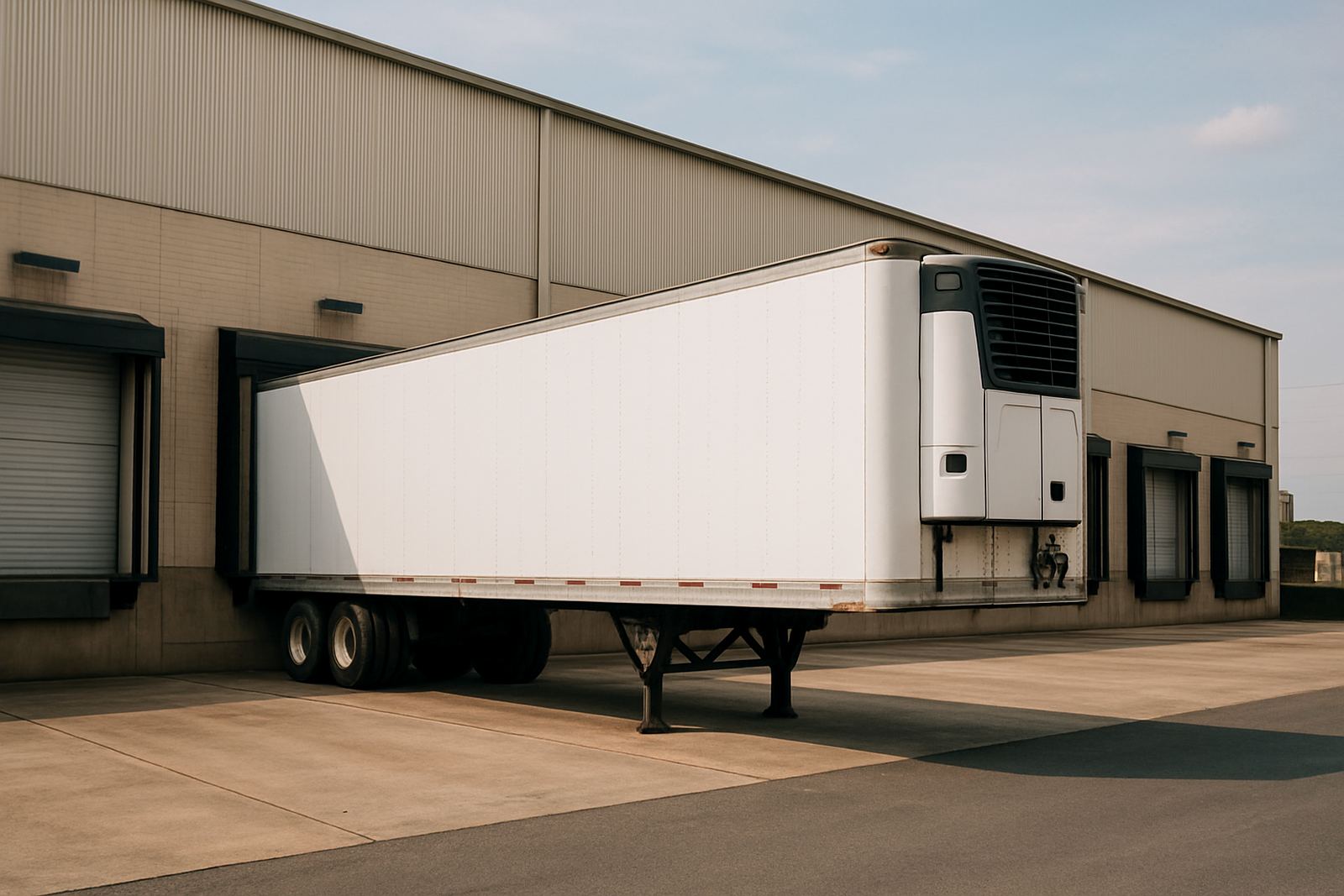
A reefer trailer is a temperature controlled trailer used to move chilled or frozen goods where the load must stay within a set range from dispatch to delivery. In South African operations that can mean fresh produce from Durban to Gauteng, dairy to Cape Town, frozen protein to inland depots, or pharmaceutical stock that must stay within strict temperature limits. The trailer has insulated panels, a refrigeration unit, a temperature monitoring system and a sealed cargo space suited to regulated goods.
These trailers are used by fleet operators, distributors and contract logistics firms that cannot afford temperature swings, moisture damage or delayed handover at port. In humid coastal conditions, and in summer heat around Durban, the unit and seals must be in good condition from day one.
- Typical use: chilled food at 0 to 5 C, frozen goods at minus 18 C, and controlled pharma loads where the spec calls for tighter monitoring.
- Common body lengths: 7.2 m, 8.5 m, 10.0 m and 12.2 m depending on axles and payload.
- Body width is usually around 2.4 m, with internal height from about 2.5 m to 2.8 m depending on floor and roof build.
Sizes, axle sets and trailer build options
Ordering the right reefer trailer starts with payload, route and load profile. A bakery distributor doing city drops has different needs from a pharma line-haul operator moving sealed pallets between Durban and Johannesburg. We check axle count, floor rating, door style and insulation thickness before the trailer is shipped. That avoids buying a unit that is too light for a heavy pallet run or too large for narrow site access.
Options normally include single or multi-temp compartments, side doors, rear roller shutters, alloy or insulated rear doors, meat rails, pallet stops and forklift rated floors. If the trailer will work in coastal areas like Umbilo, Paarden Eiland or Durban harbour, corrosion protection matters too. Road spray and salt air can shorten service life if fittings are not specified correctly.
- Axles: 2-axle and 3-axle configurations are most common.
- Floor type: flat insulated floor, T-floor for air circulation, or heavy duty pallet floor.
- Load security: load bars, e-track points, and non-slip interior lining.
Where reefer trailers suit South African operators
Reefer trailers suit food processors, wholesalers, meat distributors, flower exporters, supermarket supply chains and pharmaceutical contractors. They also work well for cross border loads into neighbouring states where long transit times and border waiting periods can break the cold chain. For customers moving between Durban harbour corridor depots and inland centres like Jet Park or City Deep, the trailer has to hold temperature even when there is idle time during collections or checks.
We often see these units ordered for fleet expansion, seasonal demand or replacement of older trailers that have rising fuel burn and poor insulation. If your business runs around load-shedding or irregular depot power, the trailer must be able to recover temperature quickly after loading and unloading. That is especially important for perishable cargo and small pharma consignment lots.
- Food distribution: meat, dairy, fish, frozen vegetables, baked goods and fresh produce.
- Pharma: clinical stock, refrigerated medicines and temperature controlled consumables.
- Industrial: chemicals or specialty materials that require stable ambient or cool transport.
Power, refrigeration and site setup requirements
The refrigeration unit may be powered by diesel, electric standby or a combination, depending on route and operating pattern. For dockside work and overnight yard storage, power access matters because the trailer may need to hold temperature while parked at a depot or bonded store. If the unit is used with temperature loggers, telematics or remote monitoring, you also need clean wiring and reliable battery support.
Installation and commissioning should be planned before the trailer lands. We coordinate delivery, port collection, inland transport and site offloading so the unit arrives where the operator can inspect it, test doors and confirm the set point. If the trailer is going into a yard with limited space, check turning radius and height clearance. In some municipal areas, access hours and heavy vehicle rules need to be followed carefully.
- Check if you need a standby power connection at the depot.
- Confirm the unit’s fuel tank size and expected run time per load cycle.
- Make sure the trailer has calibration records for temperature monitoring if required by your customer.
Care and servicing that keeps the cold chain steady
Reefer trailers need planned servicing, not just repairs after a failure. Door seals, insulation, condensers, evaporators, bearings, tyres and brake components should be checked on schedule. If the trailer works in warm coastal air or on dusty inland roads, filters and fins can clog faster. That makes the unit work harder and can lead to temperature drift.
We recommend keeping a service log with dates, temperatures, repairs and cleaning cycles. This helps during client audits and makes it easier to prove that the cargo was handled correctly. A clean trailer is also easier to clear when the load is inspected at port or during inland transfer.
- Washdown: use approved cleaning methods that do not damage seals or wiring.
- Record keeping: keep service notes, calibration dates and fault history together.
- Repairs: fix door damage, floor cracks and refrigeration faults early, not after the next load.
What to check before you order a reefer trailer
Before placing an order, check the cargo type, route length, temperature band, payload weight and loading method. A trailer moving palletised frozen food has different needs from a unit carrying small pharma cartons. If you order only on price, you can end up with the wrong floor, poor insulation or too little capacity for the route.
We help clients compare import documents, shipping schedules and customs requirements before the unit lands in South Africa. That makes the transaction cleaner and reduces delays at the port. It also helps with tariff classification and any documents needed for bonded storage, inland transport or final site delivery.
- Confirm cargo weight and whether the trailer needs a reinforced floor.
- Check door layout for loading docks, fork access and multi-drop routes.
- Ask for the refrigeration unit model, service history and spare parts availability.
- Confirm the delivery point, especially if the site has access limits or offloading restrictions.