What a water bowser does on site
A water bowser is used to move and apply water where the job is too far from a tap, hydrant or permanent line. On construction sites it helps with dust suppression on gravel roads, earthworks and haul routes. In mining support it is used for road watering, compaction, washdown and basic fire response. Municipal fleets use it for street cleaning, open spaces, temporary water supply and emergency support during interruptions.
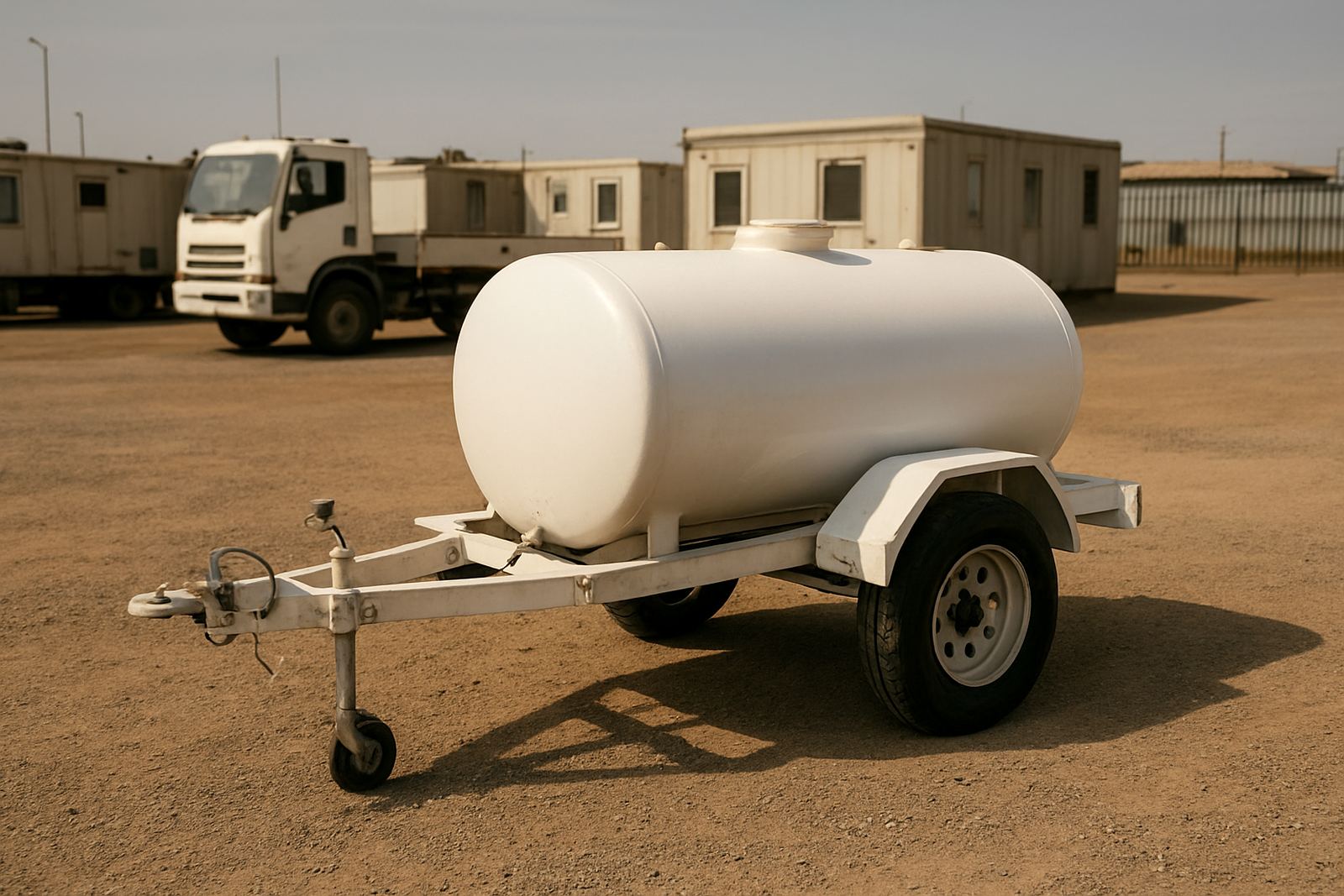
Most units are built around a steel or heavy duty tank with baffles inside to reduce surge when braking or turning. The water is normally discharged through a rear spray bar, side nozzles, a hose reel or a front cannon, depending on the build. For South African operations, that matters because rough roads, heat and long operating days put extra strain on valves, pumps and chassis mounts.
Common sizes, tank options and fittings
Water bowsers are imported in a range of sizes so the unit can match the vehicle class and the daily water demand. Small contractor units may start at 1 000 to 3 000 litres, while heavier site and municipal units often range from 5 000 to 20 000 litres. Larger roadgoing or trailer-mounted units can be specified beyond that, but they must be checked against axle ratings, braking and local road rules.
- Tank sizes from 1 000 to 20 000 litres and above
- Carbon steel or stainless steel tank options, depending on water quality and duty cycle
- Manual or hydraulic spray valves
- Rear spray bars, side nozzles, hose reels and top fill points
- Optional pumps for transfer, spraying or high volume discharge
- Level gauges, manways, drain points and anti-surge baffles
If the unit is for coastal use in Durban, Port Elizabeth or Cape Town, ask for corrosion protection on the tank, frame and brackets. Humid air and salt exposure can shorten the life of untreated fittings pretty quickly.
Where a water bowser suits best
These units suit projects where water must be moved quickly, but not necessarily pumped over long distances. Construction companies use them for road building, quarry work, concrete support and dust control. Mining operations use them on access roads, stockpile areas and drilling support. Municipal fleets use them for cleanup after pipe repairs, temporary supply in dry areas and service work during load shedding when fixed pumping is disrupted.
They also suit fleet operators that need a flexible asset rather than a fixed system. A bowser can be parked, towed or truck-mounted depending on the application, and that makes it useful for contractors moving between sites in Gauteng, KZN, the Free State and along the N2 and N3 logistics routes. If you need one unit to work across several depots, a bowser is often more practical than setting up a permanent tank.
- Construction and civils
- Mining support and haul road watering
- Municipal works and emergency response
- Plant and yard washdown
- Temporary water supply on remote sites
Power, pumps and installation points
Water bowsers do not all need the same power setup. Some are gravity-fed and fitted with simple discharge valves, while others use a petrol, diesel or PTO-driven pump. For larger units, the pump selection must suit the required flow rate, suction lift and spray pressure. If the bowser will be used in a municipal depot or on a fixed site, check whether there is a vehicle-mounted pump or a separate engine-driven unit needed for the task.
Installation is normally straightforward, but the mounting base, drawbar, axle set and braking system must be matched to the towing vehicle or truck chassis. We also check access for top loading, low-level filling, drain points and hose handling. In some areas, especially around Durban harbour corridor and inland municipal depots, space for turning and offloading is tight, so dimensions matter as much as tank capacity.
- Confirm power source: gravity, PTO, diesel engine or petrol engine
- Check hose size, pump duty cycle and discharge pressure
- Match axle load, braking and tow capacity to the carrier vehicle
- Allow space for filling, maintenance access and site offloading
Care, servicing and daily checks
Routine care keeps a bowser working and avoids downtime. Tanks should be flushed if water is dirty, treated or likely to leave sediment. Pumps need oil checks, seal inspection and clean strainers. Spray bars and valves should be cleared of grit after use, especially on sites with clay, quarry dust or corrosive water. In coastal conditions, wash down the frame and fittings often to reduce rust.
On a daily basis, operators should check for leaks, loose brackets, tyre pressure, lighting, braking and the level gauge. If the unit is used on public roads, reflectors, lights and roadworthy items need to be in order before movement. A small fault can become a bigger issue after a few rough runs, and that means lost water delivery and a delayed shift.
- Flush tank and lines regularly
- Grease moving parts and inspect pump seals
- Check tyres, lights, hoses and clamps before departure
- Drain standing water if the unit will sit unused for long periods
What to check before you order
Before ordering, it helps to have a clear use case and the measurements from the carrier vehicle or trailer frame. We look at tank size, water type, flow rate, road use, site conditions and whether the unit must be imported as a complete build or as a chassis plus tank package. If the equipment will enter South Africa through Durban, clearance, port collection and inland transport should be planned early so there are no demurrage surprises.
Also check whether the buyer needs bonded storage, site offloading, insurance cover and document control for the shipment. For fleet managers, it is worth confirming the service schedule and spare parts access before shipment lands. A unit that is perfect on paper can still be wrong if the fill point is awkward or the spray output is too low for dust control.
- Required capacity in litres
- Type of vehicle or trailer carrying the unit
- Pump and spray requirements
- Road use versus site use
- Corrosion protection for coastal or high-humidity areas
- Import paperwork, insurance and delivery point
How we handle import and delivery
Machines Africa Hub handles import planning, shipping coordination, customs clearing, tariff classification, port collection and inland transport for water bowser units. We work from Umbilo in Durban, with clearing support through Johannesburg and Cape Town for buyers that need access to Jet Park, City Deep or Paarden Eiland. That helps if the machine is landing at Durban harbour and needs to move onward to a contractor yard, municipal depot or mine site.
Our team manages the papers, the movement and the handover so the buyer can focus on deployment. We also assist with cargo insurance, bonded storage, document management and site offloading where needed. If the project has a tight deadline, we can coordinate the schedule around vessel arrival, truck availability and site receiving hours. It keeps the job moving, and avoids unnecessary hold ups.
Key facts
| Product type | Water bowser for imported site, municipal and fleet use |
|---|---|
| Typical capacities | 1 000 to 20 000 litres and above, depending on duty |
| Tank construction | Carbon steel or stainless steel, with internal baffles |
| Discharge options | Spray bar, hose reel, rear and side nozzles, fill point |
| Power options | Gravity feed, PTO-driven or engine-driven pump systems |
| Common uses | Dust suppression, washdown, road watering, temporary supply |