
What a crawler excavator is and why tracks matter
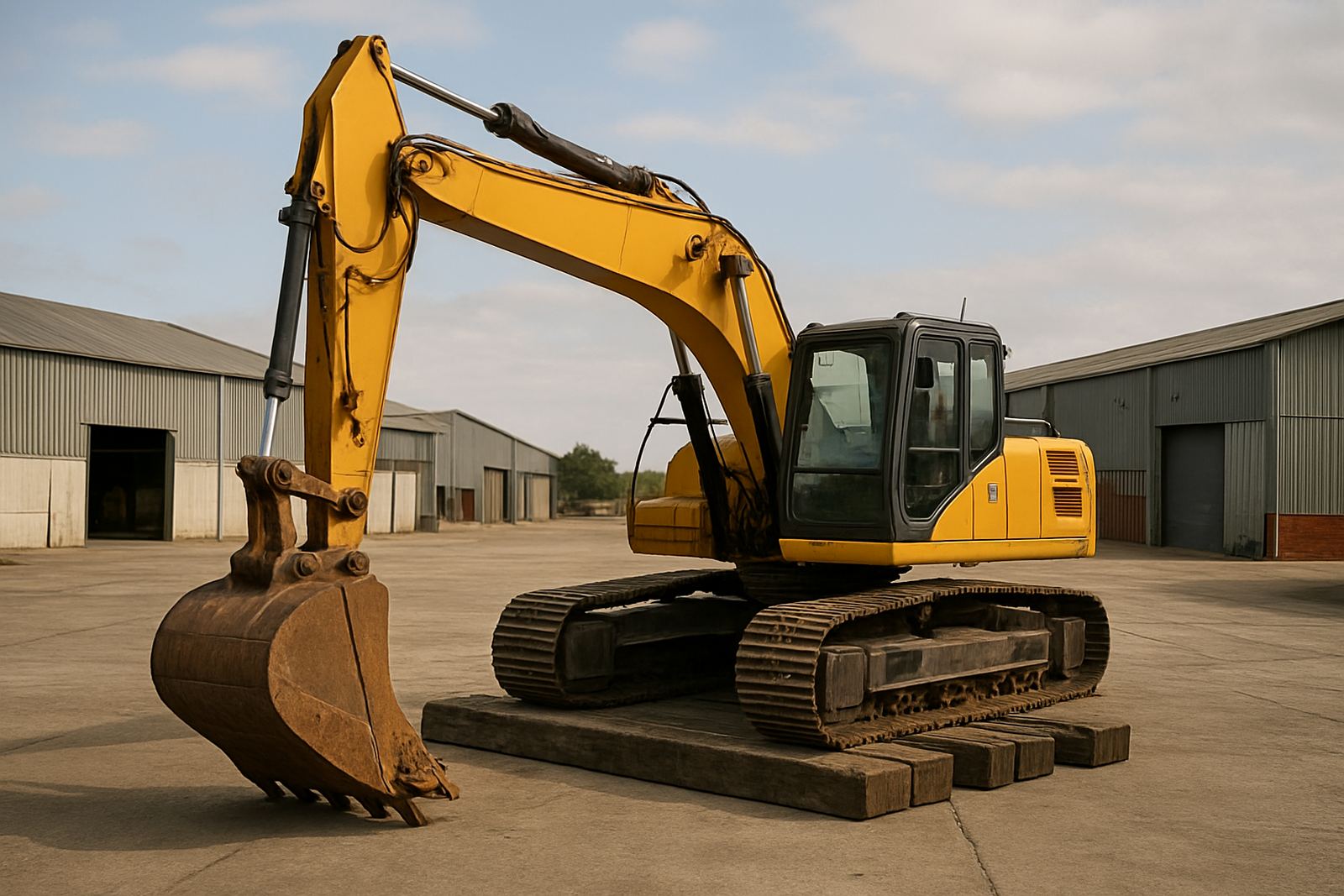
A crawler excavator is a tracked digging machine with a boom, stick and bucket mounted on a rotating upper structure. The tracks spread the weight over a larger area, which helps on soft ground, stockpiles, muddy sites and uneven terrain where wheeled plant would struggle. For contractors in Durban, Johannesburg and the coast, that extra grip is useful when ground conditions change after rain or when a site has limited hardstanding.
These machines are used for bulk excavation, foundation work, road trenching, pipeline digs, quarry support and demolition cleanup. They can run with general-purpose buckets, trenching buckets, grading buckets, hydraulic breakers, grapples and thumbs depending on the job. The right setup depends on reach, digging depth and how much lifting or loading is needed on site.
Crawler excavators are usually selected by operating weight and bucket size. Smaller units are easier to move between jobs, while larger machines offer more breakout force and deeper digging, though they need more transport planning and a stronger recovery plan if a site gets soft.
Common sizes, reach and working ranges
We handle crawler excavator imports in a range of sizes, from compact units for tight urban work through to heavy machines for mining support and major civil projects. A typical buyer will compare operating weight, digging depth, transport width and fuel use before placing an order. If a machine is going into coastal KwaZulu-Natal, corrosion protection and undercarriage condition matter a lot because salt air can shorten service life.
- Mini to compact: about 1.8 to 8 tonnes, useful for trenching, drainage and small demolition
- Mid-size: about 12 to 25 tonnes, common for general earthmoving and road works
- Heavy duty: about 30 to 50 tonnes and above, suited to large excavation, quarry and plant support
- Typical digging depth: roughly 2.5 metres to over 7 metres, depending on boom and stick setup
- Typical bucket capacity: about 0.05 m3 to 2.5 m3
When a machine is too large for a normal low-bed move, inland transport costs rise quickly. That is why import planning should start before the purchase is finalised, not after the unit has already landed in Durban harbour or at Cape Town.
Where crawler excavators suit local work
Crawler excavators suit contractors who need steady machine output on broken ground, long shifts and rough sites. They are common on residential developments in Durban North, warehouse construction in Springfield Park and Jet Park, drainage upgrades near City Deep, and port-related civil work where access can be tight. Demolition teams also prefer tracks because the machine keeps traction while pulling rubble or loading broken concrete.
They are a practical choice where the site surface is not finished yet, or where heavy rain can turn access roads to mud. In inland areas they are also used for road building, dam work and agricultural clearing. For the automotive sector and fleet yards, they help with hardstand preparation, stormwater channels and yard expansion.
- Construction: footings, basements, trenching and bulk dig
- Demolition: building knock-down, concrete breakout and debris loading
- Earthmoving: cut and fill, bund construction and stockpile handling
- Industrial sites: drainage, cable trenches and hardstand works
Import planning, site access and transport into South Africa
Importing a crawler excavator is more than buying the machine and booking a vessel. The buyer needs the exact model, serial number, dimensions, operating weight and attachment list for customs, shipping and offloading. Machines Africa Hub coordinates freight from the point of origin, then clears the machine through South African ports and arranges inland transport to Durban, Umbilo, Springfield Park, Jet Park, City Deep or Paarden Eiland as required.
Site access must be checked before delivery. Measure gate widths, turning space, overhead cables, road surfaces and the offloading area. A crawler excavator may arrive without a bucket fitted, or with the boom secured for transit, so you need enough space and the right lifting equipment on site. Some jobs also require port collection, bonded storage or site offloading with a low-bed vehicle and support truck.
There is no gas connection and no fixed electrical installation for the machine itself. It runs on diesel, so the buyer should confirm fuel grade, site refuelling control and storage arrangements. If the unit will be standing for days, keep the tank treated and check battery condition before first use.
Care, servicing and downtime control
Crawler excavators work hard, and service neglect shows up fast. The undercarriage, final drives, track tension, pins, bushes and hydraulic hoses need regular checks. In coastal conditions, wash salt and grime off the frame, boom and track area after use. On dusty inland sites, keep air filters clean and inspect the cooling pack often because blocked radiators can push operating temperatures up quickly.
Routine servicing should follow the hour metre and include engine oil, hydraulic oil, filters, grease points and track wear inspection. A machine with a good service record is easier to sell later and less likely to stop a job mid-week. Load-shedding does not affect the excavator directly, but it can delay workshop lifts, welding and charging equipment, so plan maintenance windows carefully.
- Check track shoes for cracks, missing bolts and uneven wear
- Inspect boom and stick pins for play and excess grease loss
- Test hydraulics for drift, slow response and hose sweating
- Keep the cab seals, glass and wipers in working order
- Service on time to avoid expensive component failure
What to confirm before you order one
Before placing an order, confirm the machine age, operating hours, service history, serial number and whether any attachments are included. Ask for the transport width, height with cab or ROPS frame, and the exact operating weight with the fitted bucket. If the excavator is going into a municipal area, check noise rules, working hours and any permit requirements for abnormal transport. A machine that looks fine in pictures can still have worn pins, a tired pump or cracked track frames.
It also helps to confirm whether the excavator is set up for demolition, digging or lifting. Some units come with long-reach arms, quick couplers or thumb fittings, while others are plain digging machines. If the buyer needs inland delivery to Gauteng or the Cape, clearance timing, insurance cover and bonded storage should be arranged before the vessel arrives. That way the machine can move without avoidable delays, and the site crew can be ready to offload same day.
For South African buyers, a clear order sheet saves time and money. It also reduces the risk of buying the wrong size, which is a common mistake on imported plant.
Key facts
| Type | Tracked hydraulic excavator |
|---|---|
| Operating weight | About 1.8 to 50+ tonnes, depending on model |
| Bucket capacity | Roughly 0.05 m3 to 2.5 m3 |
| Power source | Diesel engine, no mains power required |
| Typical use | Construction, demolition, earthmoving, trenching |
| Transport needs | Low-bed, route planning, offloading equipment |