What a milling machine is and how it travels
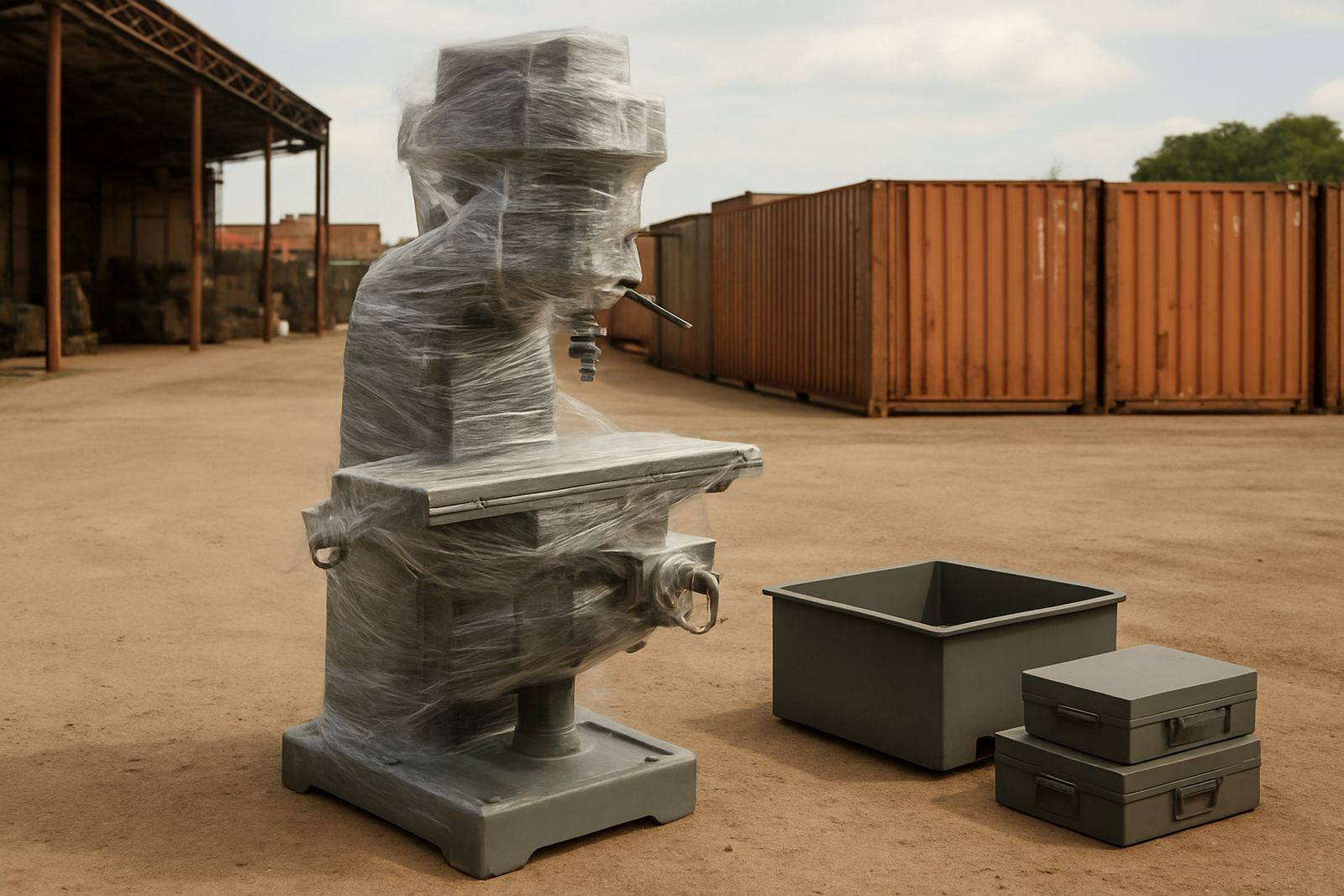
A milling machine cuts, shapes, drills, slots and faces metal with a rotating cutter. In practical terms, it is one of the core machines in a workshop, whether you are making brackets in Umbilo, repairing shafts in Jet Park, or running repeat production in Springfield Park. Shipping it is not just about putting steel on a truck. The table, head, guards, motors and control gear all need proper lifting points, packing and route planning.
Most orders arrive as a floorstanding machine, sometimes with a DRO, vice, coolant unit or auto feed attached. Smaller bench units may come on a single pallet, while larger knee mills, vertical mills or turret mills need crating and fork handling. If the machine is moving by sea into Durban harbour, we plan the discharge, customs steps, port collection and inland delivery together so the unit does not sit around waiting for a missing document or a gate booking.
Common sizes, formats and options
Milling machines come in a wide range of sizes, from compact workshop units to heavier machines for production floors. The right handling method depends on weight, footprint and whether the machine is being moved fully assembled or split into sections. For many South African buyers, the choice comes down to space, power supply and the type of work being done.
- Benchtop milling machines for light repair work and small parts
- Vertical knee mills for toolrooms and maintenance bays
- Turret and universal mills for mixed jobs and angle work
- Bed mills and production mills for repeated cuts and longer runs
- Manual, DRO fitted or CNC ready formats depending on workshop use
- Typical weights range from about 250 kg to 6 000 kg or more
We also check if the machine has loose items that should travel separately, such as drawbars, chucks, belts, vises, handwheels and tool holders. These items are small, but if they go missing it can slow commissioning by days.
Where a milling machine fits best in South Africa
Milling machines are used in toolrooms, fitting shops, agricultural repair yards, fleet maintenance depots and general engineering plants. They are also common in automotive workshops that machine bushes, flanges and brackets in-house rather than waiting on outside subcontractors. For businesses near Durban harbour corridor, the main concern is usually speed through clearing and safe inland transfer. Inland clients in City Deep or Jet Park often need the machine delivered in working order by a set date so installers can line up rigging and electrical work.
The machine is suitable for premises with good floor loading, enough headroom for lifting, and a clean dry bay. In coastal areas like Paarden Eiland and Durban, humidity can affect bare cast iron and exposed tooling, so packaging and storage matter. In some older industrial buildings, door height and turning space are tighter than expected, so it helps to measure the route from truck to final position before the cargo lands. That bit is often missed.
Installation, power and site readiness
A milling machine usually needs stable power, a level base and enough access for offloading. Smaller units may run on single phase supply, while larger workshop and production machines often need three phase power. Always confirm the motor rating, phase type, plug or isolator requirements and whether the machine needs a transformer or voltage check for South African conditions.
- Check floor strength and bring the machine onto a level slab or plinth
- Allow clear access for a pallet jack, forklift or crane truck
- Confirm electrical isolation, earthing and local compliance before energising
- Keep coolant, lubricants and swarf trays ready for first use
- Plan for load-shedding with backup procedures if the unit is part of a production line
Some plants also need the machine placed in a specific flow line so material moves in one direction. We can coordinate site offloading and handover so the machine lands where the installer needs it, not at the nearest door and then moved twice.
Care, servicing and storage after delivery
Once a milling machine has been delivered and commissioned, routine care keeps it accurate and usable. Wipe down the bed and exposed ways, keep rust preventative on bare metal during humid months, and inspect belts, lubrication points and coolant levels on a regular schedule. A machine that sits near an open roller door in coastal air will need more attention than one in a closed dry room.
For spare machines, or units waiting for workshop fitout, bonded storage or dry storage is worth considering. It protects against corrosion, knocks and missing parts while you sort out power, rigging or compliance checks. If the machine is imported with a control panel or motors packed separately, those boxes should be clearly marked and matched to the correct serial number on arrival, otherwise the reassembly team loses time hunting for bits.
What to check before you order
Before a milling machine shipment is booked, we recommend checking the full dimensions, exact mass, country of origin, voltage, and whether the machine is new, used or reconditioned. Customs treatment can vary by tariff code and the supporting paperwork must match the cargo description. If the invoice says one thing and the packing list says another, it can cause avoidable queries at clearing stage.
It also helps to know whether the machine is going to Durban, Cape Town, Johannesburg or a regional border point. That affects routing, port collection, inland transport and insurance. A machine moving to a repair shop in Umbilo may need a very different offload plan from one heading to a factory outside Polokwane. If the cargo is oversize or top heavy, we look at lifting gear, route restrictions and site access before the container is released.
- Machine model, dimensions and gross weight
- Power requirement, phase and motor rating
- Included accessories and loose tooling
- Packing type, crate size and lifting points
- Delivery address, offload method and site access
- Import documents, invoice, packing list and any compliance papers
For orders that involve sea freight, customs clearing and inland delivery, having the right paperwork at the start saves time at the harbour and helps the machine reach the workshop without extra storage charges.
Key facts
| Typical size range | From bench units to large floorstanding mills |
|---|---|
| Common weight range | 250 kg to 6 000 kg plus |
| Power supply | Single-phase or three-phase, depending on the model |
| Main use | Metal cutting, shaping, drilling and slotting |
| Handling method | Pallet, forklift, crane truck or rigging team |
| Best storage | Dry indoor storage or bonded storage for imported units |