Built for fast offloading on working sites
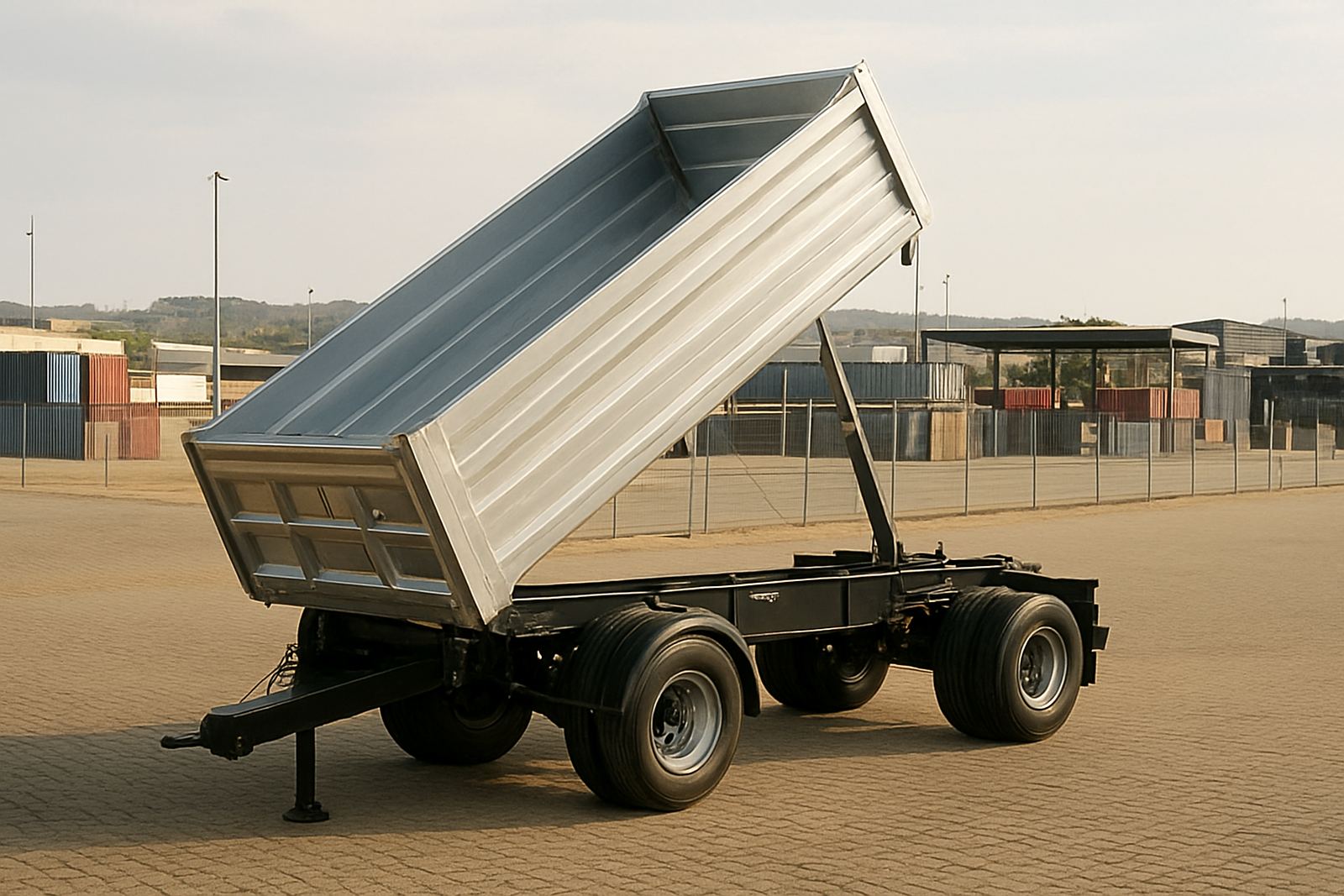
A tipper trailer is a load carrier with a tipping body that lifts to discharge bulk material at the rear, or sometimes to one side depending on the build. The design suits repeated loading and dumping where speed matters and where manual offloading would cost too much time or labour. In practice these units are common in aggregates, waste removal, landscaping, feed supply, and crop movement on farms around Durban, Pietermaritzburg, Rustenburg, Pretoria and Bloemfontein.
For South African operators, the main attraction is simple: less hand work, shorter turnaround times and better control over loose cargo. A well matched trailer can handle stone, sand, building rubble, green waste, compost, fertiliser, sugar cane residue and similar materials. If you run in the Durban harbour corridor or inland freight routes, the right spec also helps reduce spills at gate checks, weighbridges and municipal drop-off points.
- Rear tipping for general bulk loads
- Side tipping for narrow sites and road edge work
- Hydraulic lift systems for controlled discharge
- Heavy duty drawbar and axles for rough yards
Size options and load carrying choices
Tipper trailers are commonly supplied in single axle, tandem axle and tri axle layouts, with body sizes chosen around payload and towing capacity. Smaller units suit compact tractors, bakkies with proper tow ratings and municipal service work, while larger units are better for quarry yards, recycling depots and farm transport. Body volume is usually quoted in cubic metres, and carrying capacity in tonnes, so it is worth matching both to the actual material you move.
For loose stone or wet waste, volume alone can mislead because dense material reaches legal axle limits quickly. A 6 m3 body may carry far more weight in rubble than in light garden waste. We help customers check the tow vehicle, brake setup, route limits and operating environment before anything is ordered. That avoids surprises at the port or on a weighbridge near the site.
- Small utility units for light loads and tight access
- Medium trailers for contractors and farm use
- Large units for quarry, mining support and waste transfer
- Optional high sides, tarpaulin rails and reinforced floors
Where a tipper trailer suits best
These units suit businesses that handle loose material daily and need dependable turnarounds. On construction sites they move sand, stone and rubble. In agriculture they shift fertiliser, crops and compost. In waste handling they support clearing jobs, skip transfer, and green waste collection. The trailer must match the ground conditions too. A Cape Town coastal yard with salt air and wet mornings needs different corrosion protection than a dry inland depot in Gauteng.
Operators in the Durban harbour corridor often look for units that can cope with short haul work, frequent stops and harsh loading with forklifts or excavators. If your work includes municipal areas, check access rules, loading bay height and tipping space before you commit. A trailer that tips well in a farm yard may not suit a narrow industrial lane in Umbilo or Springfield Park.
- Construction and building materials
- Waste transfer and site clean-up
- Agricultural transport and farm logistics
- Quarry support and aggregate movement
Power, hydraulics and site setup
Most tipper trailers do not need gas. What matters is the tipping system, hydraulic supply and the towing arrangement. Some units draw hydraulic power from the towing vehicle, while others use an onboard hydraulic pack. Where electrical controls are fitted, the trailer may need a 12V or 24V connection for lighting, indicators and control functions. The tow vehicle must be rated correctly and fitted with the proper brake system, coupler and safety chains.
For offloading, the ground must be level and firm. Hydraulic tipping on a sloped or soft surface is a hazard and can damage the unit. If the trailer will work on sites with load-shedding, keep in mind that electric pump charging or workshop servicing may be affected, so a manual check schedule is sensible. Good practice also includes a clean parking area, wheel chocks and enough space for the body to raise fully without overhead cables or branches.
- Hydraulic or mechanical tipping depending on model
- 12V or 24V lighting and signal connection
- No gas requirement for normal operation
- Level surface required for safe tipping
Care, servicing and corrosion protection
Regular care keeps a tipper trailer working properly and helps avoid expensive downtime. After each load cycle, clean out trapped aggregate, wet soil and organic waste from the floor and hinges. Lubricate pins, hinges and moving joints on schedule. Check hydraulic hoses for chafing, oil leaks and weather cracking. Look at tyres, brakes, lights and the drawbar before every long trip, especially if the unit is going between Durban, Johannesburg and coastal ports.
Coastal humidity in areas like Umbilo and Paarden Eiland can speed up rust if paint is damaged. Salt air gets into welds, ramps and underside sections, so washing down with fresh water helps. For waste work, rinse after each wet load because acidic runoff can attack steel. A simple servicing plan, every 250 to 500 operating hours depending on use, usually keeps the trailer in good order. If you run a fleet, log faults and service dates properly it saves time later.
What to check before placing an order
Before you order, confirm the material you move, average load weight, route conditions and towing vehicle ratings. A trailer for dry maize will not behave the same as one carrying wet clay, and the legal load limit can change with axle count and braking design. Ask for the body thickness, floor reinforcement, hinge arrangement and paint or galvanising details. If the trailer will work near the port, consider lockable fittings, reflective markings and document pockets for permits.
We also recommend checking import and clearing documents early. That includes invoice detail, serial numbers if available, country of origin, dimensions and gross weight. For cross border or inland delivery, bond, insurance and transport booking must line up with the intended handover point. Machines Africa Hub manages shipping coordination, customs clearing, tariff classification, port collection, inland transport and site offloading from our Durban base, with clearing support in Johannesburg and Cape Town.
- Confirm tow vehicle rating and brake compatibility
- Check payload, body volume and axle count
- Ask about corrosion protection and floor thickness
- Prepare import, insurance and delivery documents early
Key facts
| Product type | Tipping trailer for loose bulk materials |
|---|---|
| Common capacities | About 3 tonnes to 20 tonnes depending on build |
| Body sizes | Approx. 3 m3 to 20 m3 in single, tandem or tri axle formats |
| Tipping system | Hydraulic rear tip, with side tip options on selected units |
| Power needs | 12V or 24V electrics for lights, with hydraulic supply from tow vehicle or onboard pack |
| Typical finishes | Painted steel or galvanised components for better corrosion resistance |