What a backhoe loader is, and why it ships as a mixed-size machine
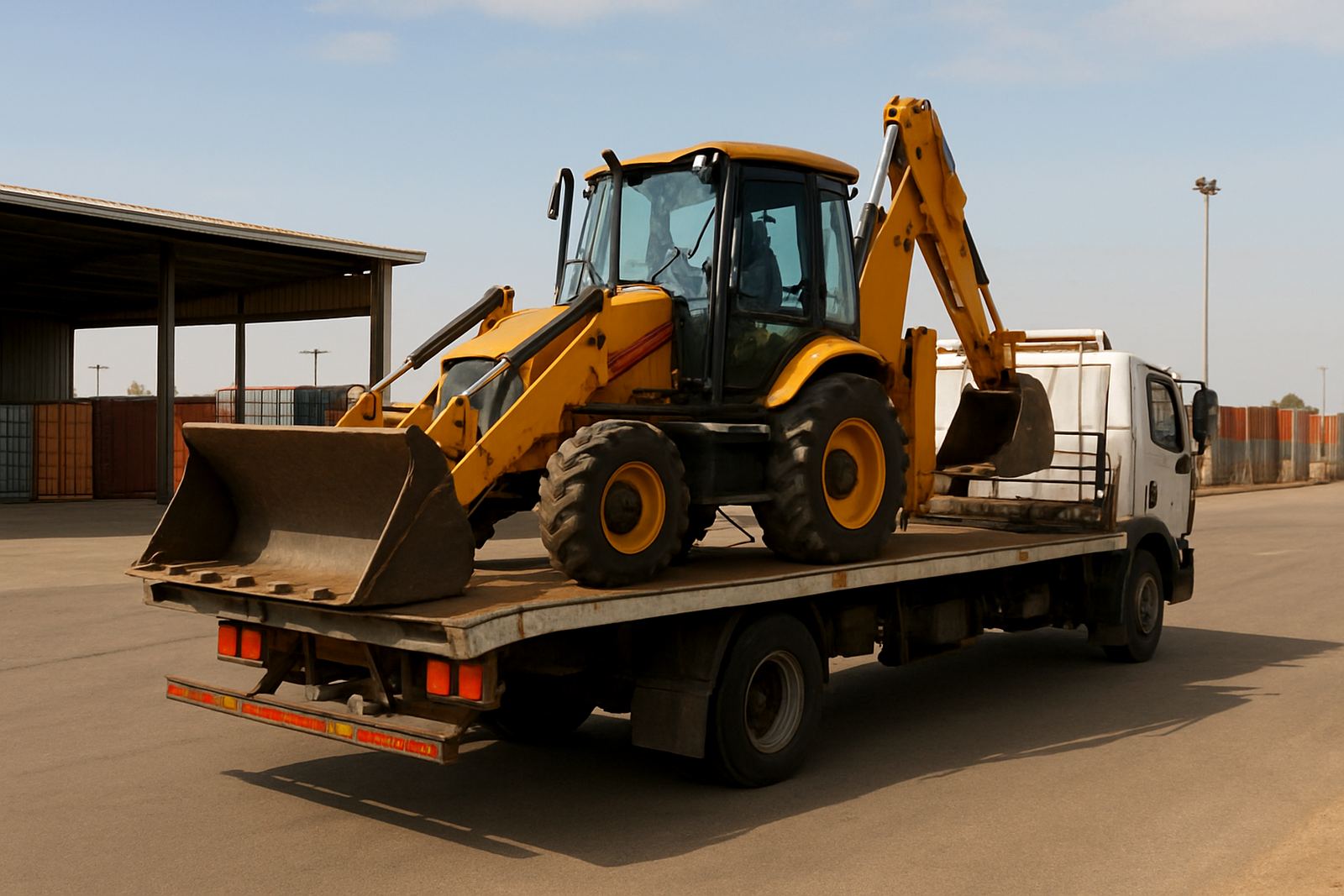
A backhoe loader is a wheeled machine with a loader bucket at the front and an excavator arm at the back. It is used for digging trenches, loading spoil, shifting materials and light site clean-up. On paper it looks smaller than an excavator or a rigid tipper, but the backhoe loader still needs proper shipment planning because the boom, bucket, tyres and canopy or cab can affect overall dimensions. In Durban humidity, coastal dust and road grime also mean the machine should be protected during transit and storage, especially if it will sit for a few days before collection.
Typical operating weight ranges from about 7,000 kg to 10,500 kg, with overall length around 5.6 m to 7.1 m depending on bucket and boom set-up. Width commonly sits between 2.2 m and 2.5 m, and height can reach 3.7 m on enclosed-cab units. For clearing, these figures matter because port handling, low-bed selection and route checks all depend on exact measurements not estimates.
Sizes and options that affect shipping and clearing
Backhoe loaders come in standard, compact and heavier site versions. Smaller units suit tight municipal work, residential trenching and utility repairs, while larger machines are better for quarry yards, road works and municipal maintenance depots. Some machines arrive with extendable dipper arms, pilot controls, 4x4 drivetrains, or quick couplers fitted. Each option changes the packing list and sometimes the tariff treatment, so the invoice and technical sheet need to match the actual machine.
- Compact units for narrow access and short-haul work
- Standard road-going machines for general construction and fleet use
- Long-reach or extendable-arm models for deeper trenching
- Cab or canopy versions, depending on weather exposure and operator comfort
- Tyred machines with different profile heights for load and route planning
Where a machine is shipping in parts, it may be wise to remove the front bucket or stabiliser attachments to reduce height and protect hydraulic joints. That helps when using bonded storage in Durban, City Deep or Paarden Eiland, especially if the machine must wait for a delivery slot or site permit.
Where backhoe loaders suit best in South Africa and across the region
Backhoe loaders are popular with contractors who need one machine for several jobs. They suit plumbing trench work, drainage lines, farm access repairs, yard loading, cemetery maintenance, cable trenches and small road patching jobs. In and around Durban, they also work well on sites where access is tight and a full-size excavator would be difficult to position. The same applies to warehouse yards in Springfield Park and Paarden Eiland, where turning space can be limited.
For export or cross-border movement, backhoe loaders are often dispatched to mining support yards, municipal teams, plant hire businesses and agricultural operations. Their wheeled format means they can move between sites without a trailer in some cases, but importers should still plan for the first and last mile. A machine might clear through Durban harbour, but if the destination is in Mpumalanga or the Northern Cape, inland transport needs to be arranged early to avoid delays and extra storage charges.
Power, fuel and site setup before commissioning
Most backhoe loaders run on diesel and do not require external electrical supply. That makes them practical for areas with load shedding, remote farms and temporary construction sites. A typical engine falls in the 70 hp to 110 hp range, though heavier site machines can go above that. Fuel tank capacity often sits between 120 litres and 160 litres, which gives enough working time for a normal shift if the machine is serviced correctly.
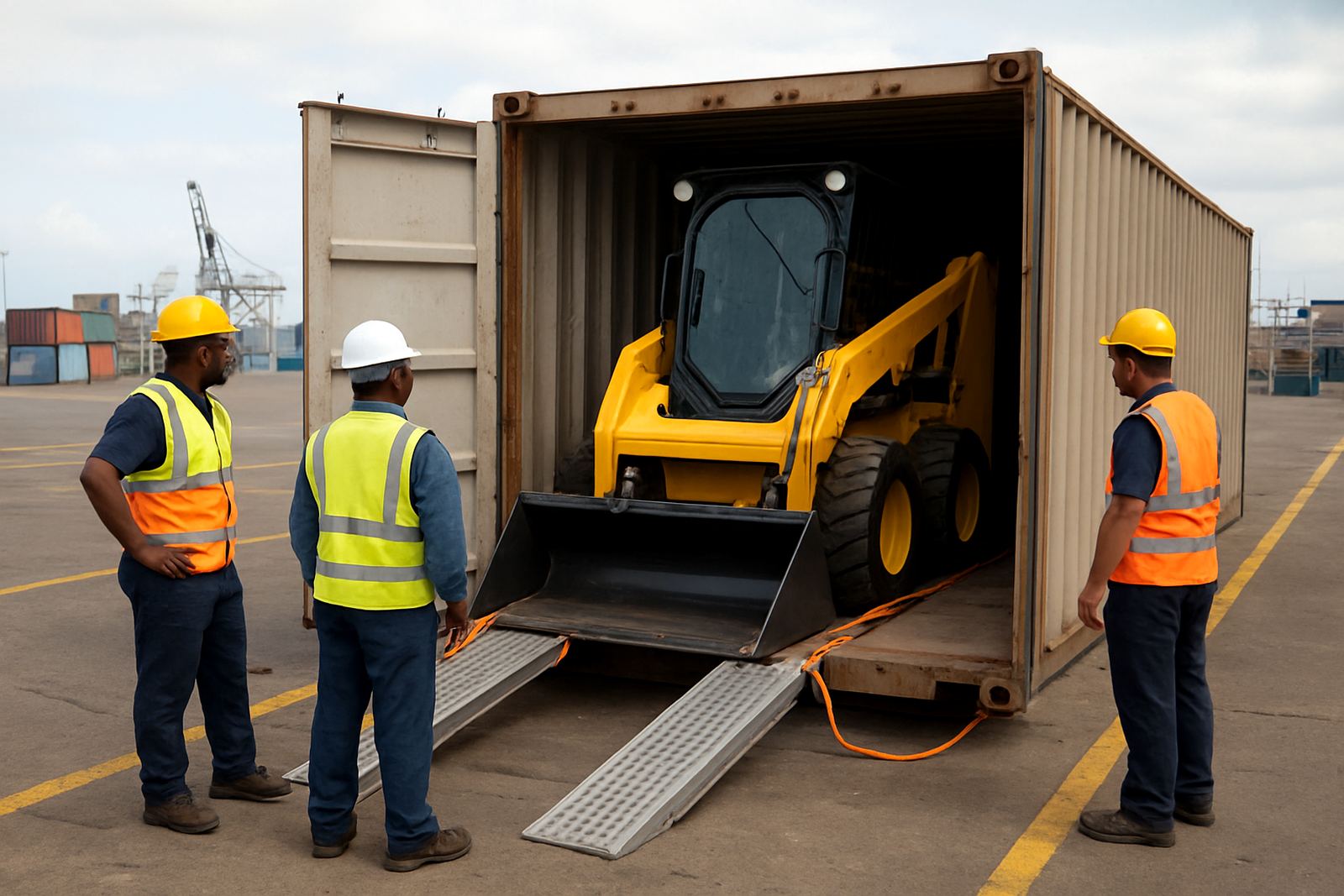
Before commissioning, check that the site can take the machine's width, turning circle and ground pressure. Soft shoulder edges, wet clay and loose fill can cause trouble when unloading from a low-bed. On municipal projects, confirm that access permits, road closures or working-hour restrictions are in place, because a machine waiting at the gate costs money very fast. If the backhoe loader is going into a coastal town, ask for wash-down and anti-corrosion care too.
- Confirm fuel type, tank level and battery condition before dispatch
- Inspect tyres for cuts, sidewall damage and pressure loss
- Check hydraulic hoses, pins and boom locks
- Ensure transport latches and buckets are secured
- Verify site access width, slope and offloading ground bearing
Care, servicing and storage after arrival
Backhoe loaders need regular greasing, filter changes, tyre checks and hydraulic inspections. If the machine is coming through a busy port corridor, it should be collected promptly and parked in a dry, secure yard. Salt air can attack exposed steel and electrical connectors, particularly in Durban and other coastal areas, so machines should not stand open to the weather for long. A simple canopy cover and battery isolator go a long way.
For machines used on uneven ground, look at pin wear, kingpin play, loader arm cracks and rear stabiliser condition every week. If the unit will work with municipal crews or hire fleets, keep a service log and record hours from the start. That helps when ordering parts, arranging insurance and proving the machine's condition after heavy use. A missed service on a backhoe loader can become a costly downtime issue very quickly, especially where spares are not held locally.
What to check when ordering a backhoe loader shipment
Good import planning starts with the machine details, not the vessel booking. We ask clients to send the serial number, model designation, weight, transport dimensions and whether any attachments are included. Clear photos help too, especially where the bucket, tyres or cab roof may alter height. If the machine is used, we also need to know whether it has residue soil, oil leaks or loose fittings that may affect port handling. Clean papers and clean metal save time at the harbour.
- Commercial invoice, packing list and serial number matching the unit
- Machine weight, width, length and loaded height
- Whether the bucket, breaker lines or extra attachments are included
- Country of origin and year of manufacture
- Destination yard address and offloading method
- Any bonded storage, insurance or inland transport needs
For clients moving equipment through Durban harbour corridor, Johannesburg clearing counters or Cape Town, we coordinate customs clearing, tariff classification, port collection and inland transport so the machine is not left waiting in the wrong place. That matters for compact site access jobs where the delivery slot is tight and the site crew is booked to the minute.
How Machines Africa Hub handles backhoe loader logistics
Machines Africa Hub arranges import planning, shipping coordination, customs clearing, tariff classification, port collection, inland transport, cargo insurance, bonded storage, site offloading and document management for backhoe loaders. Our base in Umbilo, Durban puts us close to the harbour corridor, while our clearing counters in Johannesburg and Cape Town support loads moving into Gauteng, the Western Cape and further inland. We work with fleet operators, automotive buyers, contractors and municipal buyers who need steady handling from origin to yard.
Because backhoe loaders are compact compared with many earthmoving machines, some clients expect them to be simple cargo. In practice, the smaller frame can still create hold-up if the paperwork is incomplete or the machine arrives with attachments not declared. Our team checks the import file before the vessel lands, then plans collection and dispatch so the machine can get to site without pointless standing time. If you are ordering for Durban, Umbilo, Springfield Park, Jet Park, City Deep or Paarden Eiland, send the specs early and we will map the movement properly.
Key facts
| Typical operating weight | 7,000 kg to 10,500 kg |
|---|---|
| Engine output | About 70 hp to 110 hp, depending on model |
| Overall width | About 2.2 m to 2.5 m |
| Overall height | About 3.0 m to 3.7 m |
| Fuel type | Diesel |
| Common uses | Trenching, loading, yard work, road maintenance and utility repairs |