What a plate roller does in a South African workshop
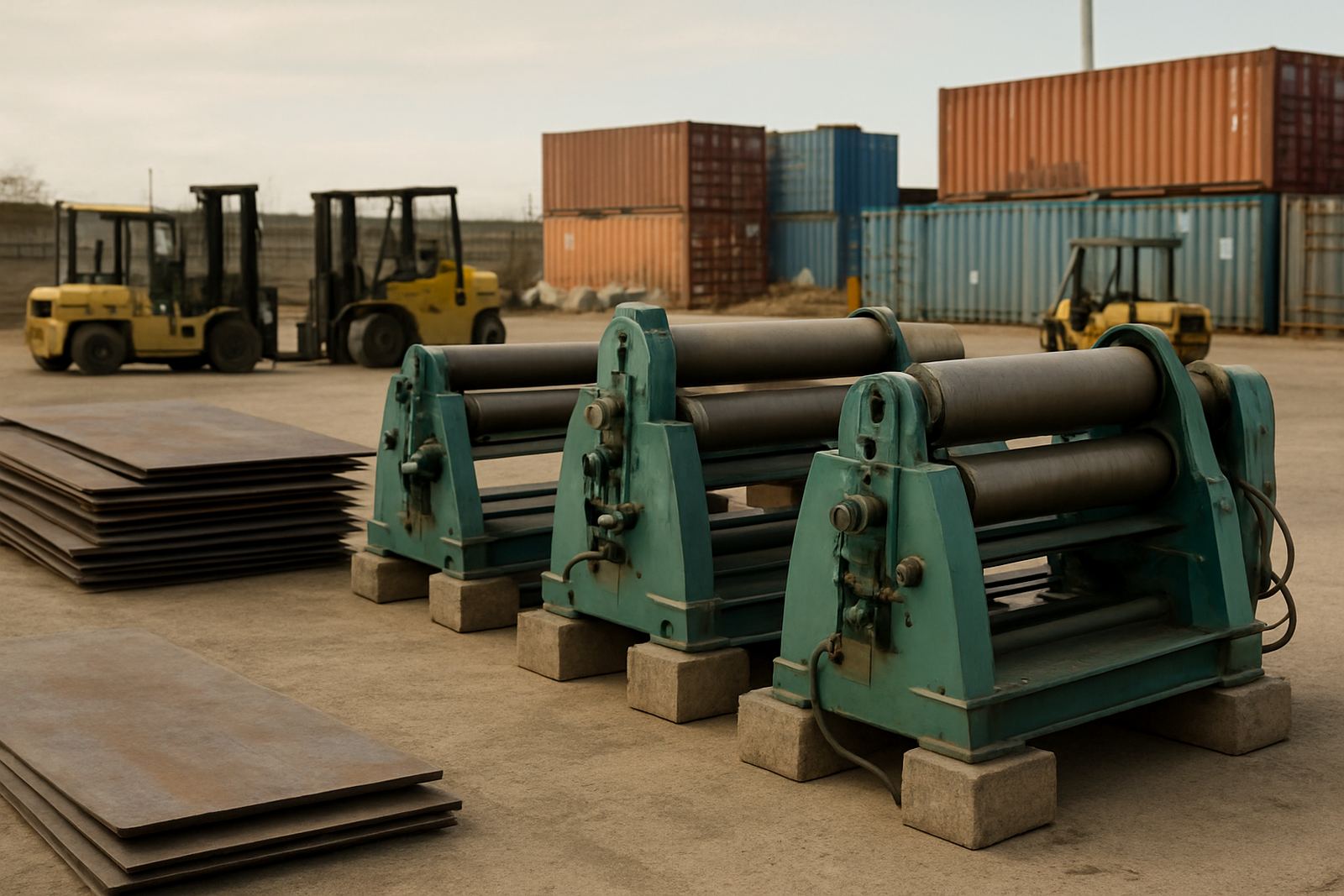
A plate roller is a forming machine that bends flat sheet or plate into a controlled curve. Most workshops use it for round shells, sleeves, duct sections, pipe transitions, cladding rings and general fabrication where a clean repeatable radius matters. It is a practical machine for shops that work with mild steel, stainless steel, aluminium and light plate, depending on the model and roller finish.
In South African conditions, the right roller helps reduce manual rework and torch correcting. That matters when power cuts interrupt work, or when a job must go out quickly from Durban, Jet Park or City Deep. A well chosen machine gives consistent output and saves material. For tank work, chimney sections and ducting, it often becomes one of the most used items on the floor.
Plate rollers are supplied in different arrangements, usually with three rollers or four rollers. Three roll units are common for general fabrication and can be compact for smaller shops. Four roll units are useful when you want better pre-bending control and easier feeding. Some workshops prefer manual adjustment for basic work, while others choose motorised drive for heavier plate and higher volume. The best option depends on plate thickness, working length and how often the machine will run in a shift.
Sizes and options to match the job
Plate rollers are normally selected by working width and the maximum thickness they can roll. A small shop may only need a 1 000 mm to 1 250 mm unit for duct sections and light gauge fabrication, while a tank or structural shop may need 2 000 mm to 3 000 mm working width with thicker capacity. Roller diameter, frame stiffness and drive power all affect the quality of the finished curve.
- Working width: from about 1 000 mm to 3 000 mm
- Roll capacity: light gauge up to heavy plate, depending on the machine
- Roll arrangement: 3 roll or 4 roll configuration
- Drive: manual, electric motor or hydraulic drive
- Control: basic panel, foot control or remote pendant on larger units
- Material: mild steel, stainless steel and aluminium, subject to capacity
For coastal workshops in Durban or Paarden Eiland, a machine with proper protective coating and sensible storage is important because humidity and salt in the air can affect exposed metal. In Johannesburg, the bigger concern is dust and keeping the rollers clean from grit that marks sheet surfaces. If the machine will be used for food-grade tanks or polished metal, ask for roller surface condition and any lining or finish options that protect the material.
Where a plate roller suits best
This machine suits fabrication businesses that make round or curved components on a regular basis. Typical users include tank builders, ducting contractors, marine repair shops, vehicle body and trailer builders, HVAC fabricators and structural steel companies. It is also useful in workshops that handle one-off work, where a client needs a custom radius rather than a standard pipe size.
In Durban harbour corridor operations, plate rollers are often used with other forming and cutting equipment for ship repair, container work and plant maintenance. In City Deep and Springfield Park they fit well into mixed fabrication yards that handle both production and repair. For automotive and fleet workshops, a smaller roller can help with exhaust, guards, fairings and custom brackets, though the exact use depends on the thickness and the accuracy required.
- Tank and vessel fabrication
- HVAC ducts and transition pieces
- Chimneys, silos and cone sections
- Structural handrails, covers and guards
- Marine and harbour maintenance work
- Custom repair and small batch production
If your work changes from week to week, it is worth choosing a machine with a bit of extra capacity rather than running at the limit all the time. That gives better life to bearings, drives and rollers, and the finish is usually cleaner too.
Installation, floor space and power requirements
Before ordering, check the floor space, access route and lifting method at the receiving site. Some plate rollers arrive as a single heavier unit, while larger models may need skidding, a forklift or crane offload. Door widths, gate clearance and floor loading should be checked in advance, especially for sites in Umbilo, Jet Park or Paarden Eiland where access can be tight and delivery windows are often short.
Power needs vary by model. Smaller machines may run on single phase supply, while most medium and heavy units need three phase power. Larger hydraulic machines can require higher motor ratings and may need a proper isolator, correct cable sizing and a competent electrician for the final connection. In areas with load-shedding, some workshops fit their own backup planning around the machine so production does not stall mid job. A plate roller is only as useful as the power and setup behind it.
- Check available supply: single phase or three phase
- Confirm motor size and starting current
- Allow space for infeed, outfeed and plate handling
- Plan offloading with forklift, crane or side loader
- Keep a level concrete surface for stable rolling
If the machine will be used near the coast, keep the electrical box, bearings and exposed fittings dry and protected. A small bit of maintenance done early prevents a lot of down time later.
Care, servicing and day to day use
Plate rollers need regular cleaning, lubrication and inspection. The rollers must stay free of grit, weld spatter and rust scale, because any contamination can mark the plate or create uneven bending. Bearings, gears and hydraulic points should be checked on the service schedule given by the supplier or installer. If the machine is used daily, a short operator check at the start of each shift is worth it.
Keep the machine level, load plate evenly and avoid forcing material beyond the rated capacity. Overloading causes premature wear and can distort the rollers. On motorised units, listen for changes in drive noise, vibration or slow return movement. On manual units, make sure handle action is smooth and that adjustment points are not binding. Small faults are easier to fix early than after a busy week. It sounds simple, but many breakdowns start with poor cleaning or loose set up.
For long term care, protect the machine from weather, especially in open yards near the harbour. If the roller is standing for long periods, coat exposed steel parts lightly and cover the control box. Keep the area around the machine clear so plate can be fed safely and staff are not working too close to pinch points.
What to verify before you order the machine
The right roller depends on the work you do now and the work you expect in the next 2 to 3 years. Ask for the working width, rated thickness, roller diameter, drive type and whether the machine can pre-bend the plate ends cleanly. If you are forming stainless steel or coated sheet, check the roller finish and whether the supplier recommends any surface protection methods.
We also advise checking shipping dimensions and total mass before final approval. That affects port handling, inland transport and site offloading, especially if the machine is moving from Durban to Gauteng or to Cape Town. Customs paperwork, tariff classification and document control should be correct before the shipment lands, because delays at the harbour can add costs quickly. If the machine comes with extras such as spare rollers, foot control, tooling or guards, make sure those items are listed properly on the documents.
- Required plate thickness and working width
- Material type and finish to be rolled
- Roll configuration and drive preference
- Electrical supply at the receiving site
- Offload method and access at the workshop
- Shipping mass, packed size and included accessories
For buyers bringing machinery into South Africa, our team handles import planning, customs clearing, bonded storage, inland transport and site delivery. That helps keep the job moving from port to workshop, without unnecessary back and forth at the terminal.
Key facts
| Machine type | Plate roller for sheet and plate forming |
|---|---|
| Common widths | 1 000 mm, 1 250 mm, 1 500 mm, 2 000 mm, 3 000 mm |
| Typical capacity | Light gauge to heavy plate, depending on model |
| Drive options | Manual, electric motor or hydraulic drive |
| Roll arrangement | 3 roll or 4 roll configuration |
| Main uses | Tanks, ducts, cones, shells, covers and structural forming |