What a wheel loader does on site
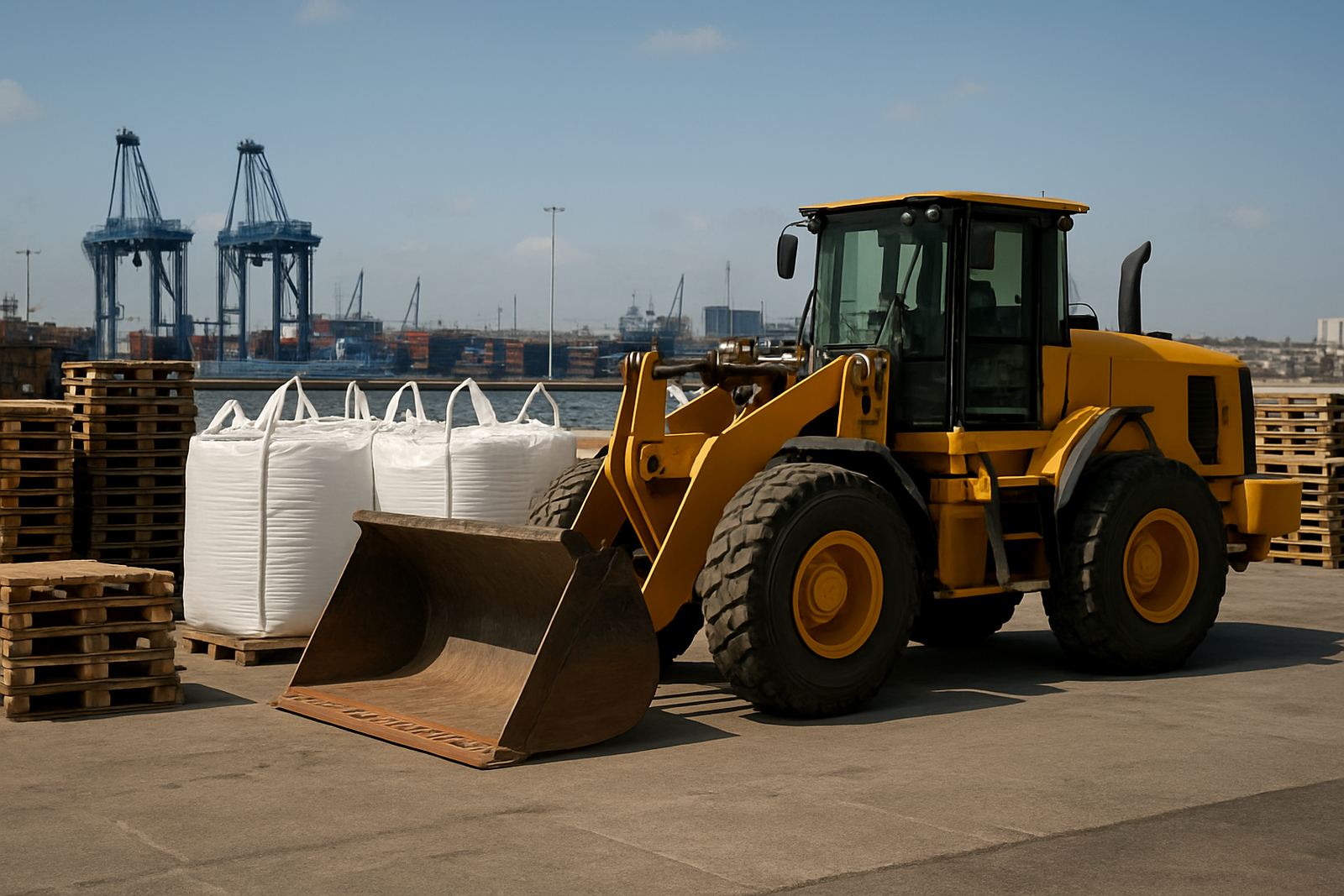
A wheel loader is a front-end loading machine fitted with a large bucket and articulated steering. It is used to scoop, carry, lift and tip material such as crushed stone, sand, coal, scrap, compost, grain and general bulk product. In a quarry it keeps crushers fed. At a waste transfer site it moves stockpiles and loads containers. On a yard or plant it helps shift palletised or loose goods where a forklift is too small or too slow.
These machines are built for short travel cycles, repeat lifting and quick bucket work. Most buyers want reliable breakout force, good visibility from the cab, a strong cooling system and tyres suited to rough ground. If the loader will work near the Durban harbour corridor, wet conditions and salt air matter too, because corrosion and electrical faults show up faster there than inland.
Common sizes and working configurations
Wheel loaders are usually grouped by operating weight and bucket size. Smaller units around 8 to 12 tons suit tight yards, bagged product handling and municipal depots. Medium machines in the 13 to 20 ton class are common in quarries, brick yards and recycling plants. Larger units from 20 tons upwards are used for hard running on bulk material, high volumes and longer shifts.
Bucket sizes generally range from 1.5 cubic metres on smaller units to 6 cubic metres or more on larger models. Some buyers choose quick hitch systems for forks, grapples, high tip buckets or light material buckets. Others specify extra counterweight, heavy duty axles, wider tyres or a return to dig feature for repeat loading work.
- Articulated steering for tight turning circles
- Standard bucket, high-tip bucket or fork carriage
- Cab options with air conditioning and dust filtration
- Tyre choice for quarry, scrap yard or hardstand use
- Rops and Fops cab protection for site safety
Where a wheel loader suits best
These machines suit businesses that move bulk product every day and need quick turnaround. Quarry operators use them to load crushers, build stockpiles and clear oversize stone. Waste handling teams use them for transfer stations, compost, municipal material and skip yards. In the automotive sector they are useful in scrap metal yards, bulk parts depots and fleet yards where heavy items need regular movement.
Wheel loaders also work well at ports, timber yards, farms, feed mills and cement depots. They are a practical choice where the ground is uneven, where a telehandler may not carry enough weight, or where a fixed conveyor is not flexible enough. For coastal sites in Durban, East London or Port Elizabeth, buyers should think about underbody washdown, sealed electrics and regular paint touch-up to slow rust.
- Quarries and stone crushing plants
- Waste transfer and recycling facilities
- Ports, depots and inland freight yards
- Agricultural bulk handling and feed operations
- Automotive scrap and service support yards
Import planning, power setup and site entry
When a wheel loader is imported, the first step is checking the exact configuration, transport dimensions and operating mass. That affects shipping method, customs tariff classification, port handling and inland transport. We arrange shipping coordination through Durban, Johannesburg and Cape Town clearing counters, and can plan for port collection, bonded storage and site offloading where needed.
Most wheel loaders run on diesel and do not need a fixed electrical supply, which makes them easier to place on remote sites or in areas with load-shedding. What they do need is good fuel quality, safe refuelling procedures and enough space for lowbed delivery and turning. If the unit will be used in a dusty plant or near fine material, check the intake filtration and cooling package before ordering. It is also worth confirming if the machine will be used on public roads between sites, because local municipal and traffic rules may affect movement permits and escort needs.
Servicing, wear parts and day-to-day care
A wheel loader works hard, so servicing must be planned before the machine lands. Greasing pins and bushes, checking tyre pressure, cleaning radiators and changing filters all help prevent downtime. On coastal sites, daily washdown and inspection of connectors, lights and exposed steel is a good habit. In inland dust, the air filter can clog quickly and should be checked more often than the book interval if the site is very dry.
Most buyers should budget for tyre wear, cutting edges, bucket teeth, hydraulic hoses and articulation joint checks. If the loader works long shifts in hot weather, cooling system attention is important. We also recommend keeping a basic spares list on hand so a breakdown does not stop loading for half a day. A loader that misses only one shift can hold up a whole fleet, and that gets expensive fast.
- Daily grease points and fluid checks
- Regular radiator and cooler cleaning
- Tyre inspection for cuts, heat damage and sidewall wear
- Cab filter changes for dusty or coastal sites
- Hydraulic hose and pin wear inspection every service cycle
What to check before you order
Ordering the right wheel loader starts with the job, not just the size. You need to know the material density, average load per scoop, working hours per day and the ground conditions. A loader for light refuse is not the same as one for blasted rock. If the machine must climb ramps, work on soft ground or load high-sided trucks, those details should shape the spec.
Ask for the serial number, year of manufacture, tyre size, bucket condition, operating hours and service records where available. Confirm whether the machine is emissions compliant for the intended market and whether any special import permits are needed. For cross-border work into the SADC region, clearance documents must be correct from the start or delays can build up at the port and on the road. Nomsa and Fatima handle the paperwork side so clients are not left chasing missing forms at the last minute.
- Operating weight and bucket capacity
- Tyre size and condition
- Engine hours and service history
- Hydraulic function, steering and braking condition
- Transport height, width and loading plan
How Machines Africa Hub handles the move
From Umbilo in Durban, Machines Africa Hub coordinates import planning, shipping, customs clearing and inland delivery for wheel loaders moving into South Africa or onward across the continent. Our team works through Durban, Springfield Park, Jet Park, City Deep and Paarden Eiland, so clients can align port activity with inland collection and offload times. Sibusiso Ntuli leads the business, with Tumisang Mahlaba on operations, Retief Labuschagne on clearing, Luthando Mchunu on fleet movement and document control, and Fatima Cassim on trade compliance.
We can assist with cargo insurance, bonded storage, port collection and site offloading for quarrys, waste operators and bulk handling businesses. If your loader is being shipped with attachments or spare tyres, we help list them properly so nothing is held back by customs or misdeclared on arrival. The aim is simple: get the right machine to the right yard, with less waiting and fewer surprises.
Key facts
| Machine type | Articulated wheel loader for bulk material handling |
|---|---|
| Common operating weight range | About 8 to 35+ tons depending on application |
| Typical bucket capacity | About 1.5 to 6+ cubic metres |
| Power source | Diesel engine with hydraulic drive systems |
| Transport needs | Lowbed or heavy equipment trailer, often with site offloading |
| Primary use | Quarrying, waste handling, port yards and bulk loading |