What a motor grader is and where it gets used
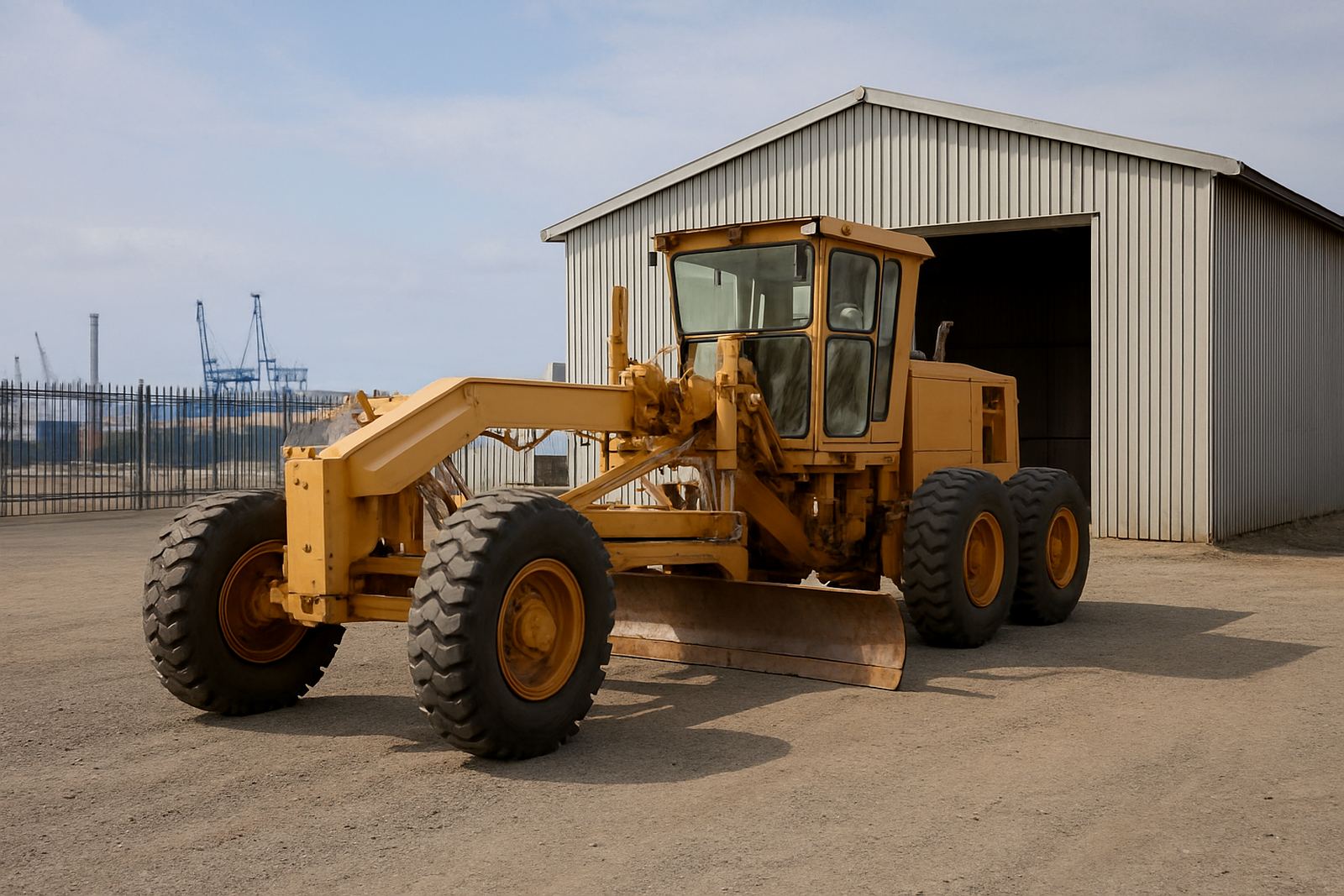
A motor grader is a long, wheeled earthmoving machine with a central blade used to level ground, cut drainage falls, trim shoulders and form base layers. On road projects it is often the machine that gives the final profile before compaction, so the cargo has to arrive in good condition and on time.
We move graders for municipal roadworks, civils contractors, quarry access roads, mine service routes, airport apron works and farm access upgrades. In South Africa, many units work between Durban harbour, Jet Park, City Deep and Paarden Eiland before going inland to sites in Gauteng, KwaZulu-Natal, Mpumalanga and the Western Cape.
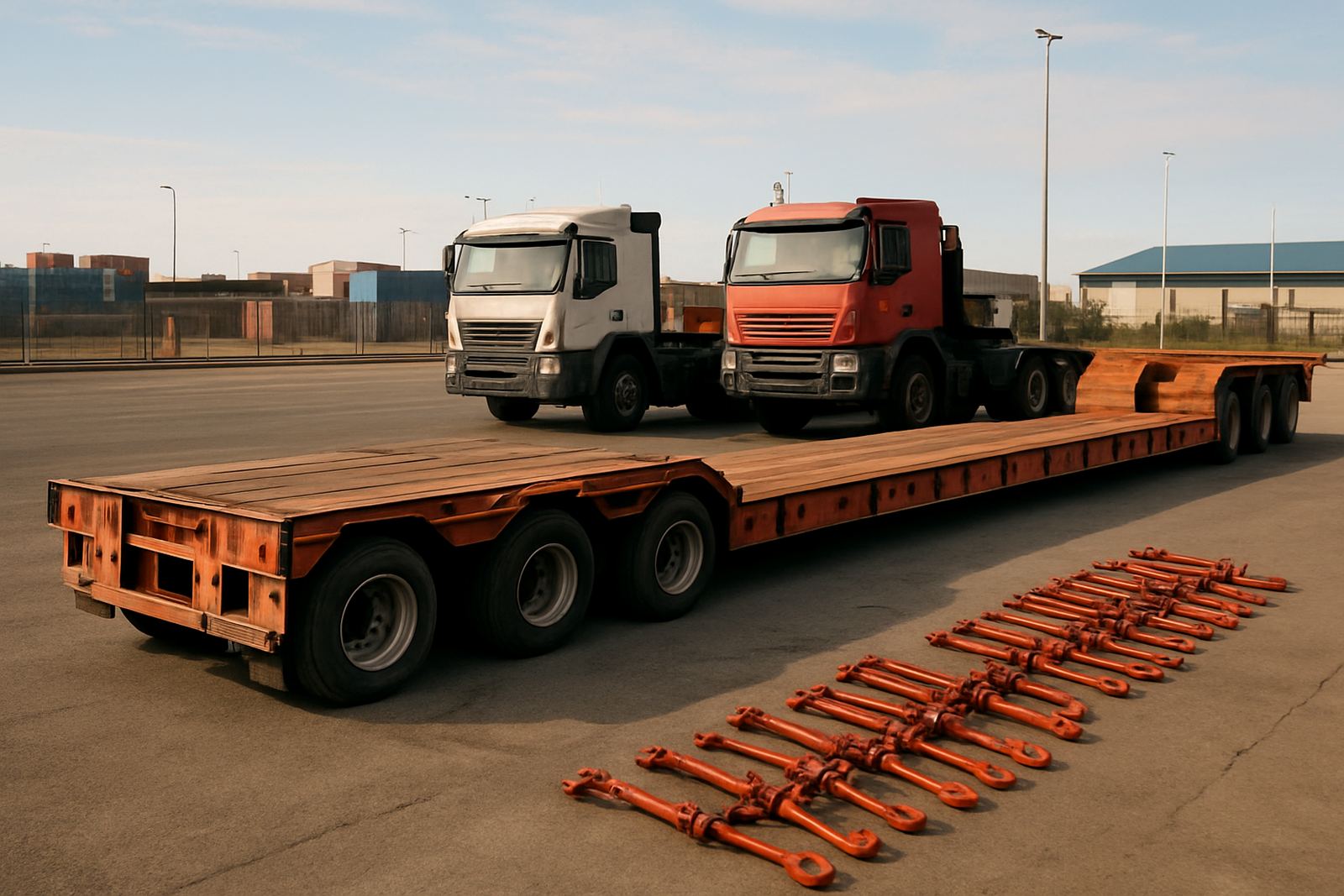
Because a grader has long wheelbase dimensions and exposed hydraulic gear, transport planning matters from the start. We look at height, blade width, tyre condition and the need for any partial strip-down before collection, then plan the clearest route and the correct truck or low-bed.
Common sizes, blade widths and machine options
Motor graders are commonly supplied in mid-size and large configurations, with operating weights from about 12 tonnes up to 30 tonnes or more. Blade widths often range from around 3.0 metres to 4.3 metres, with overall transport width changing depending on blade position, tyre setup and mirrors.
- Compact grader units for smaller municipal and farm work, usually easier to transport and offload on tight sites.
- Standard road-building graders for general civils, often the best fit for provincial road contractors.
- Heavy-duty graders for mining, quarry and bulk earthworks, usually needing stronger transport planning and wider clearances.
- Cab options with air conditioning, ROPS/FOPS protection and GPS-ready wiring for site control systems.
- Attachment options such as rippers, front dozer blades and tyre chains for softer ground or winter work inland.
When clients ask for shipping of a grader from overseas, we confirm the exact model, serial number, machine weight and whether the blade can be removed or must travel in position. Those details affect the shipping method, customs tariff classification and the inland transport rate.
How the cargo is planned for harbour, road and site movement
Motor graders are usually shipped in a container, on a flat rack, or as breakbulk cargo depending on size and port handling needs. At Durban harbour corridor projects, we often coordinate clearing, collection and transport in one flow so the machine spends less time standing at the terminal and fewer costs build up.
Our team handles import planning, customs clearing, cargo insurance, bonded storage and document management, which helps when shipping lead times are tight. For clients using clearing counters in Johannesburg or Cape Town, we can align the paperwork before the cargo lands so the release process is quicker once the vessel arrives.
If the machine is going to a road site outside the city, we check access roads, bridge limits and municipal delivery times. Some sites need after-hours delivery, traffic escort support or offloading on a prepared pad. In humid coastal areas like Umbilo and Paarden Eiland, we also advise on extra rust protection if the grader will stand for a while before commissioning.
Installation, offloading and power needs on site
Most graders do not need fixed installation like a plant room machine would, but they do need proper site preparation before first use. The offloading area should be level, compacted and wide enough for the transport vehicle to stand safely while ramps or a crane are used. Site teams should also confirm turning space, low overhead lines and clear access for the grader to move off under its own power.
For imported units, the buyer should check whether the machine is shipped with fuel drained, batteries isolated or fluids lowered for transport compliance. Once on site, the grader normally needs diesel, hydraulic oil, coolant and battery condition checks before it can be started. If the model has electronic control systems, a stable charging setup and clean earthing points help avoid faults during commissioning.
- Allow enough space for ramp loading or crane offloading, especially for large frames.
- Check tyre pressure before movement, since underinflated tyres can affect transport safety.
- Confirm the blade is locked in transport position and any loose items are secured.
- Prepare fuel, oil and grease points before the machine arrives at the site.
- Keep a trained operator available for first movement and functional checks.
Care and servicing after delivery
A grader that arrives on a busy road site should be checked before it goes into daily work. Coastal salt air, dust from haul roads and long idle periods can all affect condition if the machine is not cleaned and serviced regularly. In Gauteng winter mornings, condensation can sit in electrical connectors, while in KwaZulu-Natal humidity can speed up surface corrosion if the machine is stored outside.
We advise buyers to inspect hydraulic hoses, cutting edges, tyres, wheel bearings, articulation points and brake systems soon after delivery. It is also worth checking the battery box, cab filters and undercarriage areas for transport damage or loose fittings. A short service plan after arrival helps avoid downtime once the machine is on contract.
If a grader will be parked for more than a few weeks, keep it under cover where possible and start it on a regular schedule. Grease all points, protect exposed metal and watch for leaks under the machine. That small bit of care can save a lot of money later, especially where replacement parts have to be ordered through port channels.
What to verify before you order the machine
The simplest way to avoid delays is to send full machine details before collection or shipping is booked. We use those details to confirm the right transport plan, customs code and storage option. If the grader is coming from another African country or from overseas, the paperwork must match the machine exactly or clearing can slow down at port.
- Exact make, model and serial number.
- Operating weight, transport weight and blade width.
- Whether the blade, ripper or mirrors can be removed.
- Year of manufacture and engine type.
- Destination town, site access conditions and offloading method.
- Commercial invoice, packing list, export papers and insurance details.
For inland projects, we also ask about route restrictions, delivery hours and whether the site is in a municipal area with permit rules for abnormal loads. If the grader is going to a mine or civil site with strict access control, advance notice helps the truck reach the gate without waiting around.
Clearing support from Durban, Johannesburg and Cape Town
Machines Africa Hub is based in Umbilo, Durban, with support through Springfield Park, Jet Park, City Deep and Paarden Eiland. That gives clients practical coverage for harbour collections, inland moves and document handling across the main freight corridors. Our team includes Sibusiso Ntuli, Tumisang Mahlaba, Retief Labuschagne, Nomsa Dlamini, Luthando Mchunu and Fatima Cassim, so each job has the right person watching transport, compliance and client updates.
For motor graders, the goal is simple: keep the machine moving legally, safely and on schedule. We plan shipping, clear the cargo, arrange cargo insurance, manage bonded storage if needed and line up inland transport to site. If you are bringing in one grader or several units for a fleet refresh, we can help keep the process tidy from port to final offload.
Send the machine details, destination and delivery date through our contact form and we will map the next steps for the cargo route.
Key facts
| Product | Motor Grader |
|---|---|
| Typical operating weight | 12 tonnes to 30+ tonnes |
| Common blade width | About 3.0 m to 4.3 m |
| Transport methods | Flat rack, breakbulk or container, depending on size |
| Main sectors | Road building, civil engineering, mining, quarry and municipal works |
| Core services | Import planning, customs clearing, inland transport and cargo insurance |