What a lowbed trailer does on South African roads
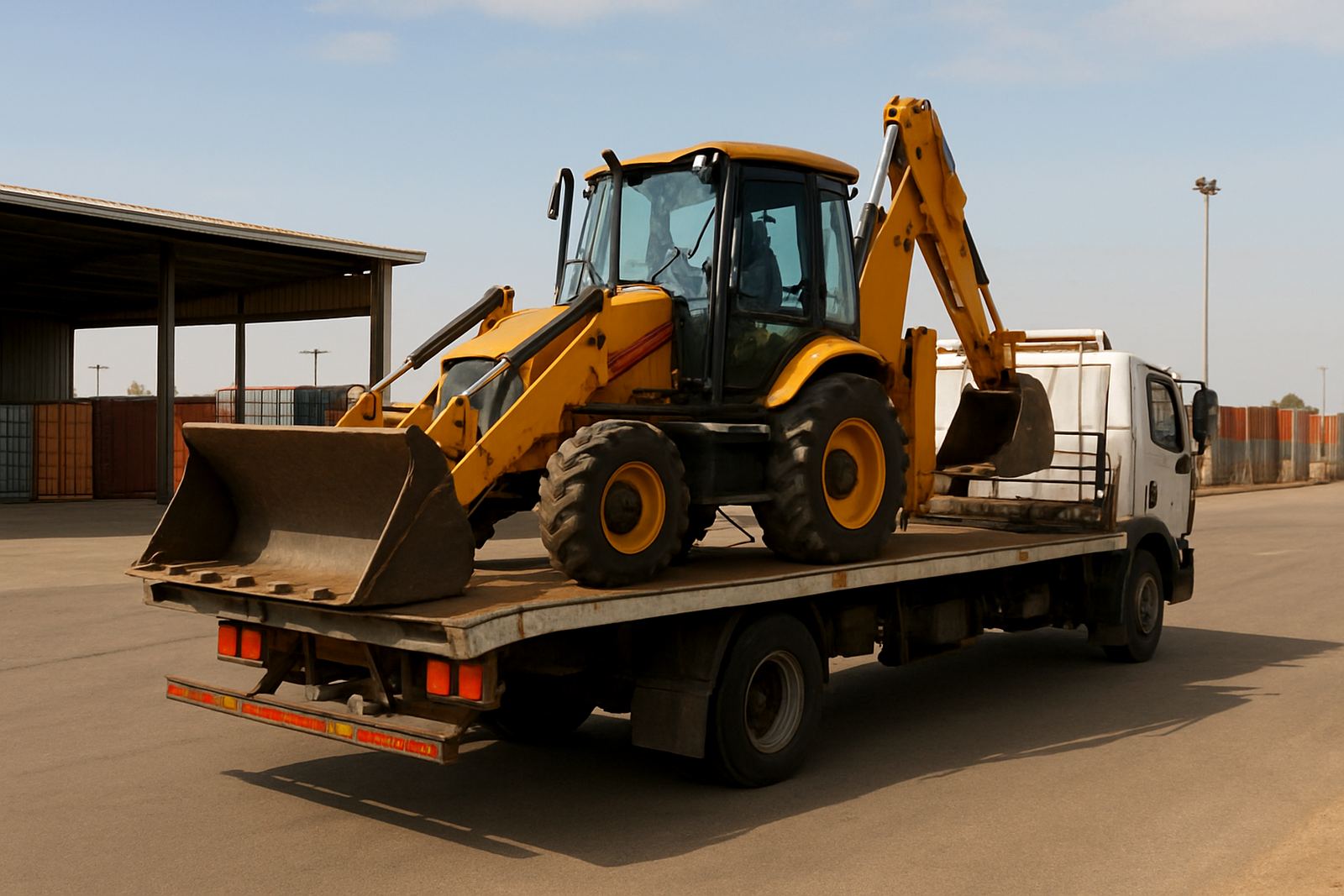
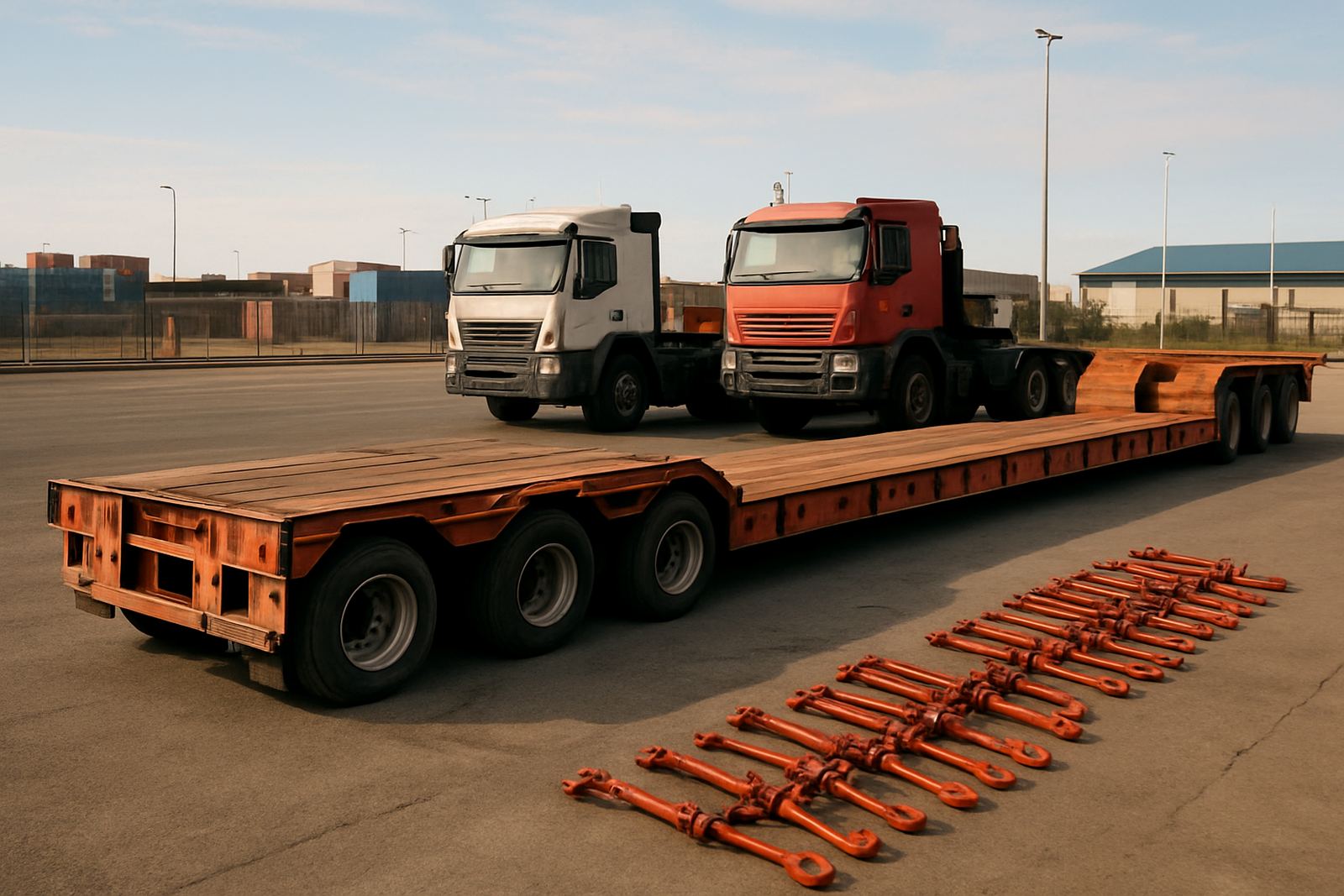
A lowbed trailer carries tall, heavy and awkward loads by keeping the deck height low, which improves stability and helps with bridge clearances, gantry heights and route planning. It is commonly used for excavators, graders, rollers, drilling units, generators, transformers and other plant that needs careful handling from harbour to site.
For Durban harbour corridor work, lowbeds are often part of the chain that starts with import planning and ends with delivery into KwaZulu-Natal, Gauteng, the North West or across border routes. The trailer itself is only one part of the job, because axle loads, permits, escort needs and the offloading point all matter. A mistake in one area can delay a shipment and add storage or truck standing time.
We supply lowbed trailers for operators who move machinery daily as well as contractors bringing in a single heavy machine for a specific project. The key is matching the deck length, axle setup and coupling to the type of cargo and the roads it will travel on.
Common lowbed trailer sizes and build options
Lowbeds are available in a range of lengths and capacities, and the right choice depends on the machine height, wheelbase, weight and route. Some units are fixed deck while others have a hydraulic goose neck for easier loading. In coastal areas like Durban and Paarden Eiland, galvanised or well-coated steel is worth considering because salt air can attack bare metal quickly.
- Deck lengths commonly range from about 8 metres to 15 metres
- Payloads often run from 20 tonnes up to 70 tonnes plus, depending on axle configuration
- Axle layouts may include 2, 3 or 4 axle sets for legal road use and load spread
- Ramp options can be mechanical, hydraulic or detachable
- Suspension can be spring, air or a heavy-duty combination for tranport over rough roads
- Coupling types vary to suit the towing unit and braking system
Some buyers need a lowbed with side extensions or removable rear sections for wider implements. Others need a shorter, tighter unit for urban work in Johannesburg, where turning circles and yard space are limited. We help match the build to the actual operating conditions, not just the brochure numbers.
Where a lowbed trailer suits best
Lowbeds suit mining support, plant hire, road building, municipal work, agricultural machinery and industrial relocations. They are also used for moving broken-down heavy vehicles when a standard breakdown truck is not enough. In the Durban harbour corridor, they are especially useful for clearing cargo from port to inland depots in places like Umbilo, Springfield Park, City Deep and Jet Park.
For neighbouring routes into Namibia, Botswana, Zimbabwe, Mozambique and Zambia, the trailer choice must also consider border delays, axle mass rules and roadside repair access. If a trailer sits idle near the coast, humidity can work into bearings, pins and electrical connections. If it runs inland through dusty routes, seals and wear components need more regular checks.
Lowbeds are not only for very large machines. They also work well where load height is the problem, such as equipment that must pass under overhead lines or through older municipal roads with height restrictions. That makes planning easier when the cargo is valuable and time-sensitive.
Importing and clearing a lowbed through Durban, Johannesburg or Cape Town
We handle import planning, shipping coordination, customs clearing, tariff classification, port collection and inland transport for lowbed trailers entering South Africa. Depending on the route, the unit may clear through Durban and move inland, or go through Johannesburg and Cape Town clearing counters when that is the better fit for the customer’s operation. The paperwork must be correct before collection, because port storage and demurrage can climb quickly.
- Commercial invoice and packing details for the trailer specification
- Tariff code support and customs entry preparation
- Bill of lading or transport document review
- Import permits or road use approvals where required
- Insurance cover arranged for the movement and port handling
- Collection planning for port, bonded storage or site delivery
In practice, good planning reduces delays at the harbour gate, limits re-handling and helps with load booking into inland transport. That matters in Durban where congestion can change fast, and in Cape Town where weather and wind can interrupt lifting windows.
Installation, towing and power needs
A lowbed trailer does not need fixed power or gas in the way a machine does, but its loading and towing setup must be matched properly. The towing unit needs enough braking capacity, drawbar strength and authorised mass for the intended load. If the trailer uses hydraulic ramps or a hydraulic goose neck, a suitable hydraulic power source is required, usually from the towing arrangement or an onboard system depending on the build.
For site work, the ground must be firm enough for loading and offloading. Soft sand, wet clay and poorly compacted gravel can cause sink-in and unsafe loading angles. If the machine is to be placed at a mine, workshop or municipal yard, check the approach road, gate width and turning space before the trailer arrives. A lowbed can only perform properly if the site is ready.
We also advise on offloading points near warehouses, depots and construction sites where forklifts or cranes may be needed for final positioning. This is especially useful when the cargo is going straight into service after arrival.
Maintenance, servicing and what to confirm before you buy
Lowbed trailers work hard, and servicing should follow the load cycle rather than only the calendar. Check tyres, wheel nuts, springs, airbags, pins, kingpin wear, brake lines and deck condition regularly. On coastal routes, wash down salt residue and inspect exposed steel and wiring more often. On inland routes, look out for loose fasteners and cracked welds after rough road use.
Before ordering, ask for the exact payload need, the loaded height, machine wheelbase and the route plan. That tells you whether the trailer needs a longer deck, more axles or a different ramp arrangement. Also confirm the coupling type, brake spec, deck width and whether the trailer will sit in a yard near the harbour or spend most of its time on the road.
- Check the cargo mass with attachments fitted, not just the base machine weight
- Confirm route restrictions, permits and escort needs before shipment
- Match the trailer deck length to the longest machine in your fleet
- Ask about corrosion protection if the unit will work near the coast
- Confirm spare parts access for tyres, lights, brakes and hydraulic items
If you need a lowbed trailer imported into South Africa, we can manage the freight, clearance and inland move so the unit arrives ready for service and not stranded in a yard.
Key facts
| Type | Lowbed trailer for heavy plant and oversized machinery |
|---|---|
| Typical deck length | 8 m to 15 m |
| Payload range | 20 tonnes to 70 tonnes plus |
| Axle options | 2 axle, 3 axle or 4 axle configurations |
| Build features | Fixed deck, hydraulic goose neck, ramps, side extensions |
| Support | Import planning, customs clearing, port collection and inland delivery |