Vehicle lift systems for day to day workshop work
A vehicle lift is a fixed or mobile lifting system that raises a vehicle off the floor so technicians can service brakes, suspension, exhausts, underbody parts and driveline components with better access. For South African workshops, depots and testing facilities, the right unit must suit the vehicle mix, floor strength, power supply and the space available around the bay.
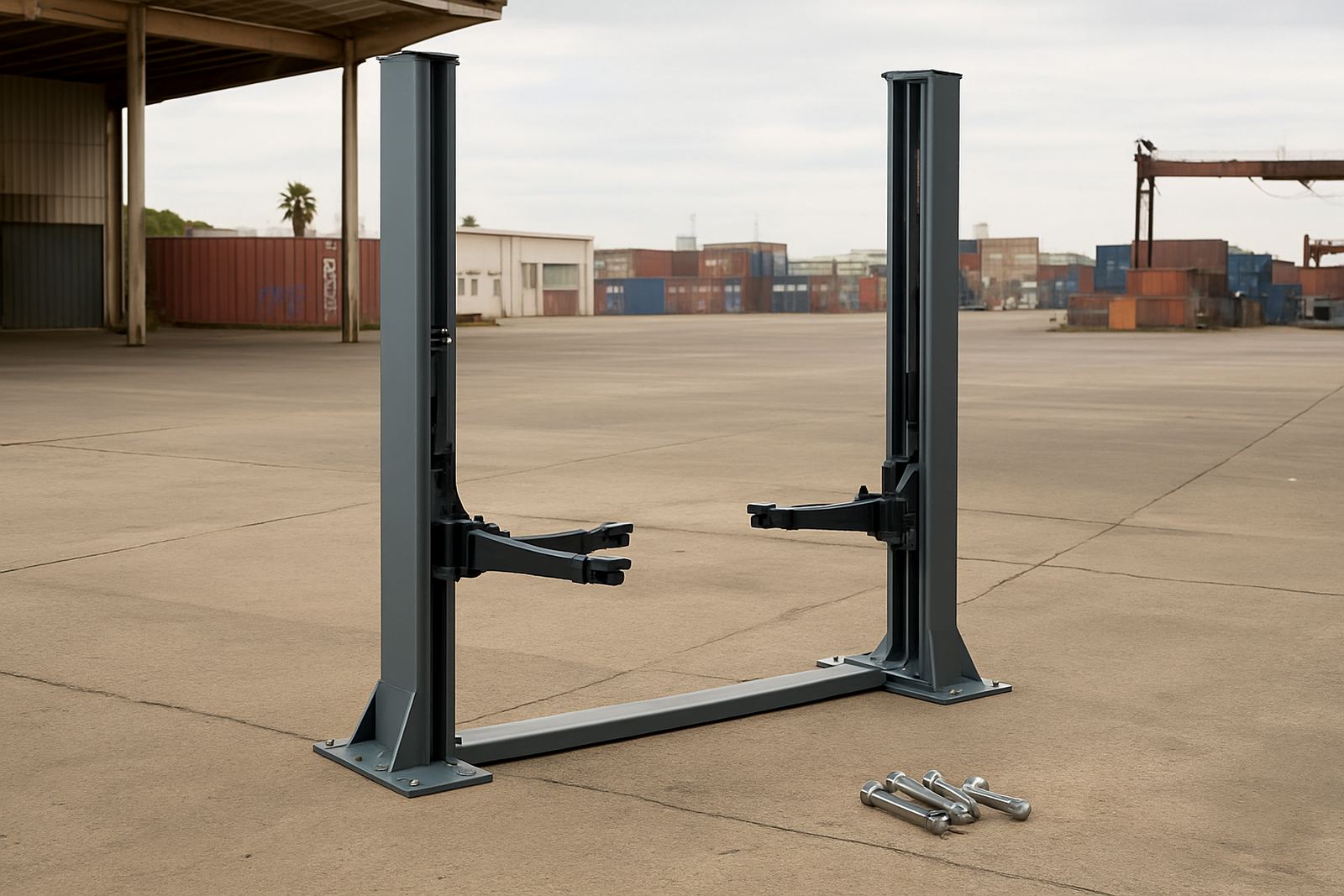
Most orders we handle are for two-post, four-post, scissor and low-rise lifting systems. Two-post units are common in repair bays where wheel and underbody access matters. Four-post units are often chosen for wheel alignment, storage and inspection. Scissor lifts suit tighter spaces and are useful where the bay layout or roof height is limited. In Durban, Johannesburg and Cape Town we often see buyers matching the lift to the work pattern first, then selecting the lifting height and capacity.
For fleet yards and municipal workshops, the practical issues matter as much as the machine itself. You need space for doors to open, safe working room around the posts or platforms, and a floor that can carry the load without cracking. If the site is near the coast, corrosion protection is worth checking early because salty air and high humidity can shorten the life of unprotected steel parts.
Common sizes, lift capacities and layout choices
Vehicle lift systems are supplied in different sizes and ratings to suit everything from passenger cars to heavier bakkies and panel vans. The main things to compare are capacity, lifting height, arm length, platform width and the overall footprint once the unit is installed. It is also wise to check the minimum lift height if you work on lower vehicles or need easy drive-on access.
Typical options we help clients import include 3.0 tonne and 3.5 tonne units for lighter workshops, 4.0 tonne to 4.5 tonne systems for mixed fleets, and higher-rated equipment where light commercial vehicles are serviced regularly. Lift height usually ranges from about 1 800 mm to 2 000 mm for many workshop units, although some inspection or alignment applications need more. Platform lengths can run from about 4.2 metres to 5.5 metres on four-post styles, while two-post systems need clear side access and floor fixing points.
- Two-post lifts: good for general repair work and wheel removal.
- Four-post lifts: suited to alignment, storage and inspection work.
- Scissor lifts: useful where ceiling height is limited.
- Mobile column systems: better for fleets and larger vehicle sets, but site planning is more involved.
When you order, we will usually ask for the vehicle types you plan to service, the bay size and whether the lift will be used for daily throughput or occasional jobs. That helps avoid choosing a unit that is too small, too slow, or not practical for the site layout.
Where these lifts suit best in South Africa
Vehicle lift systems suit service workshops, tyre and suspension centres, fleet maintenance depots, inspection stations, insurance assessment bays and certain automotive training facilities. In places like Springfield Park, Jet Park, City Deep and Paarden Eiland, space and access are often at a premium so compact or low-profile models can make more sense than a large platform unit.
For Durban harbour corridor operations, corrosion resistance and fast parts access matter because many sites are working long hours and close to salt air. In Johannesburg industrial areas, power supply stability and floor loading are often the bigger concern. If your site experiences load-shedding, you need to know whether the lift has manual lowering controls, battery backup or another safe method to bring a vehicle back down during an outage.
Inspection centres and testing facilities often require predictable lifting height, clear access around the vehicle, and a stable hold once raised. Fleet depots may prefer a setup that lets operators move through vehicles quickly with less repositioning. We assist with the import side for both single units and larger orders, including the paperwork needed for clearing through Durban, with inland movement to Gauteng or the Western Cape as required.
Installation, floor fixing and power requirements
Before ordering a vehicle lift, the site should be checked for slab thickness, floor level, ceiling height and available power. Many workshop lifts run on 220V single-phase or 380V three-phase power, depending on the type and size. If your premises have unstable supply or regular outages, it may be worth planning for surge protection and a safe shutdown procedure. Some larger systems may also need compressed air for locking or release functions, so the workshop should confirm whether an airline is already in place.
Installation normally involves anchoring the lift to a suitable concrete slab, setting the columns or frames level, and testing the safety locks before the unit is put into service. Do not assume any slab will do. A busy workshop with repeated load cycles needs proper footing and enough edge clearance around the fixings. If you are fitting a lift in a bonded or shared premises, check with the landlord and local municipal requirements before drilling or casting new pads.
- Confirm concrete thickness and floor condition before purchase.
- Check ceiling height, door clearance and approach space.
- Verify the power supply, breaker size and phase availability.
- Plan for drainage, oil spills and safe pedestrian movement around the bay.
We can arrange shipping, customs clearing and inland transport to the site, but the end user should still have the floor ready and the electrical work signed off by a qualified installer. That prevents delay at delivery and keeps the equipment safe from the start.
Care, servicing and working life
Good care starts with daily checks. Operators should look for damaged cables, uneven lifting, oil leaks, bent arms, loose fixings and worn safety locks. If a unit is used in a coastal or dusty area, the moving parts need cleaning and lubrication on a proper schedule because grit and salt will wear them down faster. A lift that is worked hard in a busy fleet yard should be inspected more often than one used only a few times a week.
Routine servicing usually includes checking hydraulic fluid, inspecting hoses, tightening anchor bolts, testing the safety latches and confirming the platform stays level through the full stroke. Keep the area around the lift clear of spare tyres, tools and packaging. Small scraps can become a trip risk or block moving parts. If a fault appears, stop using the unit until it is checked. A lift that drops unevenly or makes unusual noise should not be put back into service until it is repaired.
Where possible, choose painted or galvanised finishes, and ask about replacement parts availability before importing. A unit that is easy to service locally will save time later, especially for workshops outside the main metro areas.
What to check before placing the order
Ordering the right vehicle lift is mostly about matching the machine to the job. We recommend checking the vehicle mix, the expected daily volume, the available floor space and the power supply first. Then look at the lift capacity, lifting height, platform or arm style, and whether alignment work, general repairs or storage is the main use.
- Vehicle type: cars, bakkies, SUVs or light commercial vehicles.
- Capacity: allow a margin above the heaviest vehicle you service.
- Bay size: measure width, length and ceiling height at the actual site.
- Power: confirm voltage, phase and backup arrangements for outages.
- Corrosion protection: important for Durban, coastal Cape Town and humid storage areas.
- Documents: commercial invoice, packing list, country of origin papers and any required technical details for clearing.
If you are importing through Durban harbour and moving inland to Johannesburg or Cape Town, getting the paperwork right avoids delays and extra storage charges. Our team in Umbilo and the clearing counters in Johannesburg and Cape Town handle import planning, tariff classification, customs clearing, port collection, bonded storage and inland transport. That helps keep the vehicle lift moving from vessel to workshop without unnecessary hold ups.
Key facts
| Lift types | Two-post, four-post, scissor and mobile column systems |
|---|---|
| Typical capacity | 3.0 tonne to 4.5 tonne for most workshop units, higher on request |
| Typical lift height | About 1 800 mm to 2 000 mm, depending on model |
| Power supply | 220V single-phase or 380V three-phase, model dependent |
| Installation needs | Level concrete slab, anchor fixing, safe clearance and correct electrical supply |
| Best suited to | Service workshops, fleet depots, inspection centres and automotive training sites |