Why the first 30 minutes after landing matter
When a reefer trailer arrives through the Durban harbour corridor, the first inspection should happen before anyone signs off the handover. If the unit has travelled on a low loader, arrived by ship, or been collected from a bonded facility, any fault can quickly turn into a temperature issue. That is expensive when the load is food, pharmaceuticals, or other temperature-sensitive cargo.
Our team in Umbilo sees this often around Durban, Springfield Park and Portside routes into Jet Park and City Deep. A trailer may look fine from the outside, but the cooling unit could have a weak compressor, damaged controls, or a battery issue from long standing time. Coastal humidity also plays a part. Terminals and depot yards near the port can cause surface corrosion, and that affects plugs, sockets and door seals if the unit has been sitting for too long.
- Check the unit as soon as it lands, not later in the day.
- Record the set point, actual temperature, and fuel or power source.
- Take photos of doors, hinges, seals, cables and the control panel.
Cooling unit checks that prevent a costly breakdown
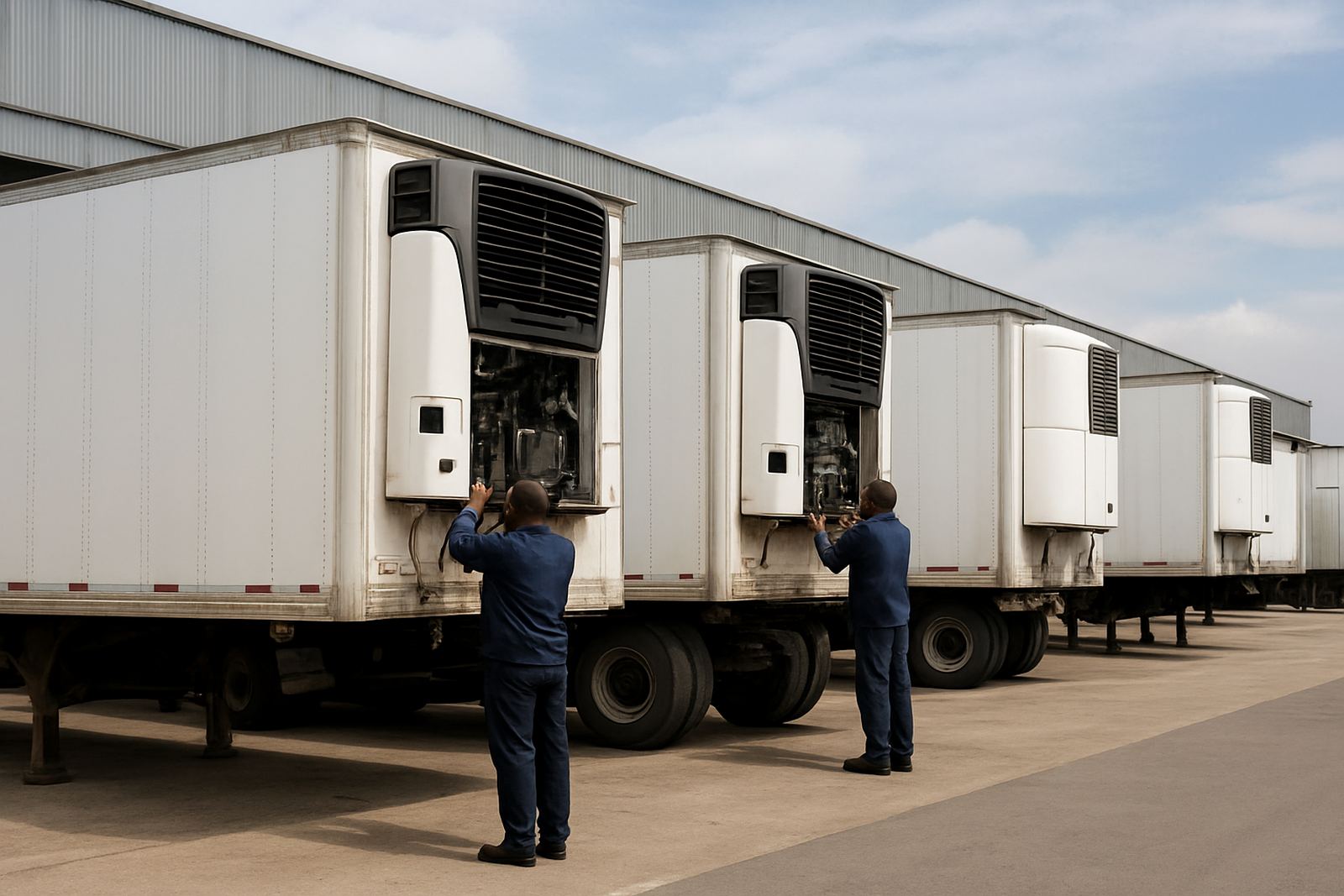
The cooling unit is the heart of the trailer, so start there. Listen for unusual knocking, rattling, or a compressor that cycles too often. A trailer can still run, but if the unit is short-cycling or struggling to hold temperature, the cargo may already be at risk. For imported units, make sure the controller display matches the documents and the required temperature range for the load.
Our operations team usually works from a simple practical list. Is the fuel supply correct, are belts tight, are filters clean, and is there any warning code on the panel? If the reefer is going into inland transport to Johannesburg, that trip can expose weakness that was not obvious at the port. It is better to find a fault at collection than on the N3 with a full load and a driver waiting at a weighbridge.
- Confirm the cooling unit starts, holds and recovers temperature.
- Check for oil leaks, loose covers and damaged fan guards.
- Verify alarms, battery condition and control settings.
- Inspect the fuel tank or electrical feed before dispatch.
Insulation panels and door seals deserve close attention
Insulation is often ignored because it is hidden inside the body, but it is just as important as the cooling plant. If a trailer has been bumped during discharge or handled roughly in a shipping yard, the insulation panels may be compressed or cracked. Even a small gap can affect holdover time, especially in Durban heat and high humidity.
Look for soft spots on the walls, floor damage, and any sign of water ingress around the roof joints. Door seals need to close evenly all the way around. If a seal is torn or flattened, the unit will work harder and use more fuel or electricity. That extra load matters when the trailer is parked at a site in Umbilo or Durban North and needs to stay cold overnight. In some cases, clients only notice the problem when product temperatures start drifting during offloading.
- Inspect the rear doors for light gaps and uneven closure.
- Check floor panels for flexing, dents or chemical damage.
- Look for moisture, mould, or staining inside the cargo box.
Electrical compatibility between port supply and the trailer
One of the most common arrival problems is electrical mismatch. A reefer trailer may be wired for a different plug type, voltage, or phase arrangement than what is available at the port, depot, or storage yard. If the trailer cannot connect properly, the unit may sit idle while a technician is called out. That is avoidable with a quick compatibility check before collection.
In practice, this means confirming the connector style, cable condition, earthing, and whether the trailer is meant to run on generator power, shore power, or battery support. For clients collecting through Durban harbour corridor facilities, we also check whether the destination yard in Paarden Eiland, City Deep, or Jet Park can supply the correct feed. Poor connections can trip breakers, damage sockets, or cause intermittent cooling. In freight work, intermittent is never good enough.
- Match the trailer plug and power source before dispatch.
- Check cable insulation for cuts, heat marks, or crushed sections.
- Test the unit on site where possible before release.
Customs, documents and timing around reefer arrivals
For imported reefer trailers, the paperwork must line up with the physical inspection. Classification, valuation, release documents, and any port instruction should be in order before the trailer moves. If there is a hold on the file, the trailer may sit longer than planned, which is never ideal for a unit meant to protect a controlled load. Our clearing counters in Johannesburg and Cape Town often assist when a Durban arrival needs fast follow-through.
Good document management also helps with insurance and warranty claims. If a cooling unit was damaged in transit, you need arrival notes, photos and the handover record ready. That is why our team keeps the inspection practical and detailed. It is not about ticking boxes for the sake of it. It is about making sure the trailer can leave the port and work straight away. No guesswork, no loose ends.
- Keep the release paperwork with the inspection report.
- Note all visible damage before the trailer leaves the yard.
- Confirm who is responsible for collection, transport and offloading.
A Durban example: what one early check prevented
We recently handled a reefer trailer arriving through the Durban harbour corridor for a fleet operator moving chilled goods between Durban and Gauteng. The trailer looked serviceable on the outside, but during the first inspection the team found a door seal problem and a power connection that did not match the receiving yard’s supply. If that unit had left the port without a check, the driver would have arrived at site with a cooling issue and delays at offloading.
Instead, the trailer was held briefly in bonded storage, the seal issue was noted, and the connection arrangement was corrected before inland transport. The client avoided product risk and an after-hours callout. That is the point of a proper reefer arrival process. Small problems stay small when they are caught early. In Durban traffic, with weather changes and busy port gates, that matters even more.
How Machines Africa Hub handles reefer trailer arrivals
Machines Africa Hub works from Umbilo and supports arrivals across Durban, Springfield Park, Jet Park, City Deep and Paarden Eiland. For reefer trailer movements, we coordinate import planning, customs clearing, port collection, inland transport and bonded storage where needed. We also help with cargo insurance, document management and site offloading so the trailer is checked before it is pushed into service.
Our process is practical. We want the cooling unit tested, the insulation verified, and the electrical compatibility confirmed before the trailer gets to the next point on the route. That way clients can focus on fleet use, cold chain timing, and delivery windows instead of chasing faults after the load has already moved. For advice or arrival support, use our contact form.
- Import planning for reefer trailer arrivals and handovers
- Customs clearing and tariff classification support
- Port collection, inland transport and bonded storage
- Site offloading and document management for controlled cargo