When civil plant has to move in stages
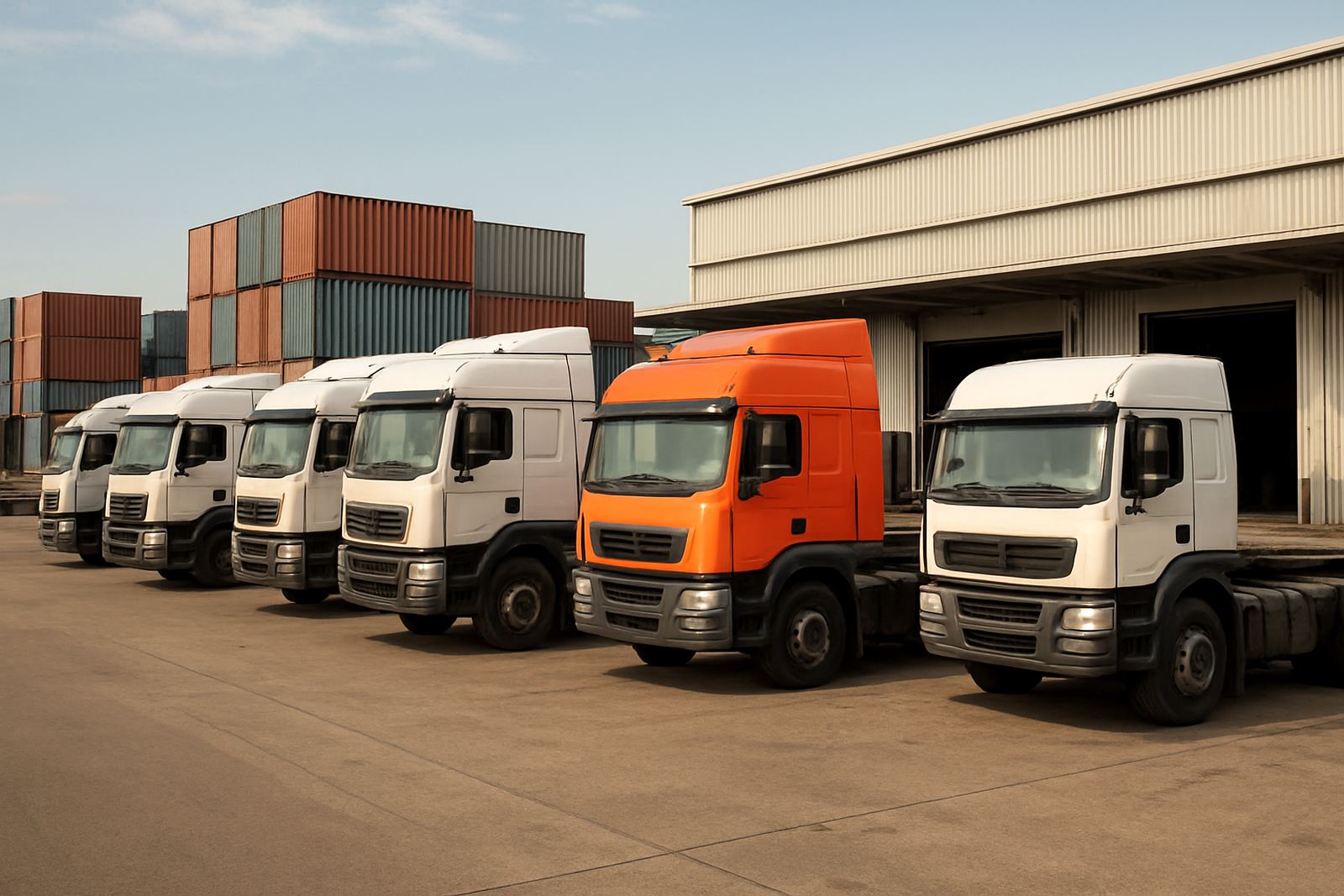
Civil contracting jobs rarely start with one straight run from port to site. A grader may land in Durban, go to bonded storage in Umbilo or Springfield Park, then move by lowbed to a depot in Jet Park or City Deep before the final trip to a project outside Pietermaritzburg, Mthatha, Polokwane, or Upington. That staged movement is normal when the site is not ready, access roads are unfinished, or permits for abnormal loads are still being arranged.
We work with contractors who need machines released quickly, but also need the paperwork, route planning, and storage to be correct. A delay at the port can hold up an entire drainage or road upgrade crew, so the import plan must match the site programme from the start.
Typical equipment for roads and infrastructure work
Civil projects bring in a mix of earthmoving, compaction, lifting and support equipment. Some items can travel as standard freight, while others need abnormal load arrangements, escort vehicles, or split delivery over several days. We plan around the machine size, axle load, site access and the receiving yard.
- Excavators from 8 ton to 40 ton for drainage, trenches, and bulk earthworks
- Wheel loaders, skid steer loaders, and backhoe loaders for material handling
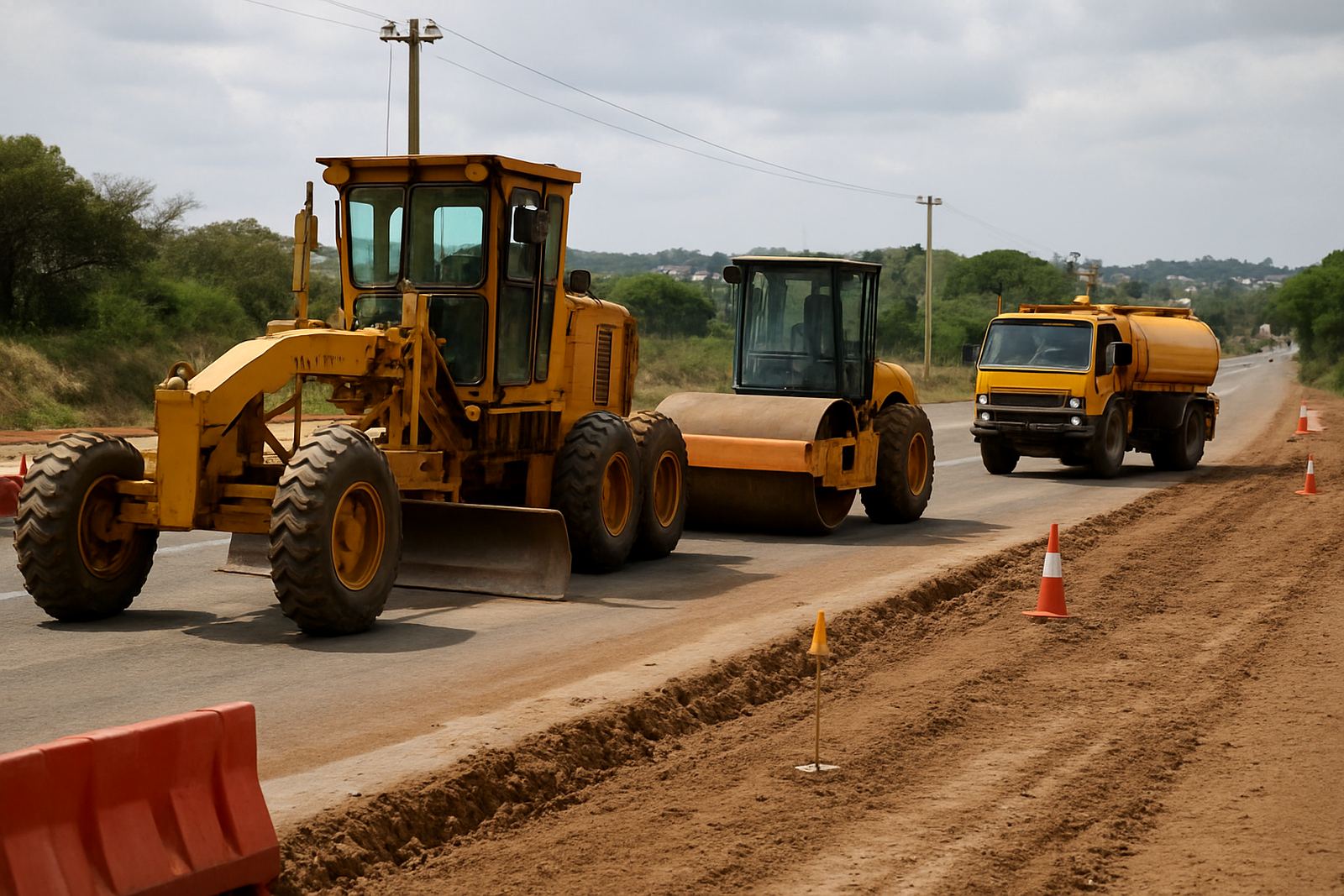
- Motor graders, rollers, and pavers for road construction and resurfacing
- Crushers, screens, generators, compressors, and water carts for site support
- Traffic control equipment, light towers, welders, and pump sets for live sites
If the equipment has attachments such as buckets, forks, rippers, or vibration plates, we list those separately so the customs entry matches the cargo. That helps avoid questions at clearing and keeps the delivery note tidy.
Planning the route from harbour to site
Durban harbour corridor movements need more than a truck booking. Coastal humidity can affect exposed steel, hydraulic systems and electrical fittings, so cargo may need wrap, desiccant, or covered storage if it will sit for more than a few days. In Gauteng, dust and road restrictions can affect final delivery, especially where the machine must enter a construction site through a narrow gate or over soft ground.
We usually map the move in three parts: port release, inland leg, and site offloading. For projects in KZN, that may mean a direct lowbed movement from Durban to Hammarsdale, Richards Bay, or Pietermaritzburg. For inland jobs, we may combine port collection with short-term storage in Umbilo, then move the unit on a booked date once cranes, rigging, and the receiving crew are ready.
- Confirm site access width, turning radius, and bridge limits before the truck is booked
- Check whether the municipality needs abnormal load notification or road opening permits
- Match offloading gear to the machine weight and the ground condition at site
- Allow for load-shedding if the site needs cranes, lighting, or powered gates
Common mistakes that hold up civil machinery
Many delays come from details that look small at the start. A contractor may book transport before clearing is final, or forget that a machine with attachments weighs more than the sales invoice suggests. We also see paperwork problems where serial numbers, HS codes, or invoice descriptions do not match the packing list, and that can stall release at the port.
Another common issue is underestimating site preparation. If the access road is unfinished, the truck may have to wait off site and that adds cost. If there is no forklift or crane at the right time, the machine stays on the trailer. In some areas the final metre matters as much as the port move, so we ask about gradients, soft ground, culverts, and any overhead lines before the load leaves Durban.
- Clear the machine before arranging final delivery dates
- Do not assume standard transport will work for oversized attachments
- Keep client, site agent, and transport controller on one delivery schedule
- Budget for storage if the project is delayed by rain, permits, or access works
Budget ranges for a civil equipment import
Costs depend on the machine value, size, origin, duty position, and the amount of inland handling required. A small machine moving through Durban to a KZN site will cost less than a 40 ton unit needing bonded storage, customs inspection, and a lowbed run into Gauteng. For most civil contracting imports, clients should allow for more than just freight. The full landed cost includes shipping, clearing, port charges, transport, insurance, and sometimes storage or site offloading.
As a working guide, a smaller project machine may need a logistics budget from about R35 000 to R85 000 excluding duty and VAT, while larger or abnormal loads can run from R120 000 to R350 000 and above depending on distance and handling. If the job needs extended storage or multiple lifts, the spend can rise quickly. We prefer to quote with the route, port charges, and delivery method included so there are fewer surprises later.
How our team supports civil contractors
Our Durban base in Umbilo is well placed for harbour work, with support through Johannesburg and Cape Town clearing counters for inland supply chains. Sibusiso Ntuli leads the business, with Tumisang Mahlaba on operations, Retief Labuschagne on clearing, Nomsa Dlamini on client service, Luthando Mchunu on fleet coordination, and Fatima Cassim on trade compliance. That mix matters when a contractor needs one point of contact but several moving parts behind the scenes.
We handle import planning, shipping coordination, customs clearing, tariff classification, port collection, inland transport, cargo insurance, bonded storage, site offloading and document management. For civil contractors, that usually means we can collect a machine at origin, clear it through Durban and manage staged delivery to the correct province without leaving your site team to chase carriers and agents.
- Need an estimate? Send the invoice, packing list, and delivery town through our contact form
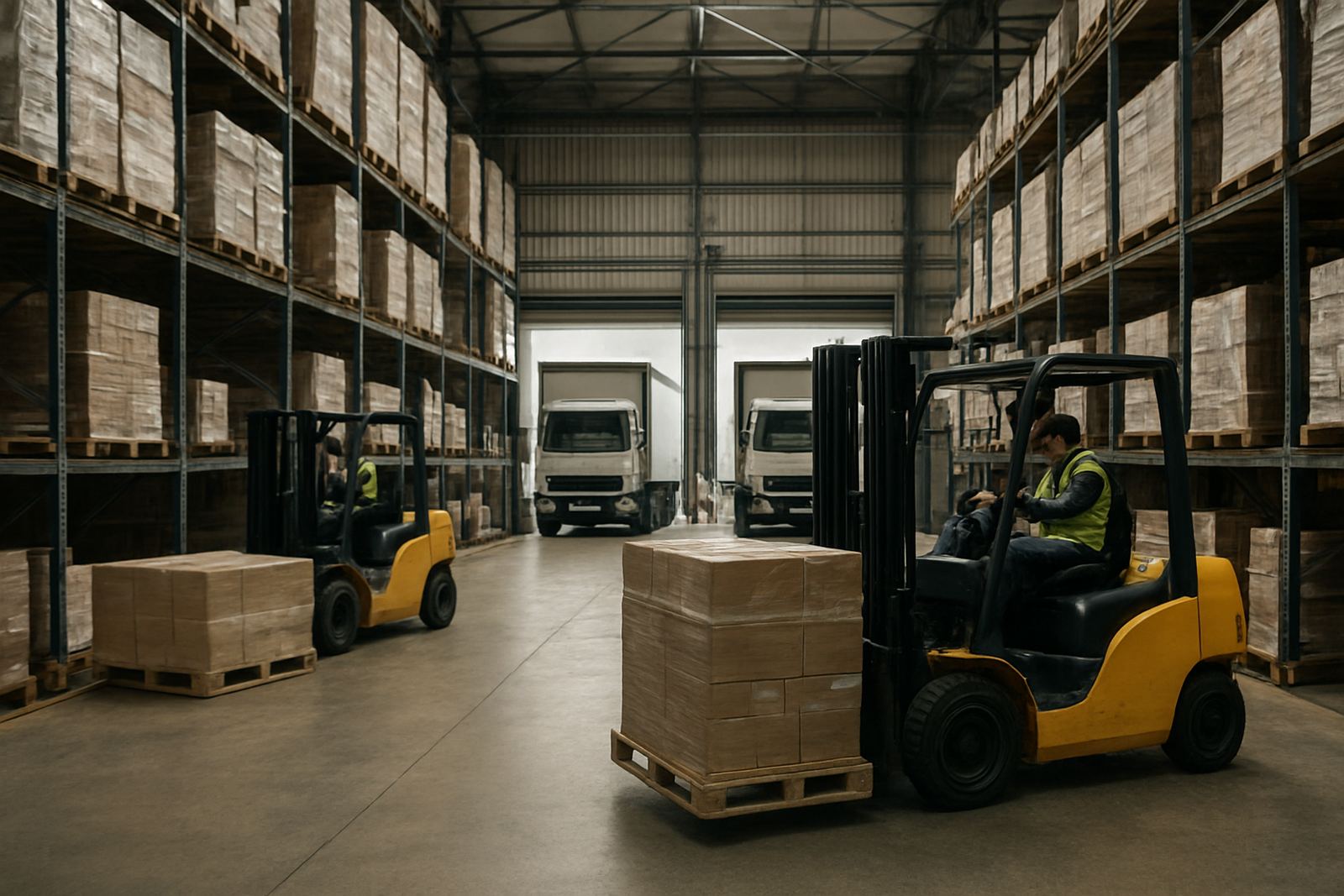
- Need storage before site handover? We can hold cargo while access, permits, or cranes are arranged
- Need multiple machines on one programme? We can split the move by release date and site priority