
When a road freight operator needs imported equipment
A road freight business rarely imports one item at a time. It is usually a mix of vehicles, trailers, tyre fitment gear, compressors, hydraulic jacks, generators, washbay units, forklifts, and hand tools for a new depot or an expanding fleet. Some clients are replacing old units after hard service on Gauteng highways, others are setting up a workshop in Durban or adding recovery equipment to work coastal routes where rust starts early and fittings seize up fast.
We support operators who need proper import planning before cargo leaves the origin port. That means checking dimensions, weight, lifting points, tyre condition, battery condition, fluid drainage, and whether the item will travel as breakbulk, containerised cargo, or on a lowbed after arrival. For a fleet manager, one wrong assumption can mean extra port charges, a missed booking, or a trailer that arrives but cannot be offloaded on site.
Our team works from Umbilo in Durban, with clearing support in Johannesburg and Cape Town, so the process can be handled where the cargo lands and where it must eventually move to. For road freight operators, that matters because the cargo often has to get to Jet Park, City Deep, Springfield Park, Paarden Eiland, or a regional depot with limited yard space and strict delivery windows.
Typical equipment in a road freight import set
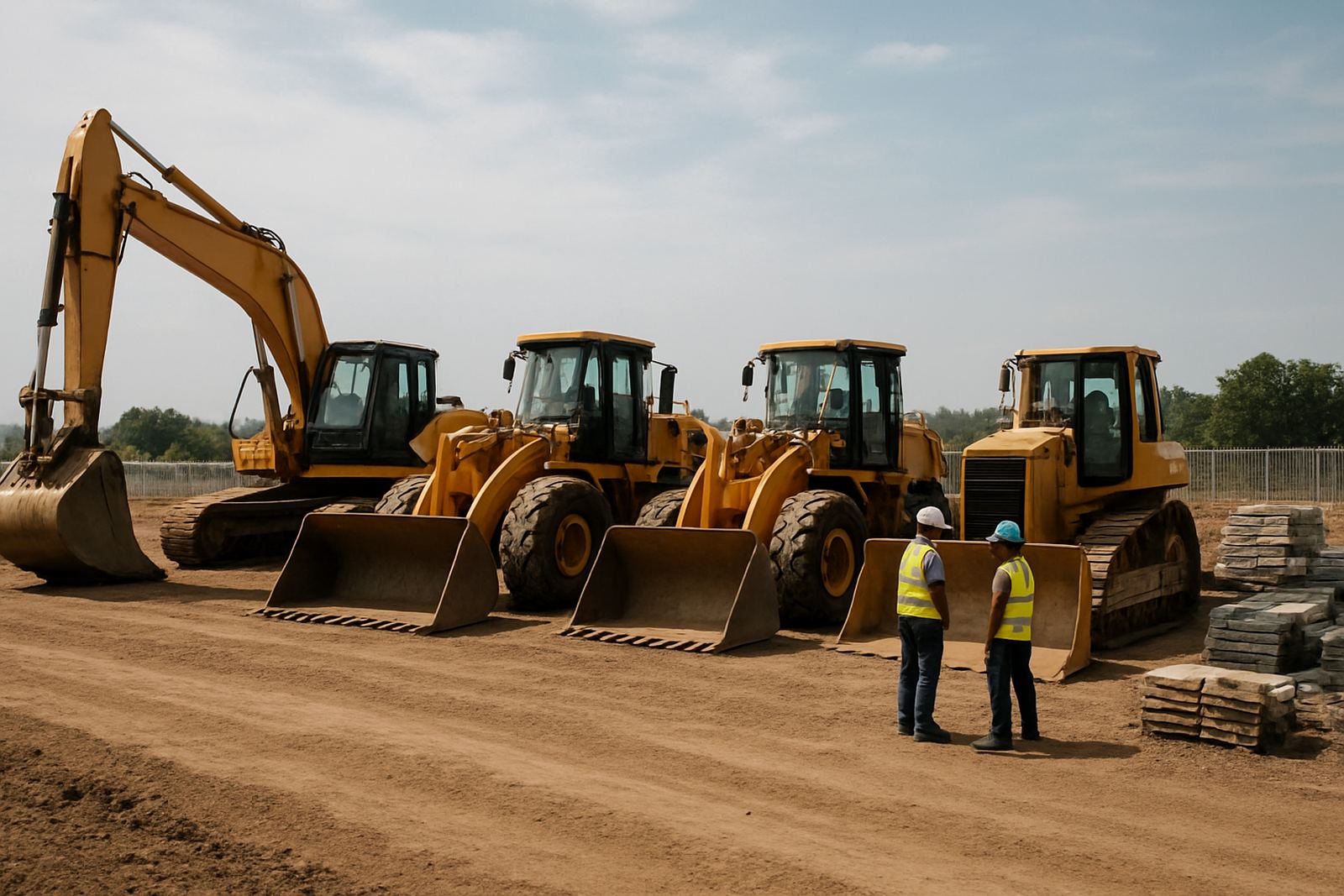
Road freight imports are usually a package of practical items rather than one machine. The load must fit the business plan, the workshop layout, and the available yard surface. A common set may include a truck, spare trailer, wheel service equipment, a compressor, spare parts cabinets, pallet handling gear, and a small forklift for offloading and loading.
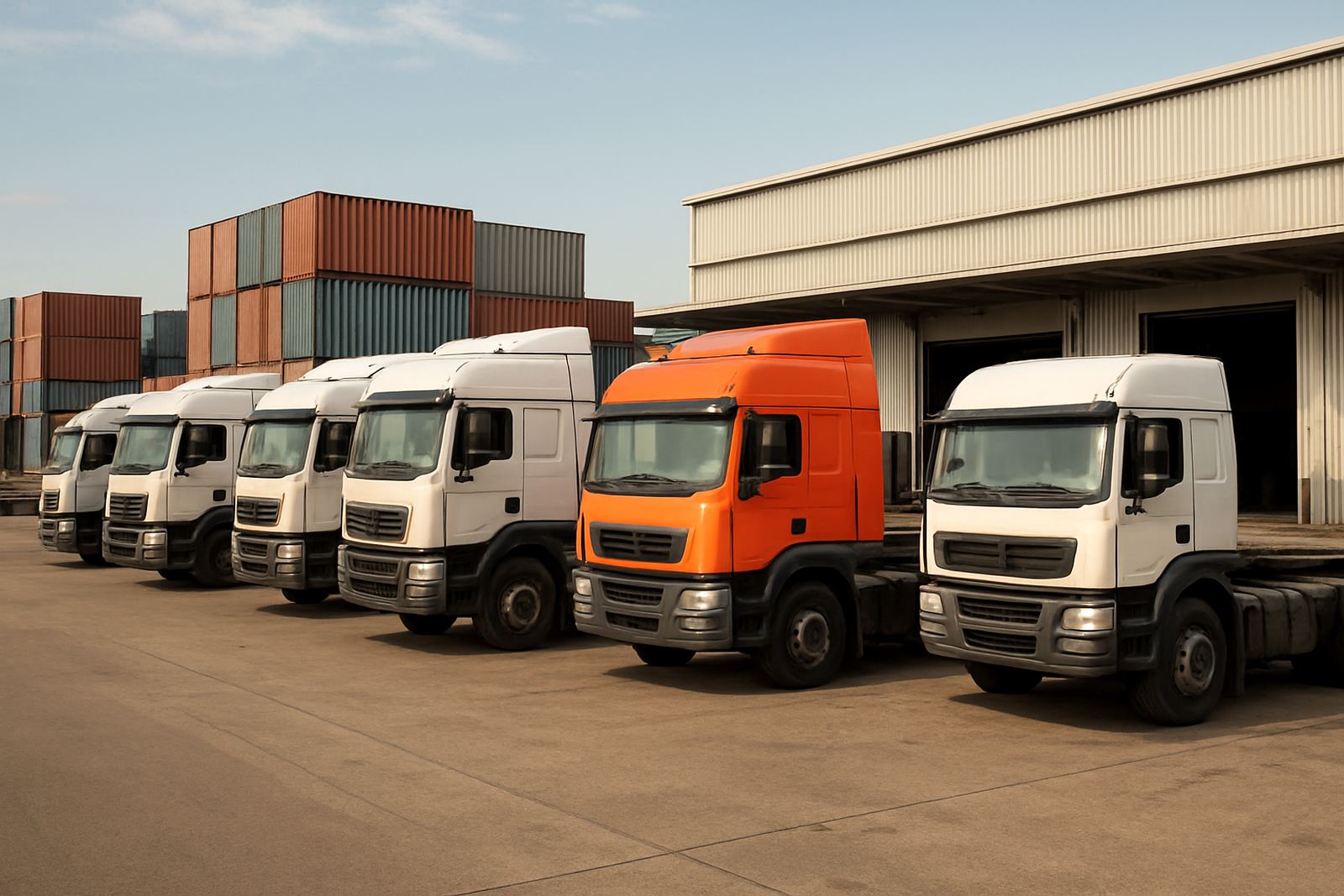
- Rigid trucks, horse and trailer units, and recovery vehicles
- Flatdeck, curtain side, tanker, and lowbed trailers
- Wheel alignment machines, tyre changers, and balancing units
- Compressors, welding sets, battery chargers, and portable generators
- Forklifts, pallet jacks, scissor lifts, and yard handling gear
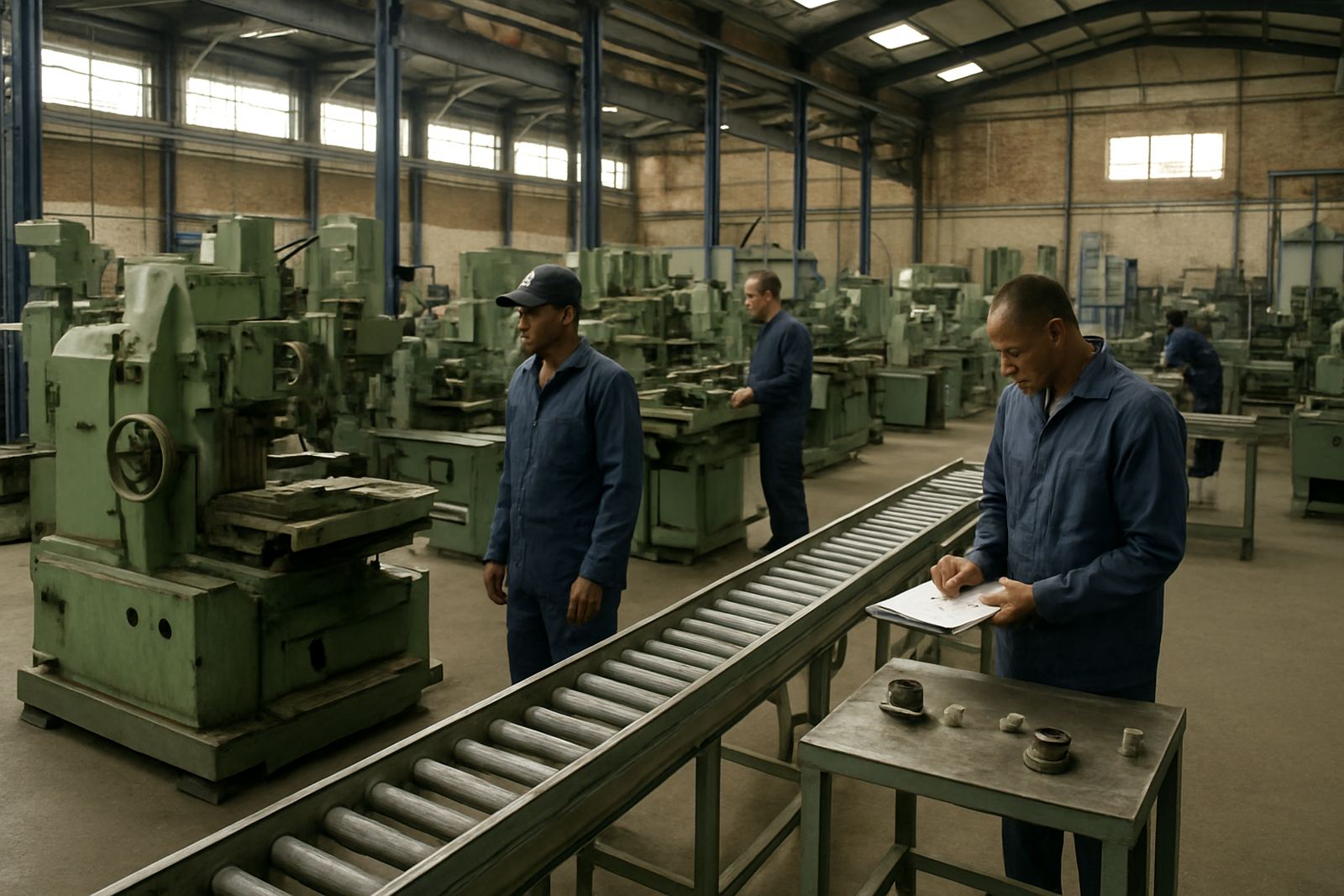
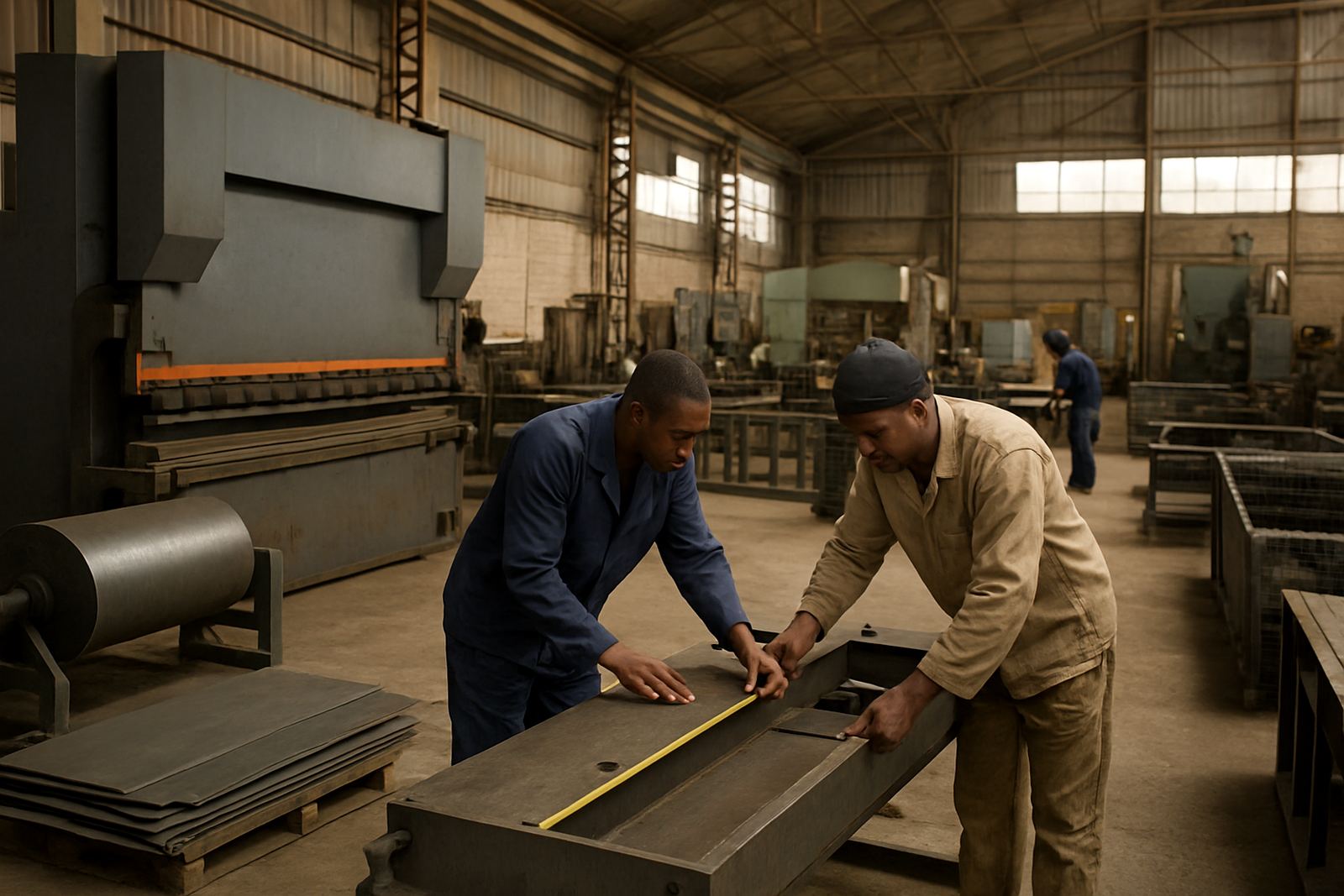
- Workshop benches, tool storage, spare parts racks, and wash equipment
For coastal operators in Durban, salt air is a real factor. Galvanised parts, coated steel, and sealed electrics are worth the extra spend. In Gauteng, dust and heat are the bigger issue, so cooling, filtration, and service access matter more. When equipment is imported for cross-border work into Mozambique, Botswana, or Zambia, we also look at documentation that will keep the cargo moving after it leaves South Africa.
Planning the yard, workshop, and offloading space
Road freight buyers often focus on the machine and only later discover that the yard is the problem. A trailer may fit on paper but not turn safely into the gate. A forklift may arrive but there is no hardstanding for the delivery truck. A workshop lift may be correct for the vehicle type yet the roof height or slab thickness is not suitable.
Before shipping, we help clients check the basics: entry width, turning circle, overhead clearance, floor loading, offloading method, and whether the site needs a crane, side-loader, or ramp. In places like Springfield Park or City Deep, access times and security rules can also affect delivery. In Umbilo or Paarden Eiland, loading space can be tight, so a timed site offload usually works better than a same-day scramble.
Good planning also includes storage. If the machine cannot go straight into use, bonded storage or short-term secure holding may save money compared with leaving cargo idle on a port stack. For businesses running on a tight schedule, one extra day of demurrage can cost more than a week of inland transport.
Clearing steps that keep the load moving
Imported road freight equipment can be stopped by simple paperwork errors. The most common issue is a description that is too vague, such as calling a trailer simply a trailer when customs needs the axle count, brake type, or intended use. Another problem is tariff classification that does not match the actual machine, which can trigger queries and delay release at the harbour or dry port.
We manage customs clearing, tariff classification, document control, and port collection so the shipment is processed properly from the start. For larger loads, cargo insurance is worth arranging before sailing. Machinery can shift, straps can fail, and coastal handling is rough when weather turns. Insurance is not a nice extra, it is part of protecting cashflow.
- Commercial invoice and packing list matching the physical cargo
- Correct tariff codes for vehicles, trailers, and plant items
- Import permits or compliance documents where required
- Release instructions aligned with the consignee and site delivery plan
- Transport booking timed with clearing, not after the cargo is already delayed
Fatima Cassim handles trade compliance matters, while Retief Labuschagne leads clearing, so the paperwork and the physical movement are managed together. That reduces the chance of a load standing at the port because one line on the entry was not right.
Budget ranges for road freight imports in Rand
Budget depends on cargo size, origin, port handling, and how much local movement is required after clearing. A small shipment of workshop gear may be straightforward, while a truck, trailer, and support equipment package can need multiple services and separate handling points. For planning purposes, many road freight clients should allow for the following:
- Clearing and customs documentation: R3 500 to R12 000
- Port collection and handling: R2 500 to R9 000
- Inland transport within major metros: R4 500 to R18 000
- Specialist loading or offloading: R2 000 to R15 000
- Cargo insurance: often from about R1 500 upward depending on value
For a full equipment set, many businesses should plan anywhere from R15 000 to R60 000 in logistics-related costs before the machines are even commissioned. Heavy or oversized items can go higher, especially where abnormal transport permits, lowbeds, escort vehicles, or after-hours delivery are needed. The cheapest option is not always cheaper if the cargo sits in storage because the delivery slot was missed.
Common mistakes road freight operators make
Most problems are avoidable. The first is buying equipment before checking whether the site can handle it. The second is underestimating the effect of weather, especially on coastal deliveries where rain, humidity, and slippery yards slow everything down. The third is assuming one transporter can handle every item, when a lowbed, curtain side, or flatbed may each be needed on the same project.
Another frequent mistake is leaving document management until the vessel arrives. By then the invoice may not match the order, the packing list may be incomplete, or the release instructions may still be with someone out on the road. It is also common for businesses to forget service access. A machine that cannot be maintained locally becomes a spare parts problem, not an asset.
We advise clients to build the import around the end use. If the machine is for a long-haul fleet workshop in Jet Park, think about service reach and parts storage. If it is for a Durban depot with fast vehicle turnaround, think about offloading speed and corrosion resistance. If the machinery must move across borders, think about documentation that holds up outside South Africa as well.