When a fabrication order needs more than local stock
Metal fabrication businesses often grow faster than their equipment list. A shop may start with cutting and hand forming work, then move into plate processing, welding, tube work, and machining as contracts become more demanding. At that point the big challenge is not only choosing the right machine, but getting it into South Africa, through the port and onto the floor without delays that knock out production.
We work with fabricators that need importing support for new lines, replacement machines, and expansion projects. Some are busy with structural steel, some with tank and vessel work, and others support mining, transport, agricultural repair, or municipal maintenance. The needs differ, but the pressure is the same: the machine must fit the job, match the power supply, and clear in a way that avoids fines or storage costs.
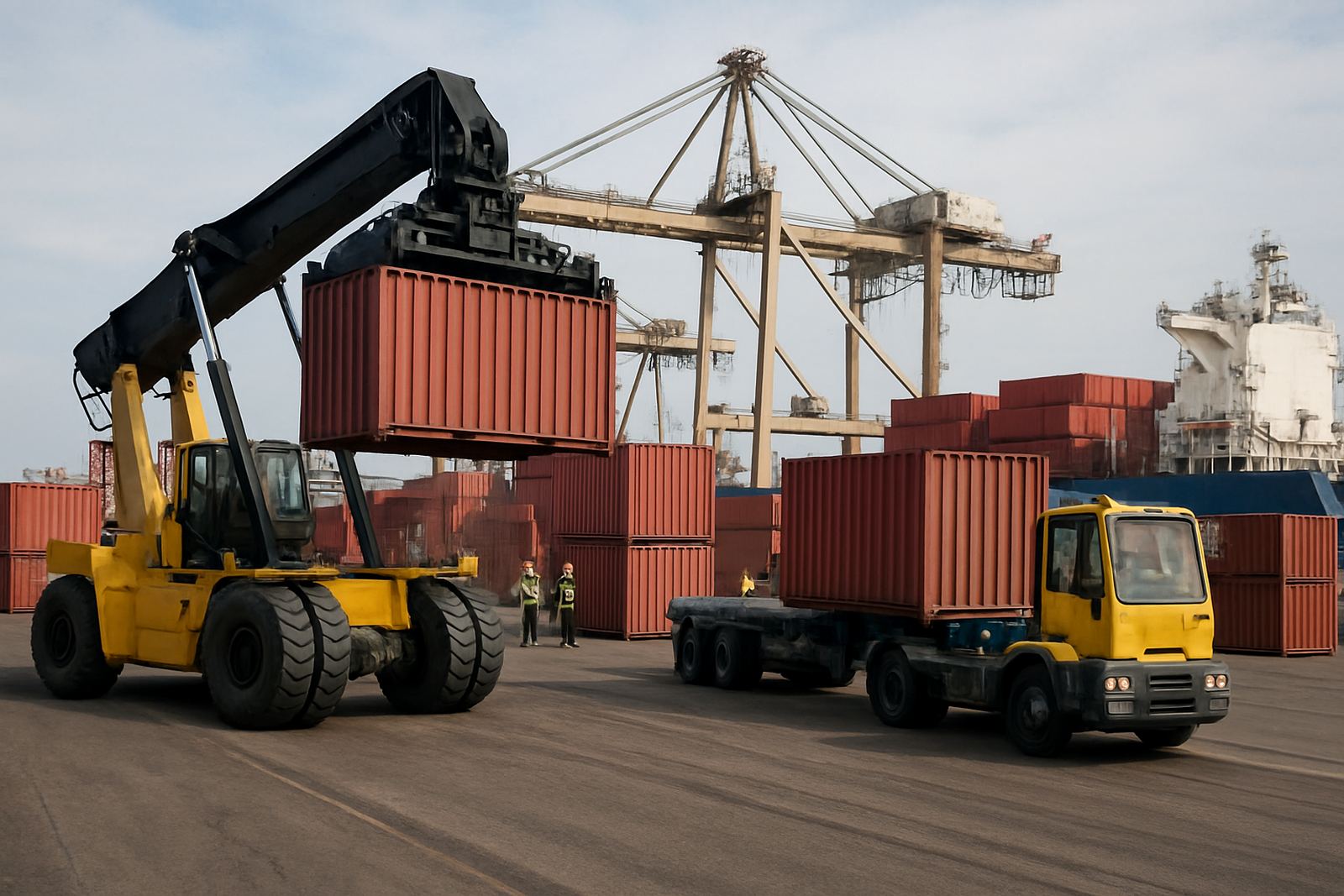
Our team in Durban, with clearing support in Johannesburg and Cape Town, manages the process from the first documents to inland delivery. That includes import planning, tariff classification, customs clearing, port collection, cargo insurance, and site offloading when the machine arrives. For businesses in the Durban harbour corridor this matters because every day in demurrage or storage can add real cost, especially when a workshop is waiting on one item before work can start.
Typical equipment used in a metal fabrication shop
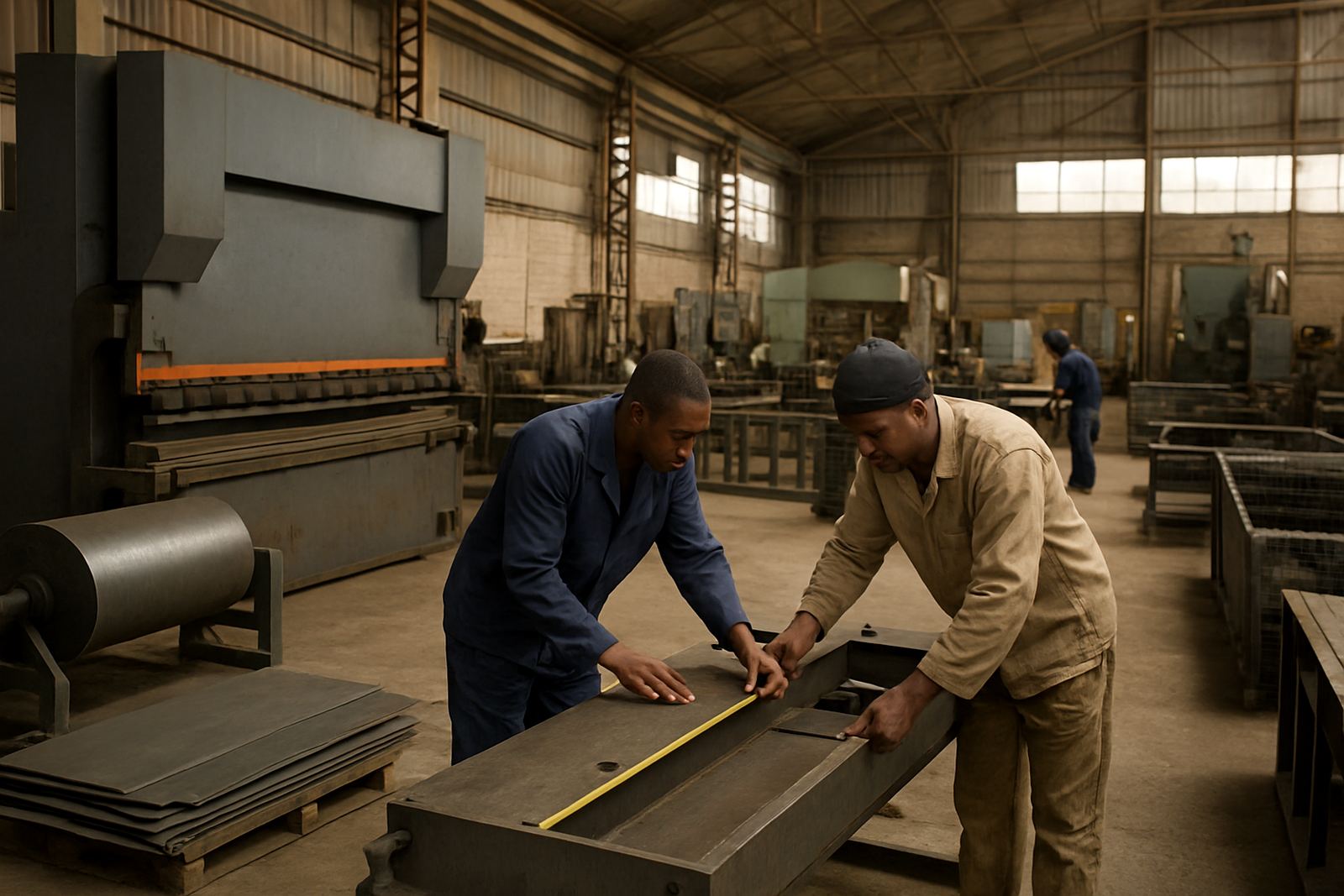
The equipment mix depends on the type of fabrication work, but most imports fall into a few practical groups. We commonly handle machinery for cutting, bending, forming, drilling, machining, and material handling. For some clients the order is one critical machine, for others it is a package that has to land together so production can start without gaps.
Typical items include plate rollers, guillotines, press brakes, hydraulic shears, punching machines, plasma cutting tables, profile benders, tube benders, lathes, milling machines, drill presses, compressors, forklifts, and overhead handling gear. In many cases a fabricator also needs consumables, spares, and tooling, even if those items are shipped separately.
It helps to think beyond the machine itself. A unit may be 3 metres long, but once you allow for pallets, crates, lifting points, and access for unloading, the space needed is much larger. Coastal humidity in Durban and salt air around Cape Town can also affect unprotected surfaces, so packing and storage need attention before the machine is moved inland. If the order will sit in bonded storage for a period, rust protection should be specified from the start, not after the fact.
- Cutting and profiling equipment for plate and section work
- Forming machines for bending, rolling, and shaping
- Machining equipment for precision finishing
- Lifting and handling gear for shop flow and safety
Layout and planning for the workshop floor
A fabricator importing machinery should plan the workshop around the full movement path, not only the final footprint. That means checking gate widths, turning circles, slab strength, forklift access, dock height, and whether a low loader can reach the delivery point. In places like Springfield Park, City Deep, and Jet Park, access can be straightforward, but urban deliveries still need timing, security, and a clear offloading area. In smaller industrial zones the main issue is often not the road, it is the yard.
We advise clients to mark out the floor before shipping. Measure the machine envelope, then add clearance for maintenance, blade changes, operator access, and raw material feed. If the machine needs three-phase power, compressed air, or extraction, those services should be ready before arrival. Load shedding also needs to be considered, because a power dip during installation or commissioning can delay testing and cost a day or two, sometimes more.
For workshops in humid coastal areas, raised storage and dry packing are worth the extra cost. In inland yards around Germiston or Midrand, dust control becomes more important. A good import plan takes these site factors into account so the machine is not left standing in a truck yard while people try to solve problems after discharge.
- Confirm crane or forklift capacity before the container lands
- Check floor loading and anchoring points early
- Plan for cable runs, air lines, and extraction points
- Keep enough aisle space for stock movement and maintenance
Clearing, classification, and documents that slow projects down
Metal fabrication imports often run into avoidable delays when the paperwork does not match the machine. Customs classification must be done correctly, especially where a machine combines cutting, forming, and control systems. If the invoice description is too vague, or the packing list leaves out attachments and spares, the shipment may be held while queries are raised.
We see common issues such as missing serial numbers, inconsistent values, incorrect origin details, and transport documents that do not match the cargo. For machinery coming through Durban harbour, this can lead to storage charges very quickly. Our trade compliance specialist checks the file before the shipment moves, which helps reduce back and forth at the port. Fatima Cassim and Retief Labuschagne work closely on classification and clearing so the client gets a practical answer instead of guesswork.
Businesses that import for the first time sometimes underestimate the role of supporting paperwork. Invoice, packing list, transport booking, insurance cover, and import permits where required all need to line up. If the machine includes electronic controls or special tooling, those should be declared properly too. Clear documents save time and often save money.
Budget ranges for imported fabrication machinery
Budgets vary widely because the type of machine, country of origin, shipping mode, and inland delivery all change the final cost. A small workshop import may land in the R180,000 to R450,000 range once shipping, clearing, and inland transport are added. Mid-sized forming or cutting equipment can move into the R500,000 to R1.5 million range. A full production line, or a package that includes multiple machines and installation support, can run from R1.8 million to well above R5 million.
It is worth budgeting for the complete landed cost, not only the purchase price. That includes freight, customs charges, port costs, insurance, storage if the schedule slips, collection, and delivery to site. In some cases bonded storage or staged delivery makes sense if the workshop is not ready to receive everything at once. For larger clients in the Durban corridor, port timing and transporter availability can make a real difference to the final figure.
We help clients compare two or three delivery options before they commit. Sometimes the cheapest purchase price is not the cheapest landed cost. A machine that looks cheaper overseas may need special lifting, extra packing, or a slower shipping route. A proper import plan makes that clear before money is tied up.
What fabricators usually want from the import process
Metal fabrication owners usually ask for three things: clarity, speed, and no surprises. They want to know what the landed cost will be, when the machine will arrive, and who is handling each step. That is where coordinated freight, clearing, and inland transport helps. Sibusiso Ntuli leads a team that works across Durban, Umbilo, Paarden Eiland, City Deep, Springfield Park, and Jet Park, so the shipment is tracked from the port to the workshop floor.
We also support fleet and logistics businesses that buy fabrication equipment for maintenance depots, body repair yards, and component workshops. Whether the job is one press brake in Umbilo or a larger set of machines headed inland, the aim is the same: get the equipment cleared properly and delivered in working order, without avoidable delays.
For many fabricators, the difference between a good year and a strained one is whether new equipment arrives in time for the next contract. That is why planning, documents, and delivery detail matter just as much as the machine spec itself.