When mine support work cannot wait for a delay
Mining support contracts are usually won on timing and uptime. A compressor for a stoping crew, a loader for clean-up work, or a workshop truck for field repairs can hold up an entire production plan if it lands late at Durban harbour or gets stuck on documents in Johannesburg. Our role is to keep the movement practical from the first invoice through to final offloading at site.
We work with contractors serving mines, plants and remote maintenance yards, especially where access roads are rough, operating hours are tight and security control is strict. For clients based in Durban, Umbilo, Springfield Park, Jet Park, City Deep and Paarden Eiland, we plan the move around the actual handover point, not just the port arrival date. That means checking dimensions, lifting points, tyre pressure, fuel status and whether the unit can travel on a low-bed or needs special handling.
Typical equipment in a mining support shipment
A mining support load is rarely a single item. It is usually a mix of machinery, spares and workshop equipment that must all arrive together or the job suffers. We commonly see compact and mid-size units, plus attachments and loose items that need proper marking before loading. If the shipment is coming in from overseas or another African country, the packing list must be clean because mixed cargo often causes delays at clearing counters.
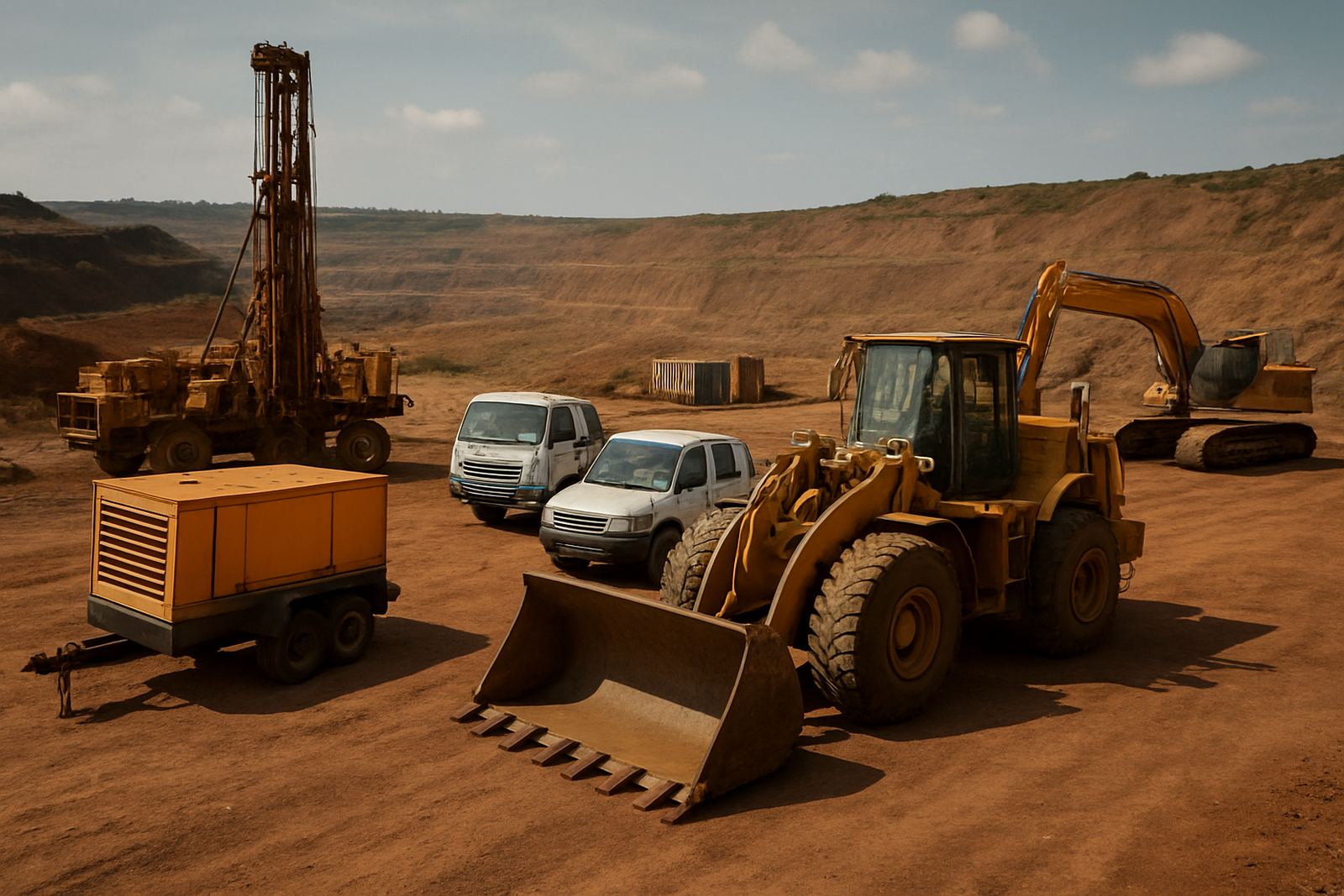
- Air compressors, diesel-powered or electric units
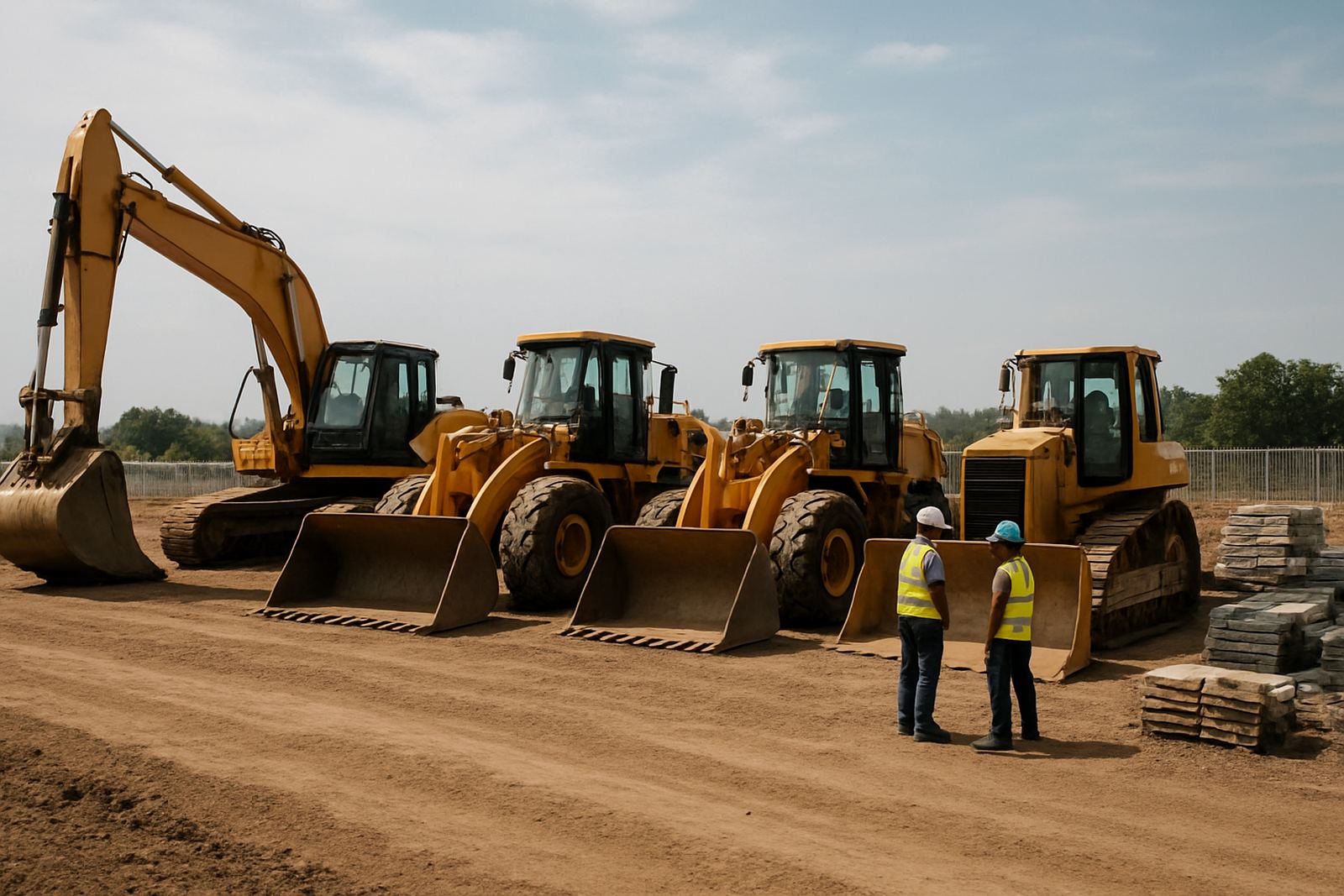
- Small to mid-size loaders and compact earthmoving equipment
- Mobile welding sets, generators and lighting towers
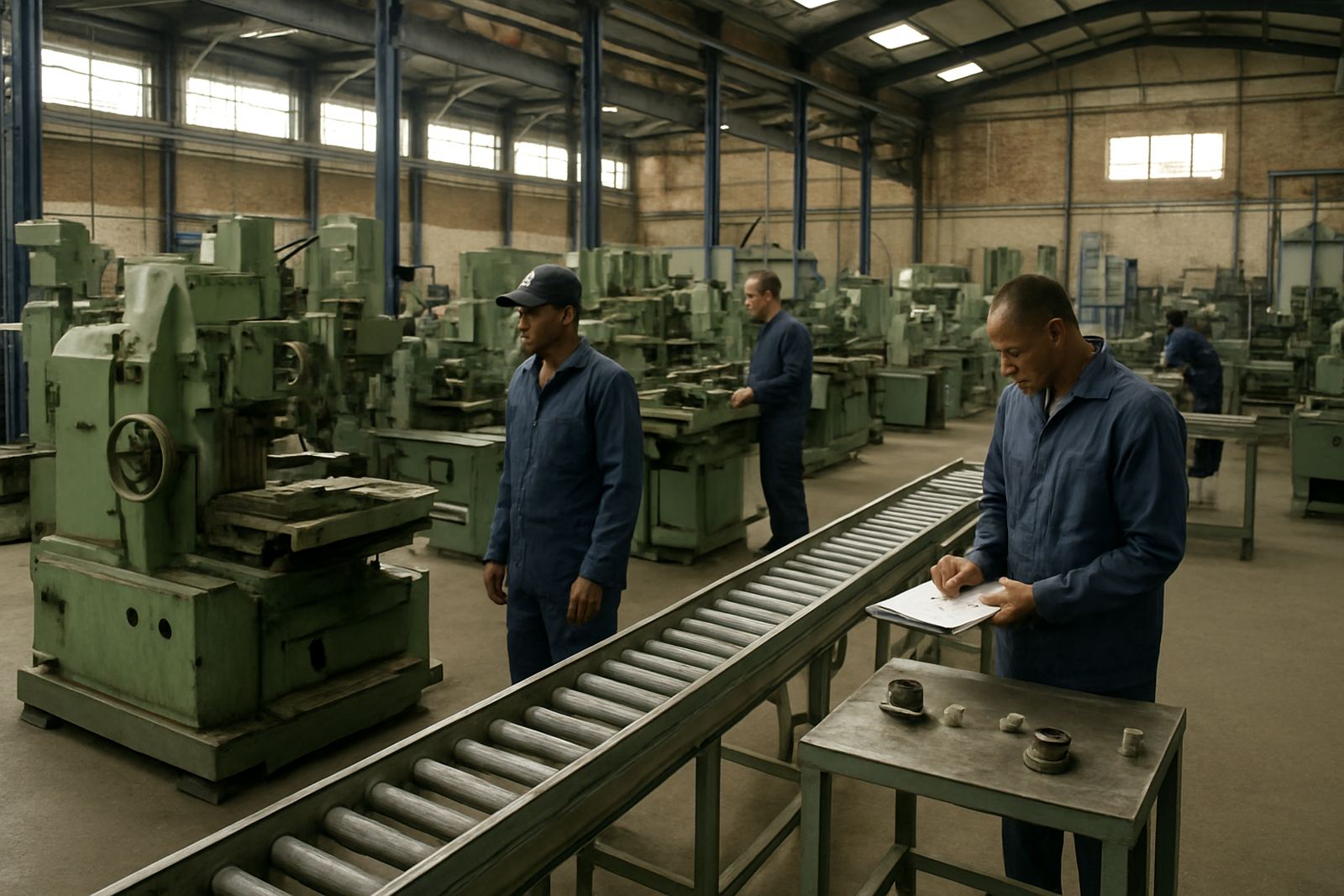
- Workshop presses, lathes, benches and service tools
- Tyres, hydraulic hoses, filters, pumps and spare parts
- Containers with support stock, consumables and recovery gear
For coastal deliveries into Durban or Cape Town, we also check for rust protection and condensation risk. Salt air can cause trouble quickly if the cargo sits in a yard too long, especially on unprotected electrical panels and machined surfaces.
Planning the layout before the cargo leaves the port
Good planning starts with the site, not the ship. If the mine support base has a narrow gate, a low overhead cable, soft ground or a turning circle that struggles with a 13.5 m trailer, the transport choice must change before loading. We often map the delivery route between the harbour corridor, inland depots and final site so that the right trailer, crane or escort arrangement is booked once only.
We recommend measuring three things before shipping: the widest point, the highest point and the heaviest single piece. That sounds simple but many delays come from one oversized handrail, a bucket sticking out by 400 mm, or a machine arriving with attachments still fitted. In Gauteng, for example, a load cleared through City Deep may still need careful route planning to reach a mine outside Rustenburg or Welkom without penalties or municipal stoppages.
- Confirm all dimensions in metres and all weights in kilograms
- Decide if the cargo can move on wheels, skates or a flat rack
- Mark loose items separately so nothing goes missing at offload
- Check if the site needs an appointment, induction or escort pass
- Allow for weekend or night delivery if access roads are busy
Clearing, tariff classification and paperwork that slows nothing down
Mining support equipment often has more paperwork than expected because it can include machinery, electrical items, spares and tools under one movement. Tariff classification matters because the duty treatment and permit needs can differ from one line item to the next. If the documents are vague, customs may ask for more detail and the cargo sits longer than planned. That is money out the door.
We prepare the clearance pack early, confirm the commercial invoice description, match serial numbers where available and make sure the consignee details are accurate. Where cargo is moving through bonded storage, we also keep the release sequence tight so no part of the shipment is split by accident. For clients who use both Durban and Johannesburg operations, we coordinate between the harbour corridor and inland clearing counters to reduce repeat handling.
Common mistakes include under-declaring value, using a broad description like machine parts, or ignoring whether an item is new, used or repaired. Another issue is leaving out the country of origin on critical lines. These small gaps can turn into delays at the port, and they are expensive because storage and transport waits add up very fast.
Budget ranges for mining support moves in Rand
Budget depends on cargo size, point of origin, port charges, inland distance and whether the load needs bonded storage or site offloading. A small import of workshop equipment may come in at a few thousand Rand in clearing and local handling fees, while a full machine move with port collection and road transport can run much higher. We always prefer to quote in line with the exact cargo, because rough numbers are where surprises start.
As a guide, mining support contractors often see these planning ranges:
- Document checks and customs clearing: R2 500 to R8 500 per entry, depending on complexity
- Port collection and terminal handling: R3 500 to R12 000 for smaller cargo, more for heavy units
- Inland transport in Gauteng or KZN: R8 000 to R35 000+, based on distance and trailer type
- Cargo insurance: usually a small percentage of declared value, often worth taking on higher-value kit
- Site offloading and rigging support: from R4 000 for simple drops to much more for cranes and lift plans
For jobs moving from Durban to inland mining areas, it is wise to budget extra for waiting time, after-hours delivery and weather delays. Heavy rain, road works and load-shedding at receiving yards can all affect timing.
What a mining support contractor should get right every time
There are a few things we tell clients to check on every movement. First, make sure the machine is ready for transport, with fluids managed, loose fittings secured and batteries isolated if needed. Second, confirm who signs for the cargo at the other end. Third, keep one person responsible for the paperwork from start to finish. When three people are answering the same message chain, mistakes happen.
Our team in Durban, Johannesburg and Cape Town handles the moving parts around the shipment so your crew can stay on the job. Sibusiso Ntuli leads the operation, with Tumisang Mahlaba managing scheduling, Retief Labuschagne on clearing, Nomsa Dlamini on client updates, Luthando Mchunu on fleet coordination and Fatima Cassim on trade compliance. That combination helps with import planning, shipping coordination, customs clearing, port collection, inland transport, bonded storage and site offloading without unnecessary back-and-forth.
For mining support work, reliability matters more than fancy promises. If a loader needs to be in place by Monday morning, the plan must suit the port, the road and the site, not only the shipping line timetable.