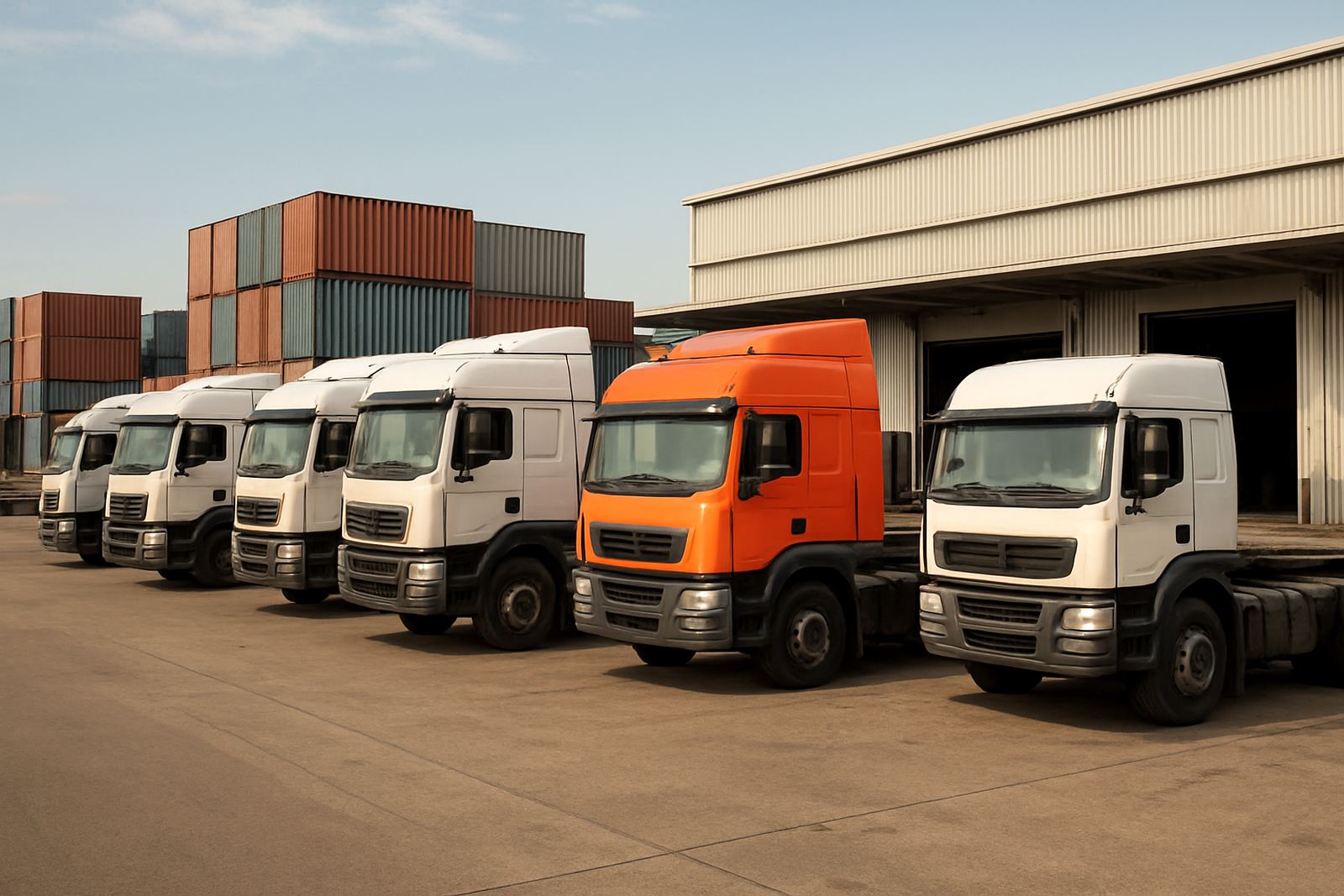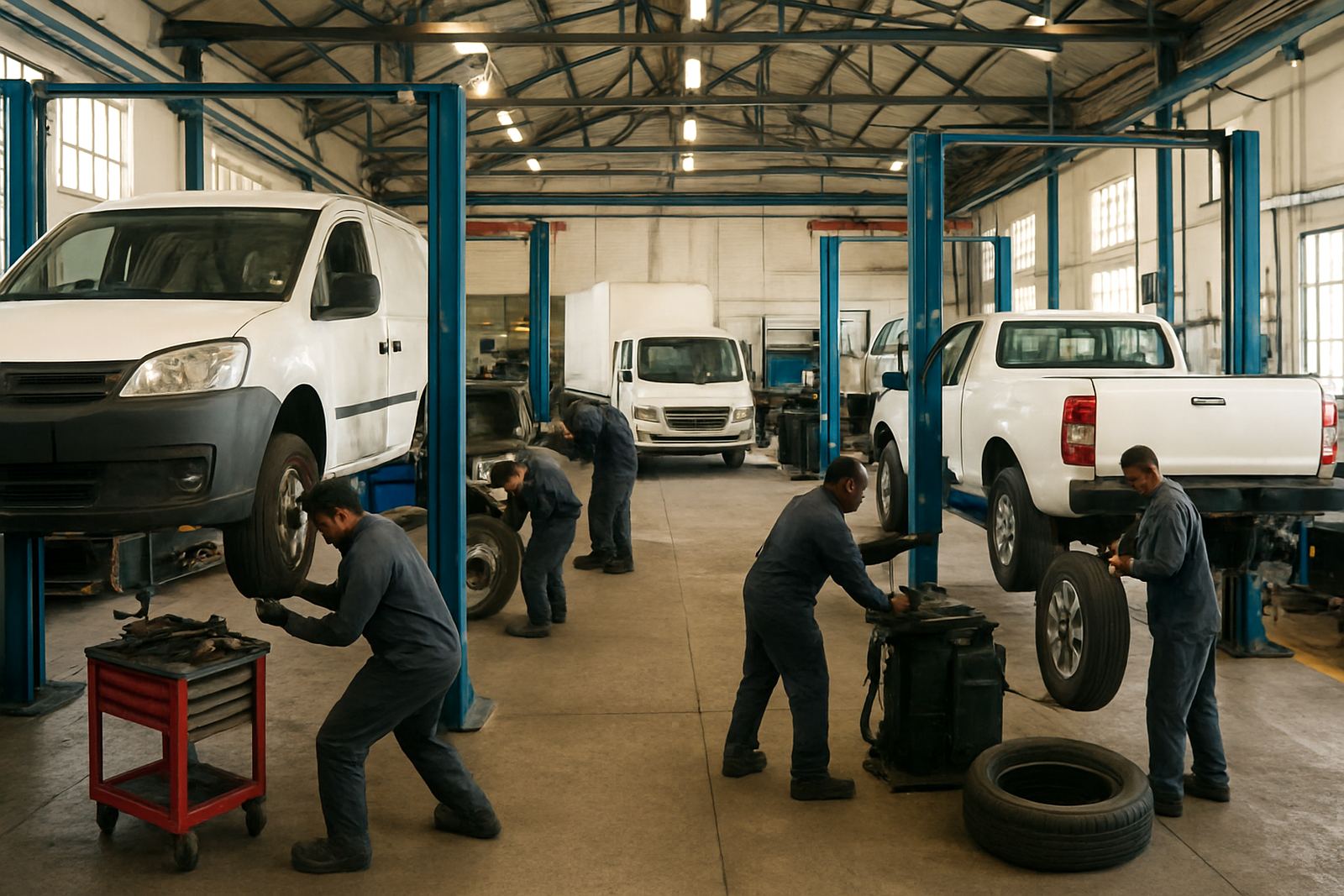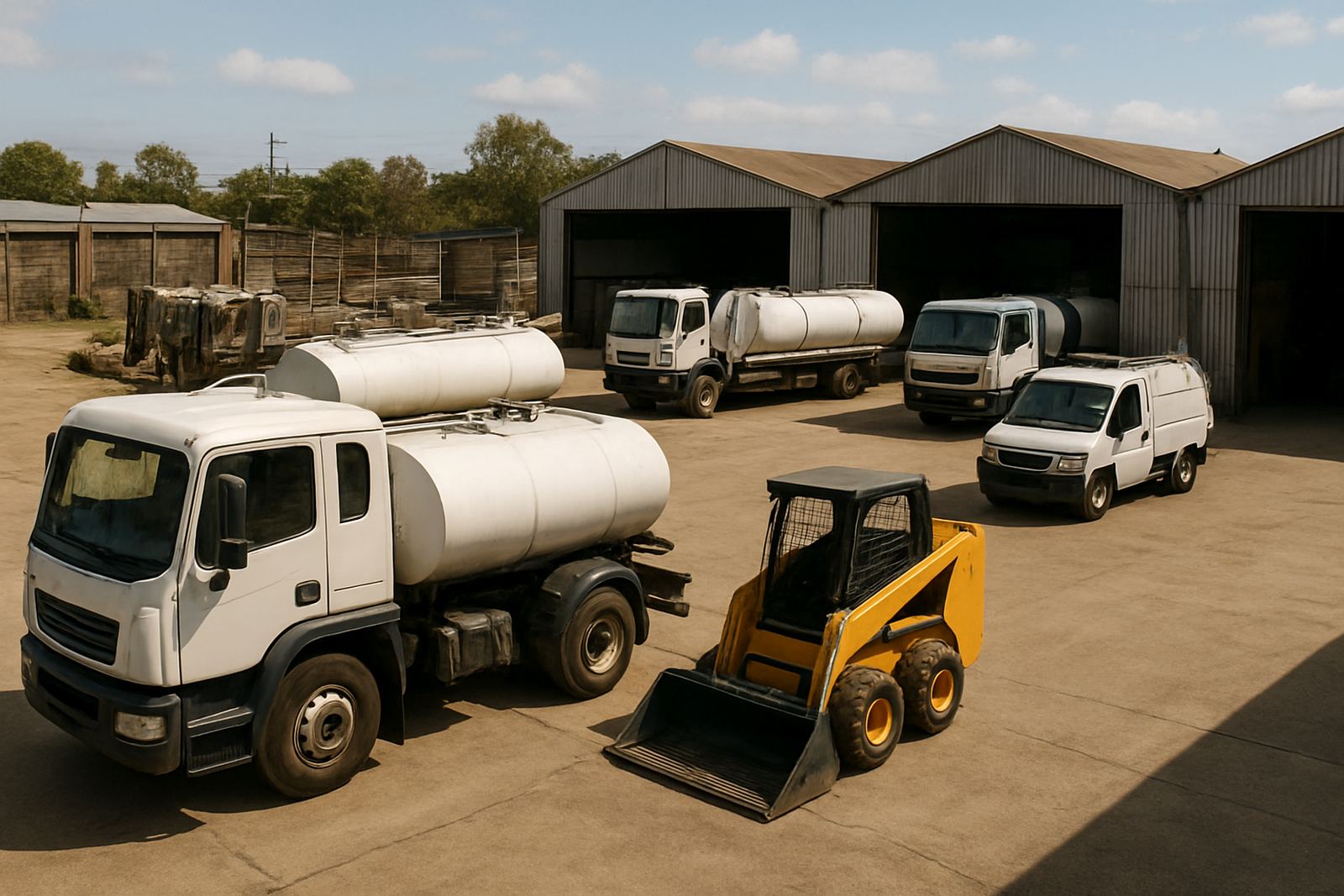
Municipal fleets need equipment that fits the job and the depot
Municipal departments rarely import one item at a time. A typical order may include compact loaders, small excavators, refuse truck parts, water pumps, generators, streetlight maintenance units, trailers, workshop tools and backup power equipment for depots and substations. The first question is not only what is being shipped, but where it will be used, who will receive it, and whether the receiving yard can handle the weight and turning circle.
For teams in Durban, Jet Park, City Deep or Paarden Eiland, the delivery point often shapes the whole plan. A tight urban depot may need smaller delivery vehicles and a lift-off plan. A coastal store yard in Durban or Cape Town may need extra corrosion protection, sealed packing and quicker offloading because humidity can damage electrical items and fittings if cargo sits too long. Load-shedding also affects receiving times, crane availability and the way warehouses plan handover windows.
- Utility pumps and pipe fittings for water teams
- Refuse handling spares and compactor parts
- Generators and auxiliary power equipment
- Workshop machinery for fleet maintenance
- Traffic and streetlight maintenance gear
- Small plant for parks, roads and drainage teams
Route planning from port to depot should start before the vessel sails
Municipal imports move more smoothly when the route is mapped before cargo leaves the supplier. We look at the vessel timing, the port of entry, the receiving city and the inland leg. For Durban harbour corridor work, that may mean collection through the port and direct movement to Umbilo, Springfield Park or inland to Johannesburg and Pretoria support depots. For Cape Town supply chains, Paarden Eiland and surrounding industrial areas often need early delivery booking because street access and operating hours can be tight.
Clear route planning matters most when cargo has abnormal dimensions, hazardous contents, or equipment that cannot be left outside overnight. If a pump set is sensitive to seawater air, or if electrical cabinets need dry storage, the transport stage should be kept short and the offload site must be ready. A good plan also checks road restrictions, bridge limits, and whether the municipality requires specific booking windows for plant movement through public yards.
- Confirm cargo size, mass and pack count before shipping
- Check depot access gates, turning space and offloading points
- Book cranes, forklifts or tail lifts early
- Plan weekend or after-hours receipt only where allowed
- Match the inland carrier to the cargo height and weight
The paperwork that prevents delays at customs and in municipal stores
Municipal buyers often work under procurement controls, so the paperwork must be clean from the start. Tariff classification, invoices, packing lists, insurance schedules and shipping documents should all match. If a municipality is importing equipment through a tender or project order, the item description must be exact, because vague wording can slow customs clearing and create audit questions later.
We also check whether a product needs a permit, technical approval, or special handling note. This can apply to generators, batteries, compressed gas systems, communication equipment and certain workshop machines. Where goods will enter bonded storage before release, the stock records and serial numbers must be kept in order so the receiving team can reconcile every line item. It sounds simple, but one missing serial number can hold up an entire handover.
Our team in Umbilo works with clients who need a practical route between the port, the clearing counter and the final depot. That matters in a city like Durban where rain, congestion and port queues can change the day’s plan quickly.
Typical budget ranges for municipal equipment imports
Cost planning depends on the size of the machine, the port of entry, insurance value, inland distance and whether storage is needed. Small support equipment can be managed within a modest import budget, while complete plant or truck-mounted systems need a larger allocation. Municipal teams should budget for the full landed cost, not only the supplier invoice.
As a working guide, smaller support equipment imports may sit from about R35 000 to R120 000 for freight, clearing and inland movement, depending on volume and route. Mid-size machinery often falls between R120 000 and R450 000 once shipping, duty, VAT, port charges and delivery are included. Larger utility plant, specialist workshop machinery or multi-unit orders can move well above R450 000, especially if bonded storage, site offloading or extra insurance is required.
It is safer to separate the budget into clear lines so the procurement team can see where the money goes.
- International freight and shipping coordination
- Customs clearing and tariff classification
- Port collection and handling charges
- Inland transport to depot or project site
- Insurance and storage if the site is not ready
Common mistakes that create avoidable costs
Municipal cargo problems are usually not caused by one big failure, but by a few small misses. The most common issue is ordering equipment before the receiving site has been checked. If a loader is too wide for the gate, or if the yard has soft ground after rain, the offload may need extra machinery and extra time. Another frequent problem is shipping without confirming the correct tariff code, which can lead to duty differences or queries at customs.
Teams also lose time when they underestimate storage. If a container lands on a Friday and the depot is not ready until Tuesday, storage charges can start adding up. In coastal areas, rust and moisture can become a problem very quickly, especially for steel parts, switchgear and tools. Keeping goods under cover and moving them promptly saves money and protects the asset.
We often advise clients to nominate one person for approvals, one for site access, and one for sign-off on documents. Too many handovers can cause confusion, and then the carrier waits while everyone looks for the last message.
How we support municipal teams across Durban, Johannesburg and Cape Town
Machines Africa Hub handles import planning, shipping coordination, customs clearing, port collection, inland transport, cargo insurance, bonded storage, site offloading and document management. For municipal service teams, that means one chain of responsibility from supplier release to final delivery. Our operations team in Durban works closely with clearing support in Johannesburg and Cape Town so cargo can move through the right gate, the right port and the right depot without repeated explanations.
We work with municipal service departments, contractors and fleet maintenance teams across Durban, Umbilo, Springfield Park, Jet Park, City Deep and Paarden Eiland. If you are bringing in utility equipment for roads, water, parks, refuse or fleet support, we can help map the route and set the timing before the shipment lands. Municipal buyers can share the equipment list, estimated mass, delivery town and target date when they write in.
For municipal supply chains, good planning is not extra admin. It is the difference between a machine standing in the yard and a team on the job.