
What a flatbed trailer does on site and on road
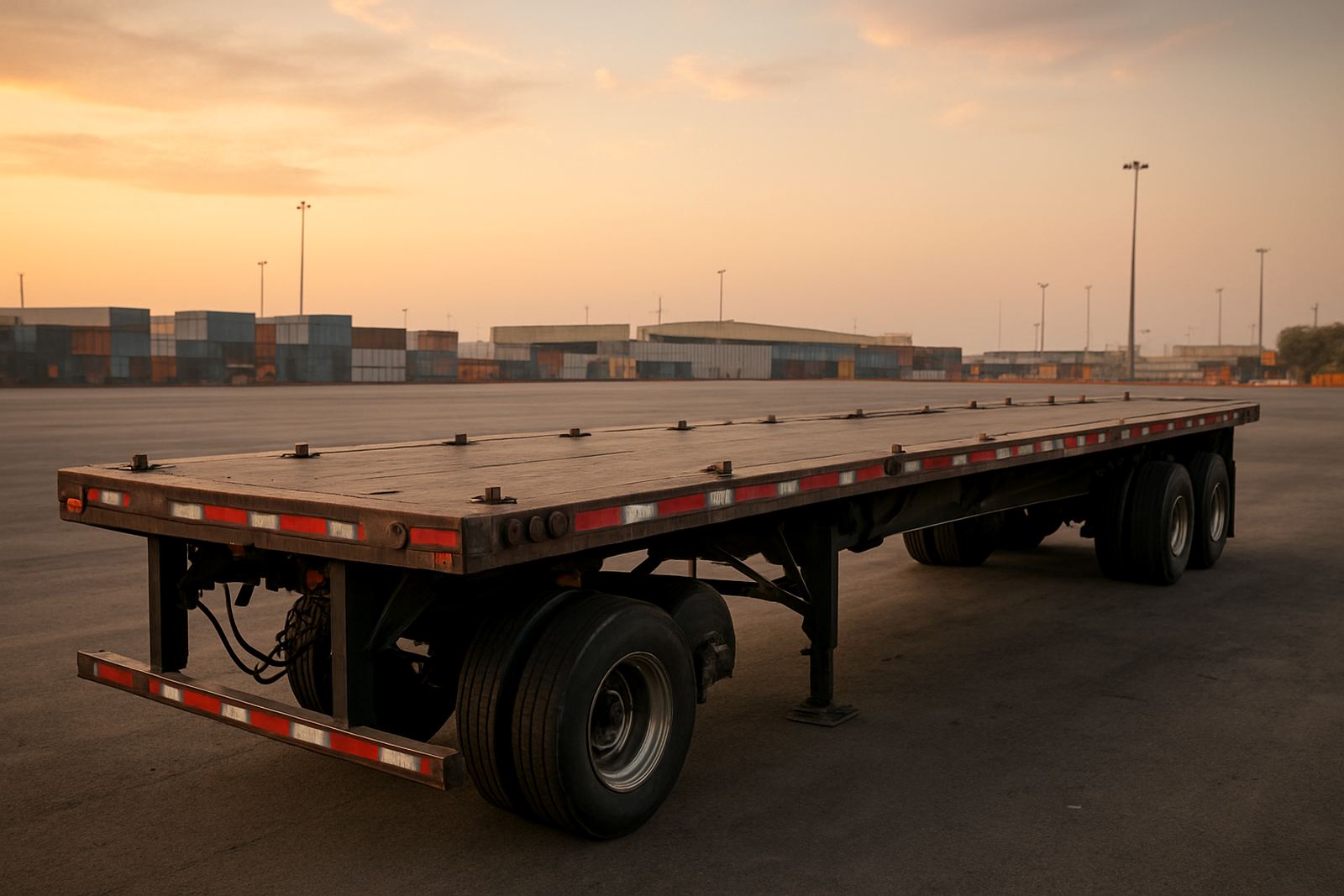
A flatbed trailer is an open platform built for cargo that is too long, too heavy or too awkward for a closed body. You get a strong deck, tiedown points, axles built for load carrying, and a drawbar or fifth wheel set-up depending on the trailer type. There are no side walls to work around, so loading with a forklift, crane or loader is far easier than on a box trailer.
For importers, flatbeds are often used for farm inputs, structural steel, pipe bundles, timber packs, plant equipment and machinery skids. They are also common where the load must be strapped down from above and inspected quickly at warehouse or port side. In coastal areas like Durban and Paarden Eiland, galvanised parts or proper paint protection matter because humidity and salt air can start surface rust fast.
- Open deck for side loading and crane lift access
- Designed for long, wide and uneven cargo
- Suited to tethering with straps, chains and binders
- Can be ordered as a tri-axle, superlink or trailer unit depending on tonnage
Common sizes, axle sets and load options
Flatbed trailers are built in a range of deck lengths and widths. A standard unit may start around 6 m and go up to 13.5 m for long haul work, while low deck and extended formats can be configured for oversize freight. Widths often sit around 2.4 m to 2.6 m on road-legal units, though the load itself may project under permit conditions. Payload depends on the chassis, axle count and braking system, so a buyer must look at gross vehicle mass and not only the deck size.
For heavy duty work, trailers may be fitted with reinforced cross-members, stronger king pins, higher rated axles and ramp options. Some have removable side posts or stake pockets for mixed cargo. Others are bare decks made only for machinery and steel. If the trailer will work in Johannesburg or City Deep for distribution, a higher spec braking and suspension package usually pays off because of stop-start traffic and rougher yard surfaces.
- Deck lengths: 6 m, 8 m, 12 m, 13.5 m and custom builds
- Width: about 2.4 m to 2.6 m road legal, subject to load permit
- Axles: tandem, tri-axle or more for heavier work
- Deck finish: timber planks, steel floor or mixed deck
- Extras: ramps, toolboxes, load rails, twist lock points, wheel chocks
Where flatbed trailers suit best in South Africa
Flatbed trailers suit builders merchants, steel stockists, timber yards, agricultural suppliers, fleet operators and engineering firms. They are also used by automotive businesses moving non-running vehicles, shells, parts pallets and workshop machinery. In Durban, they are often chosen for cargo moving between the harbour corridor, Umbilo and Springfield Park before inland distribution. In Cape Town, Paarden Eiland loads often involve timed collections and careful route planning because access and parking can be tight.
These trailers also work well for municipal and private contractors carrying generators, compressors, water tanks and packaged plant. If the load must be shifted at a site with uneven ground, the open deck is handy because the forklift can work from either side. For long-distance work between Durban and Gauteng, the lower loading height on some flatbeds helps with stability, especially when the trailer is full and the wind picks up near the coast.
- Steel and pipe transport
- Timber and board packs
- Machinery, skid-mounted units and workshop tools
- Oversize or awkward freight needing open access
- Fleet and automotive loads that are non-running or partially stripped
Import clearing, permits and delivery through the ports
When a flatbed trailer is imported, the paperwork matters as much as the steel. Machines Africa Hub handles import planning, shipping coordination, customs clearing, tariff classification and port collection through Durban and other gateways. A trailer may require product descriptions, axle details, dimensions, tare mass, declared value, country of origin and the correct HS code before it can clear. If the unit is going into service quickly, document management and pre-clearance can save days at the port.
For oversize or heavy units, inland transport has to match road permits and route limits. That can mean arranging the correct escort requirements, checking bridge heights and planning offloading at the buyer’s yard. We also assist with cargo insurance and bonded storage where a trailer needs to sit while papers are finalised. It is worth saying plainly: if the documentation is thin, clearance slows down and costs can climb, so get the specs right from the start.
- Durban harbour corridor collections and inland movement
- Clearing support in Johannesburg and Cape Town
- Tariff classification and permit guidance
- Bonded storage and site offloading when required
Installation, loading gear and power requirements
A flatbed trailer does not need gas or an electrical installation in the normal sense. What it does need is the right towing vehicle, coupling gear, braking compatibility and a loading plan. If the trailer has air brakes, the prime mover or towing unit must match that system. If it uses mechanical or hydraulic ramps, those parts should be checked for wear before first use. A trailer that will carry machinery should also be matched to the weight of the load plus straps, chains and any spreader beams used during lifting.
For site use, think about the surface the trailer will stand on. Soft ground, uneven paving and tight industrial yards can make offloading awkward. On a wet Durban morning or in a dusty Jet Park yard, the difference between a level stand and a poor one is big. If the trailer is arriving in a municipal zone, check if there are restrictions on delivery times, truck access or night offloading. It saves hassle, and sometimes a fine.
Care, servicing and what to inspect before you order
Good trailer care is simple and it starts with regular checks. Tyres, hubs, lights, brakes, hinges, landing legs and deck condition should all be inspected before and after each trip. On coastal routes, wash down road grime and salt. On inland routes, check for stone damage and loosening from vibration. Grease the moving points, inspect welded joints and watch for deck rot on timber floors or pitting on steel floors.
Before you order, ask for the usable deck length, deck width, tare mass, axle rating, brake type and expected payload. You should also confirm whether the trailer is road legal for your intended route and if any oversize permit will be needed. If you need the trailer to work with specific loads, ask for tiedown spacing and any clearance under the deck. A short call now can prevent a very costly mismatch later.
- Check deck size against your longest load, not the average load
- Confirm axle count and braking system
- Ask for tare mass and payload in writing
- Inspect tyres, lights, ramps and coupling gear on arrival
- Match the trailer to your yard access and route limits
Key facts
| Product type | Flatbed trailer for open cargo transport |
|---|---|
| Typical deck lengths | 6 m to 13.5 m, with custom options |
| Typical width | About 2.4 m to 2.6 m road legal |
| Common axle setups | Tandem or tri-axle, depending on load |
| Best use | Steel, timber, machinery and oversize freight |
| Service support | Import planning, shipping, customs clearing and inland transport |