
What a press brake is and why the move must be planned
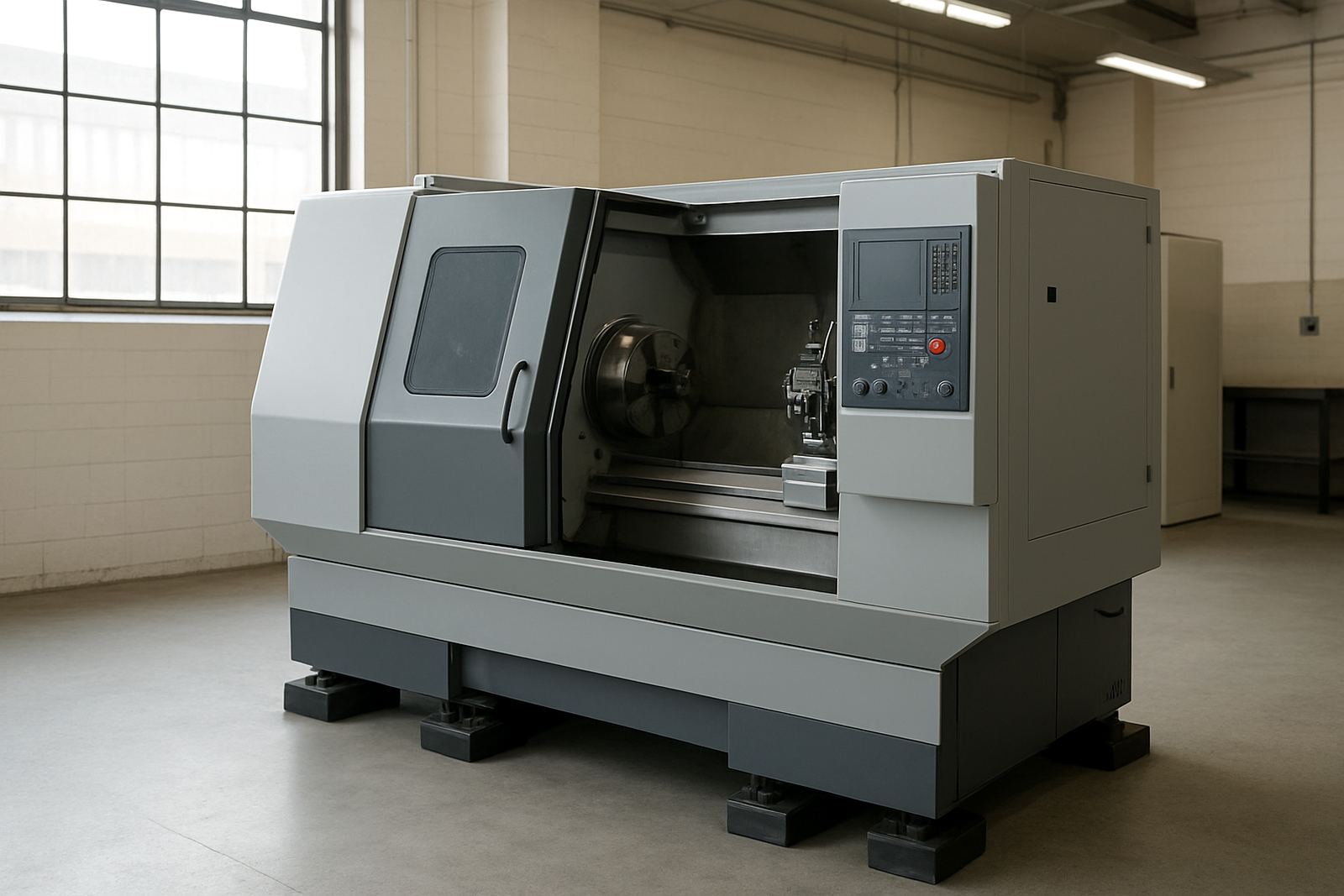
A press brake is a metal forming machine used to bend sheet and plate into accurate angles. In South Africa it is common in fabrication, signage, agricultural equipment, steel shop work, trailer building and small production runs where repeat bends matter. These units can be compact bench-type machines or long hydraulic machines with back gauges, guards and separate control cabinets, so the transport method must match the exact build.
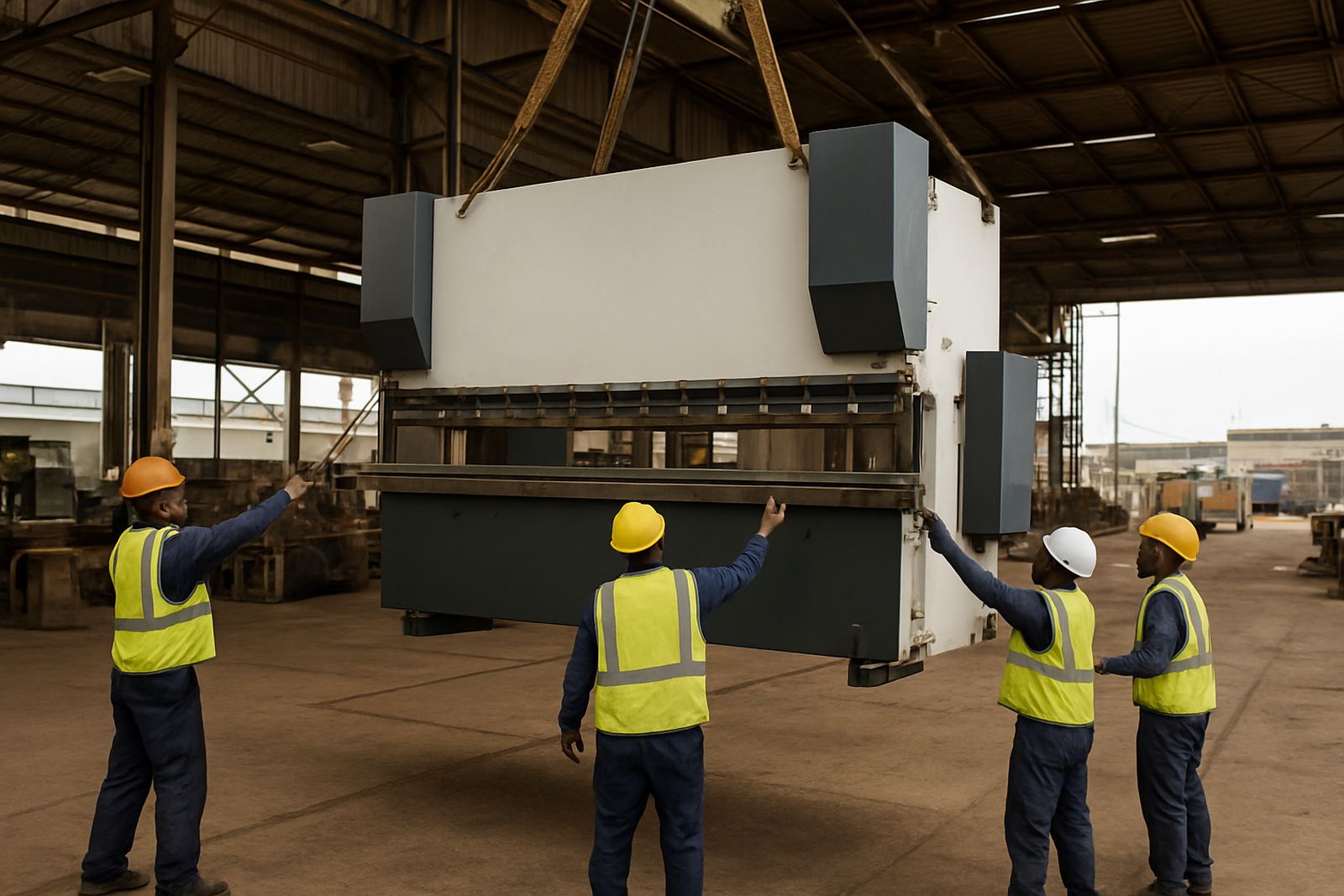
For import and inland movement, the main issue is not only mass but shape. A machine can arrive with a long bed, protruding arms, loose tooling, or a separate hydraulic pack. Some units sit low and are manageable on a flatbed, while others need a crane truck, low-bed trailer or a side-loader at the first point of offloading. If the workshop floor is on uneven ground or inside a narrow bay, the delivery sequence needs to be checked before the truck leaves Durban.
We plan press brake cargo for controlled offloading and placement, with the load path checked from harbour corridor to final site. That matters in places like Springfield Park, Jet Park, City Deep and Paarden Eiland where access roads, loading bay height and turning space can affect the last 20 metres of the job.
Common sizes, formats and shipping options
Press brakes come in a wide range of sizes and tonnage ratings. Smaller workshop units may be around 1.2 m to 2.5 m in bed length, while larger fabrication machines can run from 3 m to 6 m or more. Weight can vary from under 2 tonnes for lighter machines to well over 15 tonnes for industrial units. The footprint, centre of gravity and packing method are just as important as the weight, especially when the machine is packed with accessories.
- Bed lengths from 1.2 m, 2.5 m, 3 m, 4 m and larger
- Typical capacities from 40 tonne to 400 tonne and above
- Single machine loads or combined containers with tooling, dies and guards
- Crated, strapped, shrink-wrapped or skid-mounted cargo
- Loose attachments such as back gauges, pedals, control panels and hydraulic packs
For shipping, we look at whether the machine should move as breakbulk, containerised cargo, or on a flat rack depending on size and access. If the cargo is high, wide or awkward, the loading plan should protect both the machine and the packing material. South African coastal humidity can affect exposed metal, so wrapping, VCI protection and dry packing are worth using when the shipment will wait in port or storage.
Where press brakes suit best in South Africa
Press brake cargo suits workshops that need predictable handling from port to site. That includes steel fabricators, panel shops, construction suppliers, agricultural repair yards, automotive component plants and fleet body builders. It also suits small businesses moving from a manual bending setup to a powered unit with more repeat accuracy.
In Durban, many clients want the machine cleared through the harbour corridor and then delivered to Umbilo, Springfield Park or inland to Johannesburg and Pretoria. Cape Town customers often need support through Paarden Eiland, with final delivery into industrial areas around the metro and surrounding towns. For cross-border buyers moving machinery into Namibia, Botswana, Zambia or Zimbabwe, the same planning principles apply, but the documents and border timing must be checked early.
- Fabrication shops needing repeat bends and tighter tolerances
- Automotive repair and body building operations
- Fence, gate and trailer manufacturers
- Heavy-duty maintenance and small production facilities
- Importer-distributors bringing in stock for resale or hire
Installation needs, power supply and workshop readiness
Before delivery, the site must be ready for the machine size and power draw. Many press brakes use three-phase power, often 380V to 415V, with current requirements depending on motor size and control system. Some units need a stable electrical supply with proper earthing and isolation. In areas affected by load-shedding, a workshop may need generator support or a planned shutdown window for setup and testing. If the machine has a hydraulic system, check the oil condition and confirm that the first start-up procedure is understood.
For installation, the floor should be level and strong enough for point loads. Heavy units may need anchor bolts, levelling pads or packing under the base before final positioning. Clearance for tool change, back gauge movement and operator access must be measured in advance. If the site has a low doorway or narrow roller shutter, the unloading method should be matched to the opening, not the other way around.
- Check three-phase supply, isolator position and cable route
- Confirm floor loading and doorway height
- Allow space for guards, tooling and maintenance access
- Plan for crane truck, forklift or skates at site
- Keep the operating area dry where possible, especially near the coast
Care and servicing after delivery
Once the press brake is on site, it should be kept clean, dry and covered when not in use. Dust, grinding residue and moisture can affect moving parts and electrical components. In coastal areas like Durban and Cape Town, the air carries salt that can mark exposed steel and fasteners, so regular wipe-downs help. If the machine stands idle for long periods, oil levels, hoses, seals and control cabinets should be checked before restart.
Routine care usually includes greasing guide points where required, checking hydraulic oil condition, keeping tooling stored correctly and watching for leaks around fittings. Operators should also inspect foot controls, guards, stops and emergency systems. A machine that is moved between branches or shared between sites should be re-levelled after transport, because even a small shift can affect bend consistency.
For customers who store machinery before installation, bonded storage or secure covered storage can reduce risk while paperwork, power work or floor preparation is completed. That is often useful when project timing slips a week or two, which happens in real life more than people plan for.
What to confirm before you order
Good ordering starts with accurate information. The supplier invoice should match the cargo description, serial details, number of packages and packing list. You should also know whether the machine is complete, partial, or supplied with tooling as separate boxes. A few missing items can hold up clearing or delay commissioning, so the paperwork and physical cargo need to line up.
When you send us press brake details, we check route, clearance, tariff class and offload plan before the machine lands. That saves time at the harbour and reduces rehandling costs. It also helps us arrange inland transport to Johannesburg, Cape Town or the final workshop without surprises at the gate.
- Overall dimensions, mass and centre of gravity
- Whether tooling, dies and electrical cabinets are included
- Power requirement, voltage and control system details
- Delivery address, access restrictions and offload method
- Any storage need before installation
If the cargo is oversized or the site is tight, tell us early. A press brake can be a straightforward move when the facts are known, but a poor assumption about size or access can add costs fast.
Key facts
| Product | Press brake machinery import, clearing and delivery |
|---|---|
| Typical size range | 1.2 m to 6 m+ bed length |
| Typical weight range | Under 2 tonnes to 15 tonnes+ depending on model |
| Power needs | Often three-phase 380V to 415V, model dependent |
| Handling options | Forklift, crane truck, flatbed, low-bed, skates |
| Service areas | Durban, Umbilo, Springfield Park, Jet Park, City Deep, Paarden Eiland |