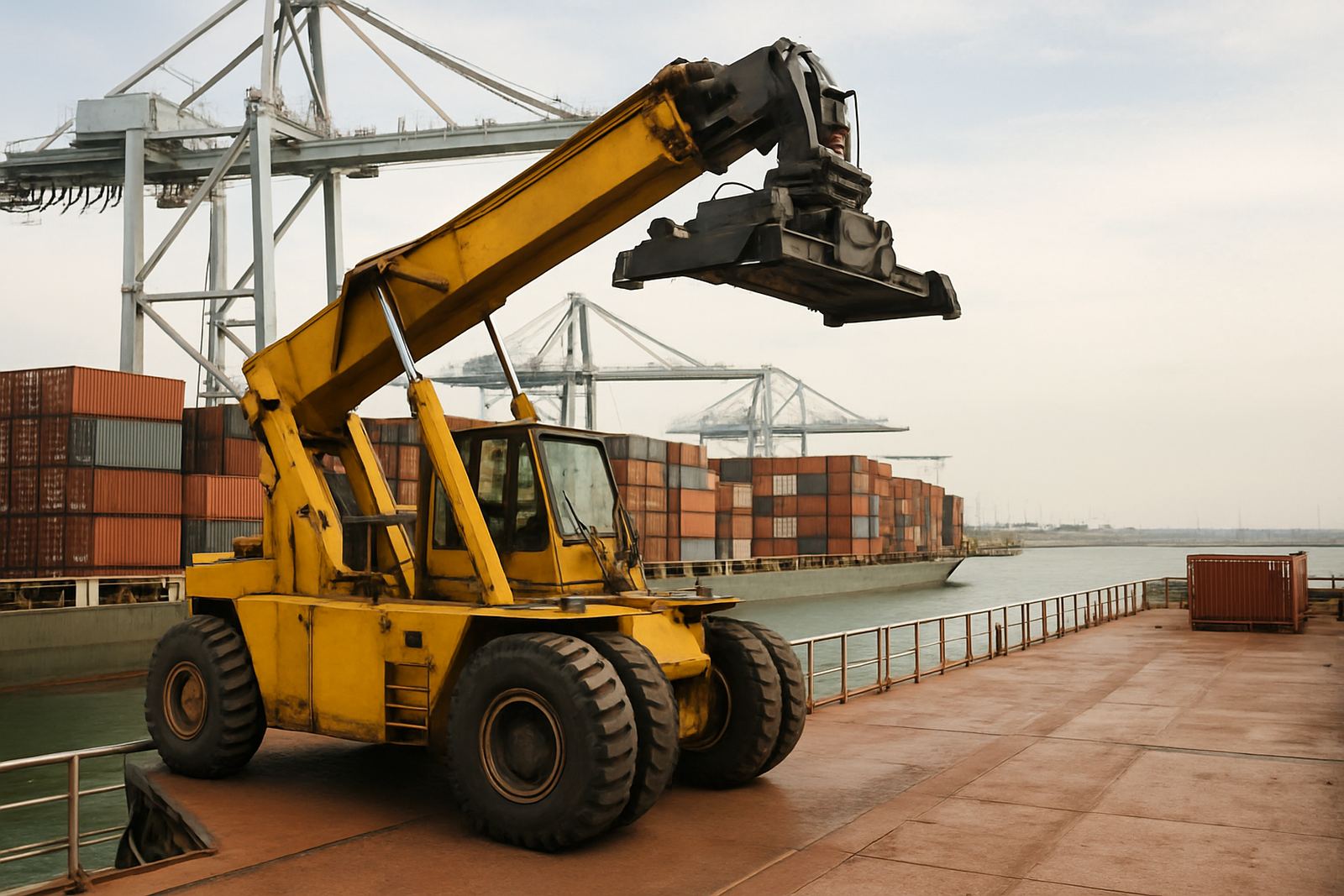
Start with the yard, not the brochure
Buying port yard gear starts on the ground, not in a quotation. Measure the lanes, turning circles, loading bays and surface condition before you look at machine size or lifting capacity. A unit that looks suitable on paper can become awkward in a narrow yard, especially where trucks queue, containers move fast and pedestrians share the same space.
In Durban, many operators work around mixed surfaces, salt in the air and stop-start traffic from the harbour corridor into Springfield Park and Umbilo. That means clearance height, ground pressure and tyre choice matter as much as rated capacity. If the machine will work near City Deep or Paarden Eiland, check whether the same unit can cope with different floor conditions and storage layouts too.
- Measure lane width at the tightest point, not the widest.
- Check turning space with a loaded machine, not only when empty.
- Allow for container corners, bollards, drains and uneven paving.
- Confirm overhead clearance for canopies, lights and stacks.
Match duty cycle to the actual shift pattern
Duty cycle is where many buyers get caught out. A machine that works well for a few moves an hour may struggle when the yard runs all day with limited rest. Ask how many hours the unit will run, how many loads it must handle per hour and whether it will work in bursts or under constant pressure. That answer should guide engine size, cooling, brakes and transmission selection.
For fleet yards and automotive sites, the pattern is often uneven. Morning dispatch can be busy, then the machine sits, then a vessel lands or a line haul truck arrives and the pressure spikes. In that case, fuel use, heat build-up and operator fatigue become important. If you buy too light, you spend more on repairs and downtime. Too heavy, and you waste diesel and lose manoeuvrability.
- List the busiest 2 hours of the day and size for that load.
- Check whether the machine will work on short runs or long continuous shifts.
- Ask for cooling system details if the yard is hot or dusty.
- Confirm service intervals in hours, not just calendar dates.
Parts support beats fancy features
Port yard gear is only useful when it is moving. That is why parts support should weigh as much as lift height or speed. A machine with a lower purchase price but slow access to filters, hoses, pins or electrical components can sit idle for days. In a harbour environment that is expensive because vessels, trucks and labour are all timed.
Before you commit, check which wear items are local, which need to be imported and how long the common replacements take to land. Ask who carries consumables in South Africa, whether the supplier can support diagnostics, and whether the operator can get urgent help after hours. Load-shedding also matters. If the yard depends on charging, testing or digital controls, plan for power cuts and backup procedures from the start.
- Keep a list of fast-moving spares on site.
- Ask about technical support in Durban, Johannesburg and Cape Town.
- Confirm whether the machine uses common filters, belts and tyres.
- Check the lead time for major items such as hydraulics and control units.
Lane widths and reach decide yard flow
Many yards lose time because machines are bought for capacity alone, then cannot move cleanly between stacks. Lane width affects everything from the first pick to the final park position. If the operator must reverse too often, productivity drops and collision risk rises. If the machine is too long, the turning radius will eat up usable space and slow truck turnaround.
For Durban harbour corridor sites, lane widths can change between storage rows, loading zones and collection points. Older yards may have tight corners, shallow drainage slopes and patchy paving. In those settings, a machine with good visibility and sensible reach often performs better than a bigger model that is awkward in confined space. The same logic applies in Paarden Eiland where space is tight and access must be planned carefully.
- Map the route from receiving point to storage and to exit gate.
- Allow space for loaded turns, not just straight-line travel.
- Check visibility over the load and around the mast or boom.
- Test the machine where the tightest turns happen in real life.
A Durban example from the harbour corridor
A fleet yard in Umbilo needed handling gear for containers, parts pallets and automotive stock moving between the workshop and the loading area. The first choice on paper was the largest machine the budget could stretch to. On site, that option proved too wide for one of the internal lanes and too heavy for a surface that softened after rain. It would have worked, but only after more concrete work and slower movement through the yard.
After measuring the actual lane widths and checking the daily shift pattern, the site chose a smaller unit with better visibility, easier service access and faster parts supply. The operator team could work longer without stress, and the yard kept moving during busy receiving periods. The lesson was simple: the right machine is the one that fits the yard, the shift and the support plan.
That same thinking helps buyers in Johannesburg and Cape Town too. A City Deep operation may need faster interchange between storage rows, while a Paarden Eiland site may need tighter turning and cleaner access around low roofs and shared entrances. One size rarely suits every yard.
What to ask before you sign
A proper buying decision needs more than capacity and price. Ask practical questions, insist on site details and make sure the machine suits the work from day one. If the answers are vague, the risk stays with you after delivery.
- What is the real duty cycle for the machine in our yard?
- Which parts are stocked locally and which are imported?
- Can the unit cope with our lane widths and turning points?
- What is the expected lead time for service support?
- How will the machine perform during power interruptions or fuel delays?
- Does the machine suit coastal humidity, dust or uneven pavement?
These questions are especially useful when the yard handles mixed freight. What works for pallets may not suit containers, and what suits the workshop may not suit the port gate. A buyer who tests the machine against real conditions will usually spend less over the full life of the equipment.
Keep the buying decision tied to operations
Port yard gear should make the site easier to run, not add another problem to manage. The best purchase is the one that fits the shift pattern, has dependable parts support and moves safely through the available lanes. That is true whether you are working from Umbilo, Jet Park or a coastal site with salt in the air and tight access.
When the machine matches the yard, the team spends less time waiting and more time moving cargo. That is the real return. Not the brochure figure, not the showroom finish, but the number of loads handled without drama.