Why heavy fabrication machines need a handling plan before collection
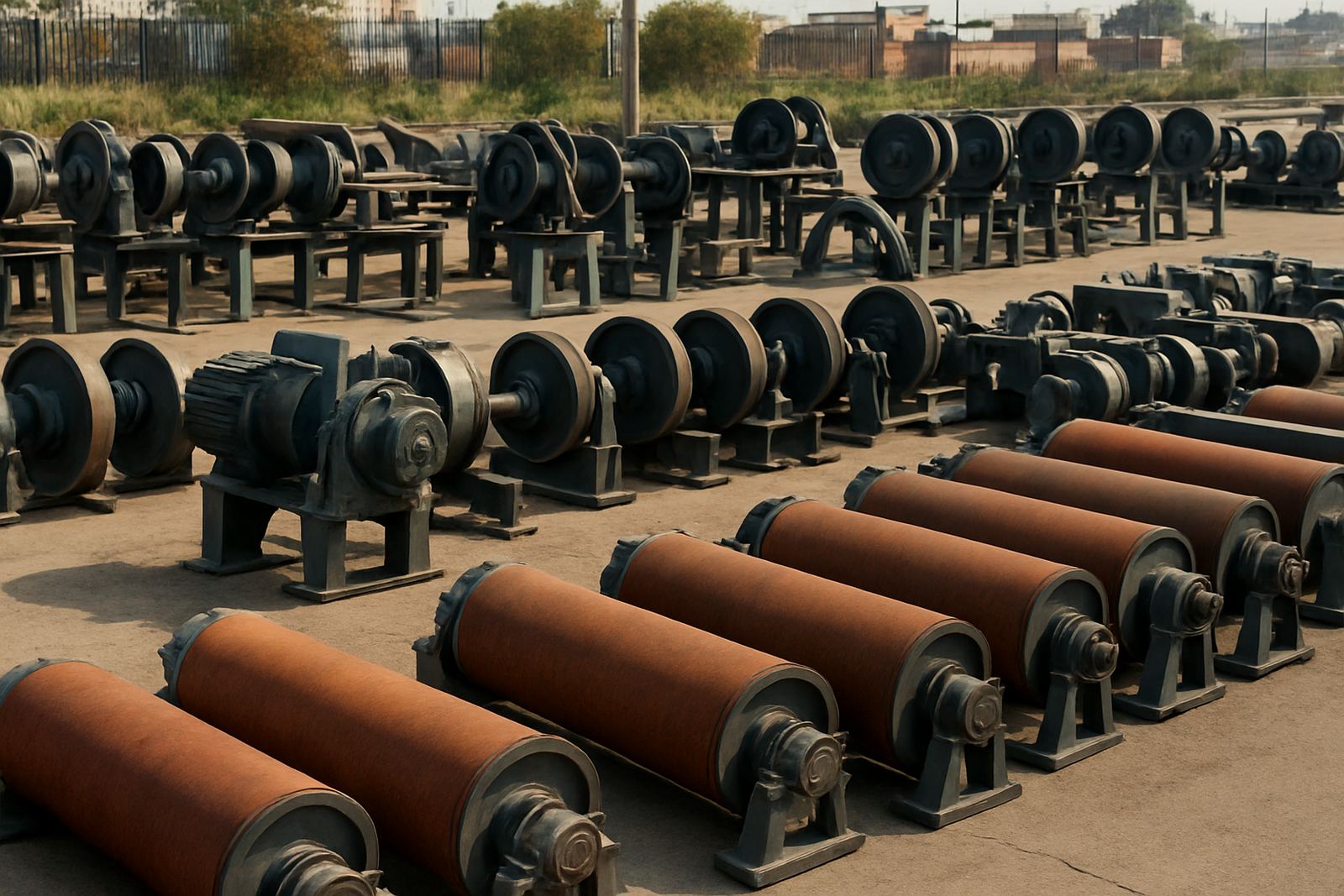
Metalworking equipment is often more awkward than it looks on paper. A 6 tonne press brake can have a narrow base, a long footprint and sensitive control gear, while a large lathe may carry most of its weight toward one end. If the lifting crew guesses wrong on the centre of gravity, the machine can twist, tip or land hard on a pallet jack, trailer deck or workshop floor.
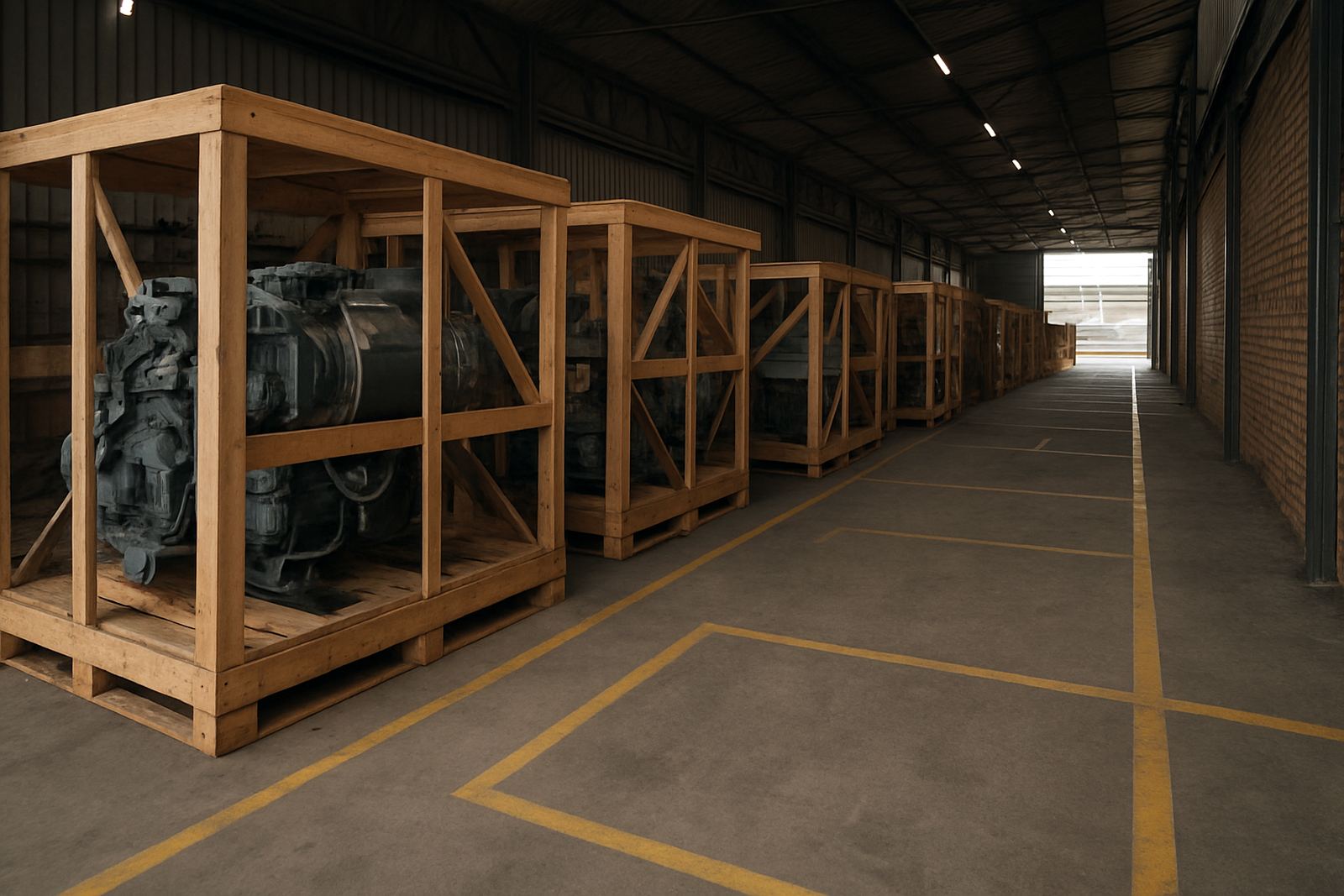
At Machines Africa Hub, we start with the basics: machine dimensions, gross mass, packing condition, access points and the final offloading location. That includes checking whether the machine is still on its original skid, whether oil has been drained and whether the floor at the destination can carry point loads. In Durban's harbour corridor, where collections often move between Umbilo, Springfield Park and the port, timing matters as much as the lift itself.
- Confirm the machine mass, length, width and height before booking transport.
- Check where the lifting eyes, fork pockets or base channels are located.
- Match the handling method to the destination floor, not just the transport vehicle.
- Allow for access limits, low lintels, tight turns and dock height differences.
Stable lift points and centre of gravity are not optional
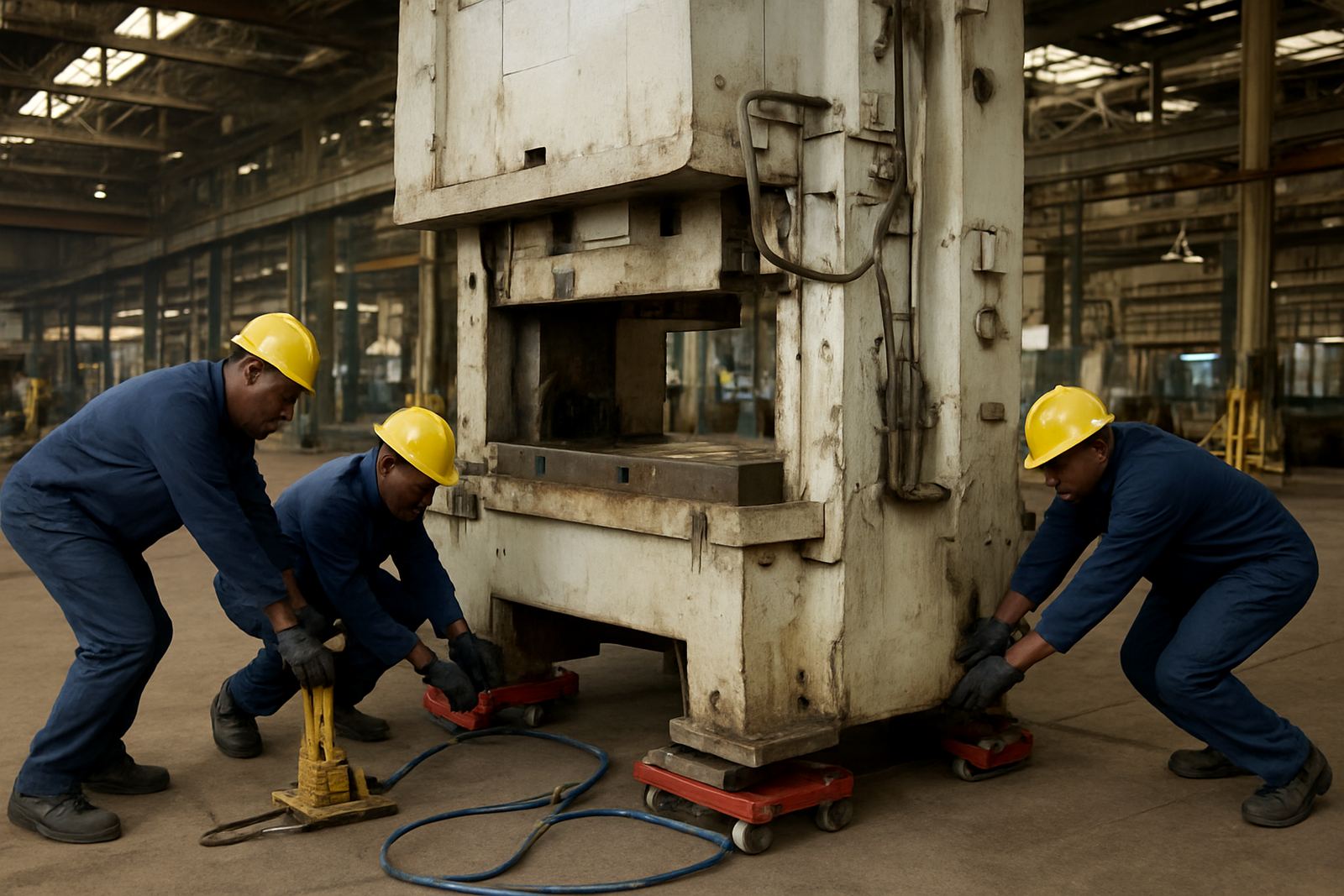
Heavy fabrication machines need stable lifting points because the load is rarely uniform. A machine with a top-mounted motor or control cabinet may lean the moment it leaves the floor. The same applies to older equipment with cast bases, protruding tables or tool changers. If the rigging team uses the wrong sling angle or picks from the wrong side, the machine can swing and put people at risk.
We always advise clients to identify the machine's rated lift points or manufacturer markings before the crew arrives. If those are missing, the handling plan must be based on the physical build of the machine and not on assumption. For imported units, this is especially important when the machine has travelled by sea and may have been braced differently inside the container or on a flat rack.
Simple checks help avoid delays and damage:
- Look for fork pockets, crane eyes, base rails and transport bolts.
- Check that loose parts are secured, removed or wrapped separately.
- Drain fluids where required for inland transport and compliance.
- Use spreader beams or rated slings when the load is long or top-heavy.
Floor load planning for workshops, warehouses and factories
One of the most overlooked parts of metalworking machine handling is floor load planning. A machine can be within the building size limits and still exceed the slab's point load capacity. That is common in older workshops, mezzanine areas and some light industrial premises in Johannesburg and Cape Town where the floor was designed for general storage, not concentrated machine weight.
Before a site offloading job, we ask for the destination layout, entry height and floor details. If the machine is going onto a raised bay, a steel plate, timber spreaders or a temporary route may be needed to spread the load. On polished concrete, the wrong wheel pressure can mark the surface. On a suspended slab, a heavy press can create structural risk if the load is parked in the wrong place.
A practical floor plan should show:
- Entry points and turning radius inside the building.
- Where the machine will stand and how it will be levelled.
- Any ramps, drains, cable trenches or floor joints.
- Whether a forklift, crane or gantry can work safely indoors.
Import clearing and transport for machinery that is too heavy to guess about
Metalworking machines coming through the ports need the paperwork to match the actual cargo. Tariff classification, invoice descriptions, packing lists and serial numbers must be accurate, because customs queries can hold the load while storage charges climb. If the machine is bound for Durban, Jet Park or City Deep, delays at the port or depot quickly affect collection slots and inland transport bookings.
Our clearing team in Durban, Johannesburg and Cape Town handles the movement from ship side to the final address. That includes customs clearing, port collection, bonded storage where required and document management. When a machine is imported for a fabrication shop, we also check whether the delivery route has access limits, municipal loading restrictions or security needs at the site.
- Make sure the commercial invoice matches the machine model and serial number.
- Confirm tariff classification before shipment arrives at the terminal.
- Book inland transport with enough clearance for height, width and weight.
- Allow for port congestion, load-shedding delays and after-hours site rules.
A Durban example: moving a press brake from Umbilo to a workshop in Springfield Park
We recently handled a heavy press brake moving from a storage point near Umbilo to a fabrication workshop in Springfield Park. The machine had a long frame, a high centre of mass and limited fork access. The receiving workshop had a concrete floor, but the entry door was tight and there was a drain channel near the bay. The first step was not the truck, it was the floor check and route measurement.
Our operations team set the lift sequence, planned the trailer deck and arranged the offloading position inside the workshop. Because the machine was going into a live production area, the client needed the move completed before the afternoon shift started. That meant a clear route, a booked time slot and enough labour on site to guide the set-down without stopping production for half a day.
Jobs like this show why machine handling is a logistics task, not just a transport task. One missed measurement can hold up a whole line of work.
What clients should prepare before the truck arrives
Good machine moves start with good information. If your team prepares early, the collection is quicker and the risk of damage drops. It also helps with insurance, because the load condition, packing method and route are documented from the start.
Before arrival, please have these details ready:
- Machine type, weight and dimensions, including any attachments.
- Photos of the unit from all sides, plus the underside where possible.
- Collection address, access notes and site contact names.
- Destination address, floor type and where the machine will be placed.
- Any special requirements for cranes, forklifts, offloading hours or permits.
For humid areas near the coast, protection against corrosion matters too. If the machine will stand in a warehouse in Durban or Paarden Eiland before installation, we may recommend wrap, desiccant or bonded storage depending on the turnaround time.