Why sea freight packing starts before the crate is built
Good packing begins with a clear view of the machine, the route and the discharge point. A press moving from Durban to Mombasa faces a different set of risks from a compacting unit going inland through Johannesburg after discharge at Durban harbour. Salt air, crane handling, road vibration and long dwell times all affect how the cargo should be prepared.
At our Umbilo base, we see the same mistake often enough: a machine is cleaned, wrapped and sent out, but the moving parts are not locked, the edges are not protected, and the crate is built for the equipment itself without allowing for fork pockets or sling points. That can lead to bent guards, chipped panels, rust stains and delays during inspection. On a busy route through Durban, Jet Park or City Deep, the smallest packing weakness can cost a full day of handling time.
Blocking and bracing that stops machinery shifting at sea
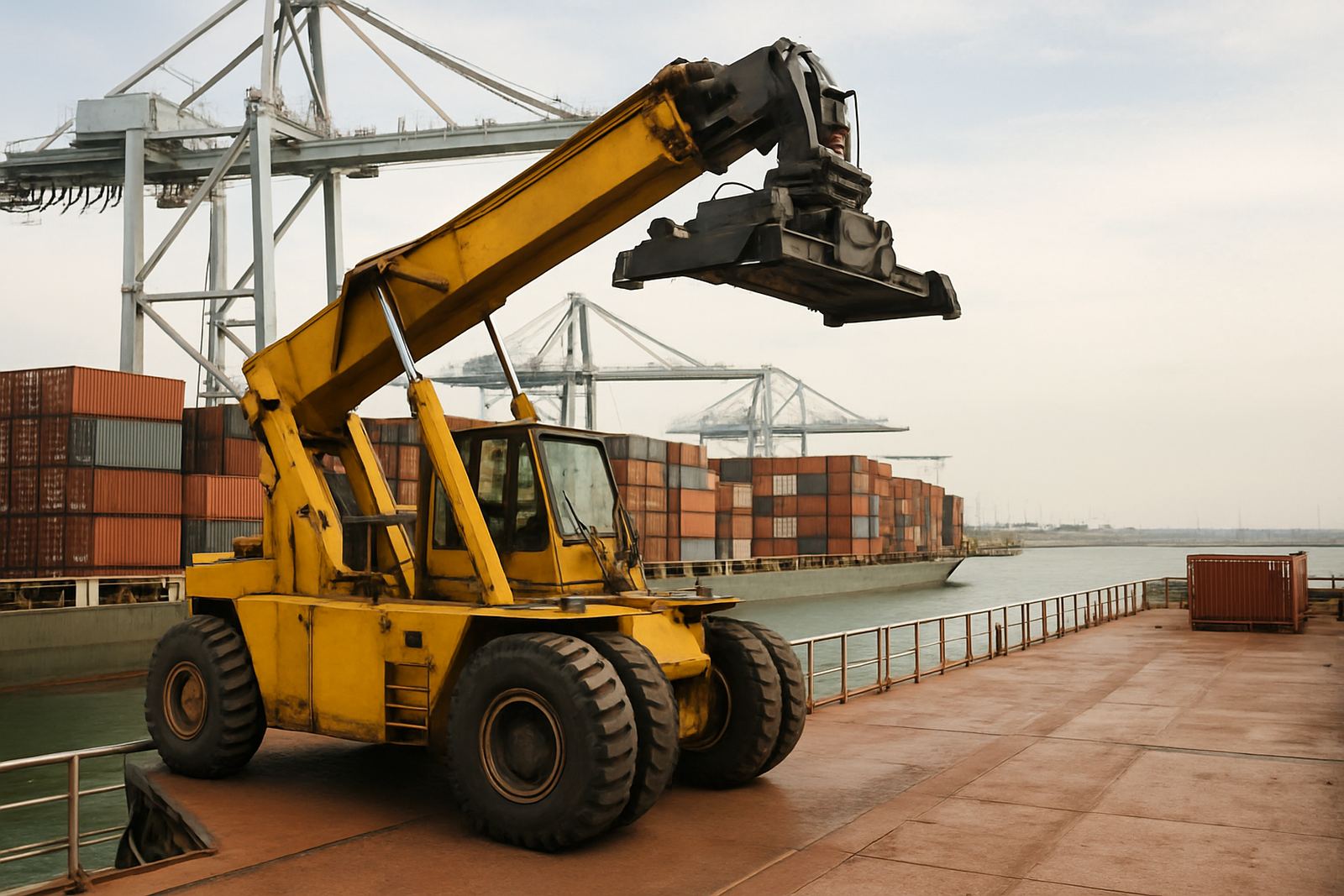
Once cargo is loaded into a container or onto a flat rack, there is constant movement from vessel motion, road vibration and port handling. Blocking and bracing must hold the machine in position even when the unit leans, jolts or settles during the trip. Timber, steel brackets, chains and rated straps are used according to the weight and shape of the cargo.
As a rule, the machine should not sit loose on the floor of the container. It should be fixed at the base, with movement limited from side to side and front to back. Heavy plant often needs custom chocks under the feet, while smaller units benefit from bolting onto a skid. The point is simple: if the cargo can shift, it will shift.
- Fix the base to prevent sliding during transport.
- Use chocks or wedges on wheels and round surfaces.
- Protect protruding arms, pipes and control panels.
- Check that lifting points stay open and visible.
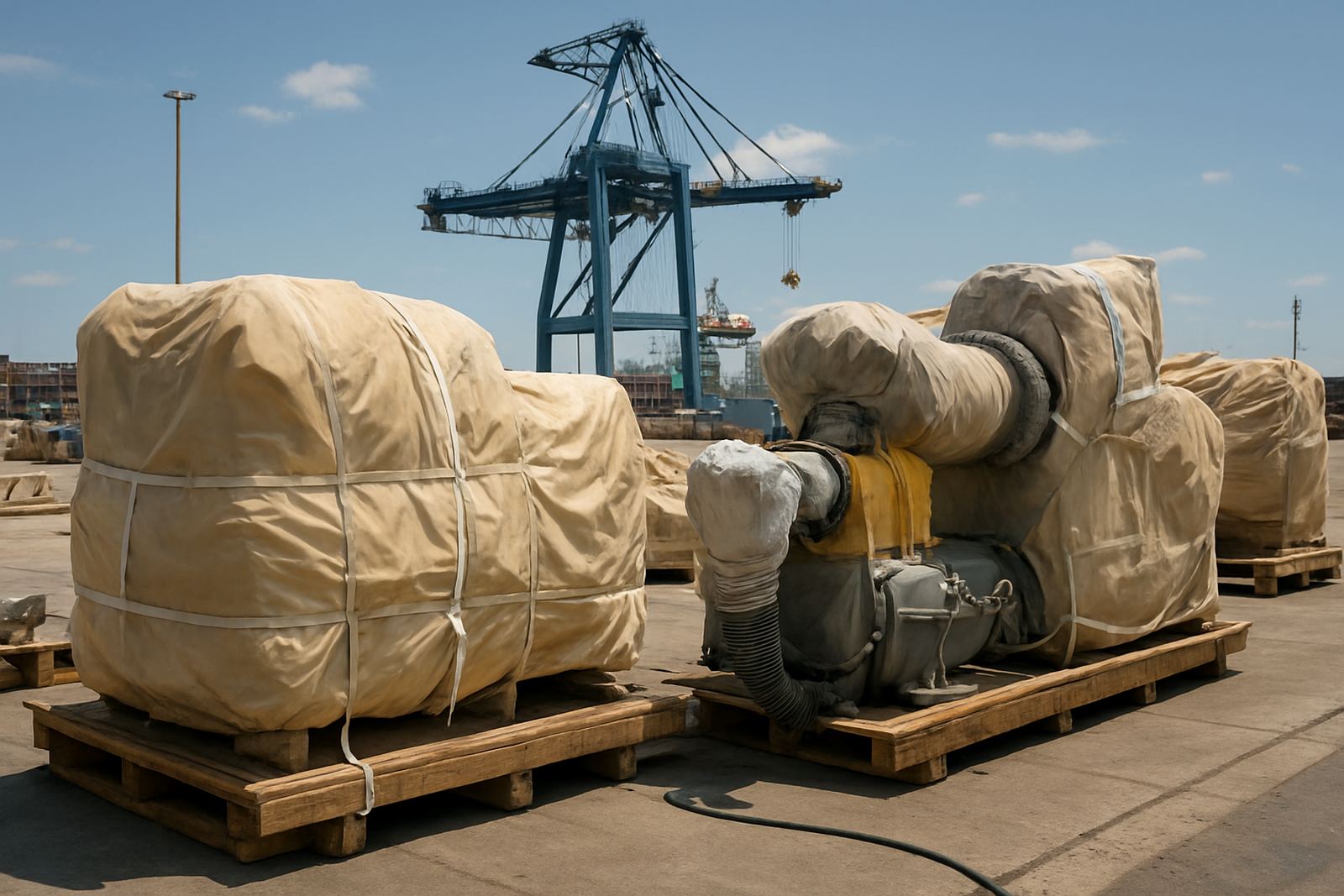
Wrapping against moisture, dust and salt air on the Durban route
Sea freight packing in South Africa has to deal with humidity, especially around Durban harbour and the coastal strip through Springfield Park and Paarden Eiland. Even when rain is not falling, moisture in the air can settle inside packaging and start corrosion. Machines with electrical components, bearings or polished surfaces need more than a plastic sheet thrown over the top.
A proper wrap usually combines barrier film, desiccants, sealed seams and outer protection that can handle rough cargo movements. For export cargo leaving Durban, we also look at how long the machine may sit before vessel cut-off, and whether it will be exposed to open yard conditions. If the cargo is going to wait in a bonded store, the moisture protection must last the full dwell period, not just the first 24 hours.
- Use desiccants sized for the container volume and transit time.
- Seal openings where humid air can enter control boxes or housings.
- Apply rust protection to bare metal surfaces before wrapping.
- Allow for condensation when temperatures change between day and night.
Crates, skids and container loading for machinery of different sizes
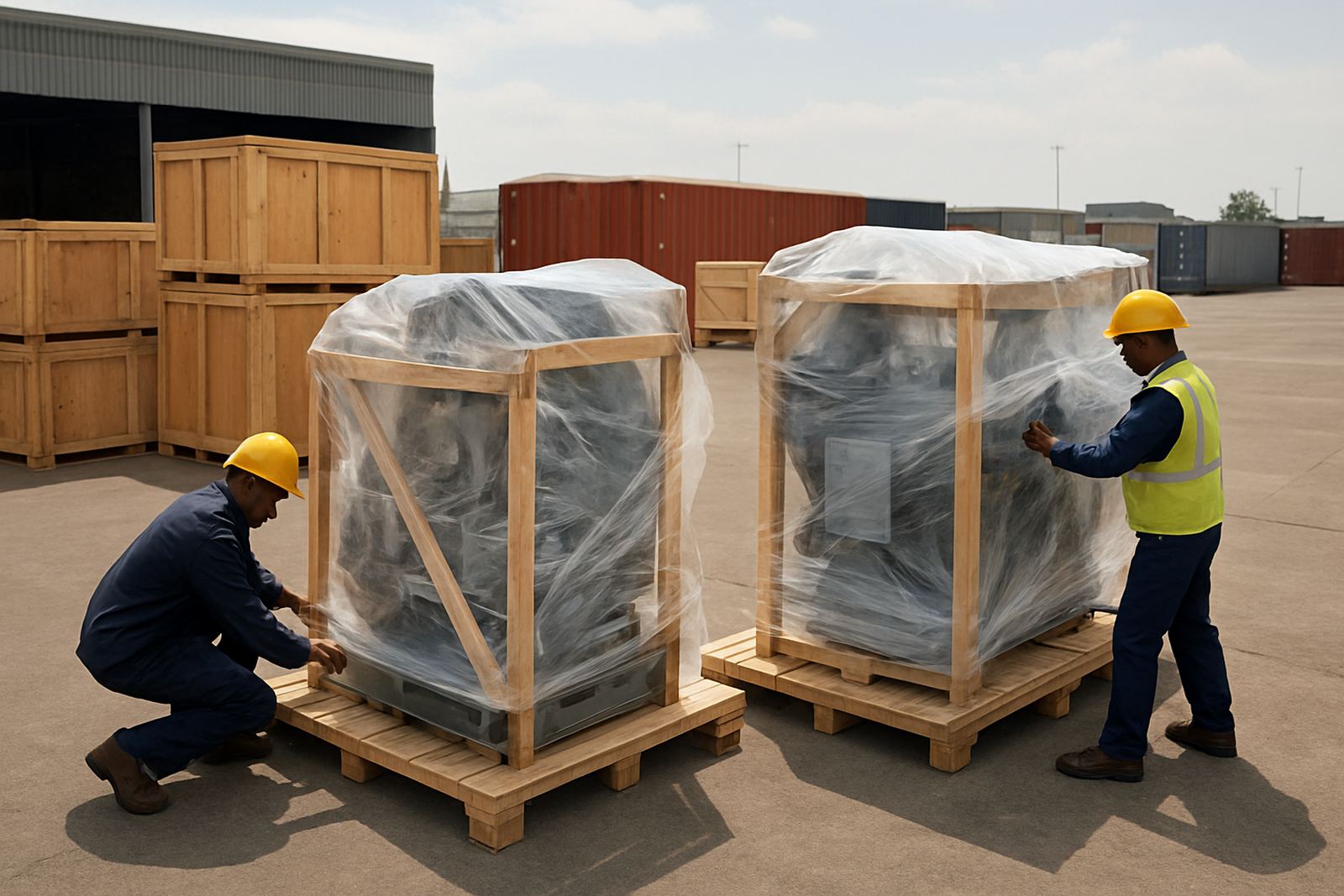
Not every item needs a full crate. Some machines are better secured on skids, while others need partial crating that protects the control face and leaving service access open. The right choice depends on the machine weight, the centre of gravity, the handling equipment available and whether the cargo will move in a standard container, open top or on a flat rack.
In practice, a small lathe may travel safely on a treated timber skid with side protection, while a larger compressor set might need a steel base and a weather cover. Overpacking can add cost and create lifting problems. Underpacking creates damage. The job is to match the packing method to the route, the port and the final offloading point, whether that is in Umbilo, City Deep or a site outside the metro.
We also check container floor condition, timber strength and the clearance needed for forklift tines. If the cargo is loaded too tight against the door end or against the roof, handlers struggle and damage starts at the loading bay.
Documents, labels and inspection marks that save time at clearing
Packing is not only physical. It must also support customs clearing and inland delivery. Cargo that is well packed but poorly marked slows everything down. Labels should show the machine name, gross weight, dimensions, lifting points and any orientation limits. If a unit must stay upright or cannot be stacked, that needs to be visible at the first glance.
Our clearing work in Johannesburg and Cape Town shows the same pattern: if the packing list does not match the actual pieces, there are questions at the port and delays at the shed. A proper pack schedule helps everyone involved, from the shipping line to the truck driver collecting in Durban. It also helps with insurance claims if there is an incident on the way.
- Mark each item with matching numbers on the invoice and packing list.
- Show weight, dimensions and lifting points on the crate or skid.
- Note fragile parts, no-stack instructions and orientation arrows.
- Keep copies of serial numbers and photos before loading.
A Durban example: what changes when the cargo is going inland
Consider a fleet maintenance workshop in Umbilo sending two diagnostic units and a hydraulic press to a client in Gauteng. The sea freight leg ends in Durban, but the cargo still has to survive port handling, collection and inland transport through the corridor to Jet Park. The packing used for that trip needs to think beyond the vessel.
For that load, we would normally brace the press to a skid, wrap the electronics separately, and make sure each unit is clearly marked for site offloading. If the cargo is going into bonded storage before release, the moisture plan must include longer protection and regular checks. It is the kind of detail that looks small on paper but prevents expensive rework when the machine reaches site and has to go straight into service.
Packing choices that pay off when the machine must work on arrival
The best packing is practical. It protects the cargo, but it also respects port handling, customs checks and the realities of South African logistics. A machine that arrives clean, dry and easy to unload can go from vessel to truck to site with fewer interruptions. That matters when a business is waiting on one item to keep a workshop, fleet or production line moving.
For shipments through Durban harbour corridor, proper blocking, wrapping and moisture control are not extras. They are part of the transport plan. If the cargo is going out through Durban, stored in Johannesburg, or received at Paarden Eiland, the same rule applies: pack it so the people handling it can do the job safely and the machine can go back to work without repairs first.